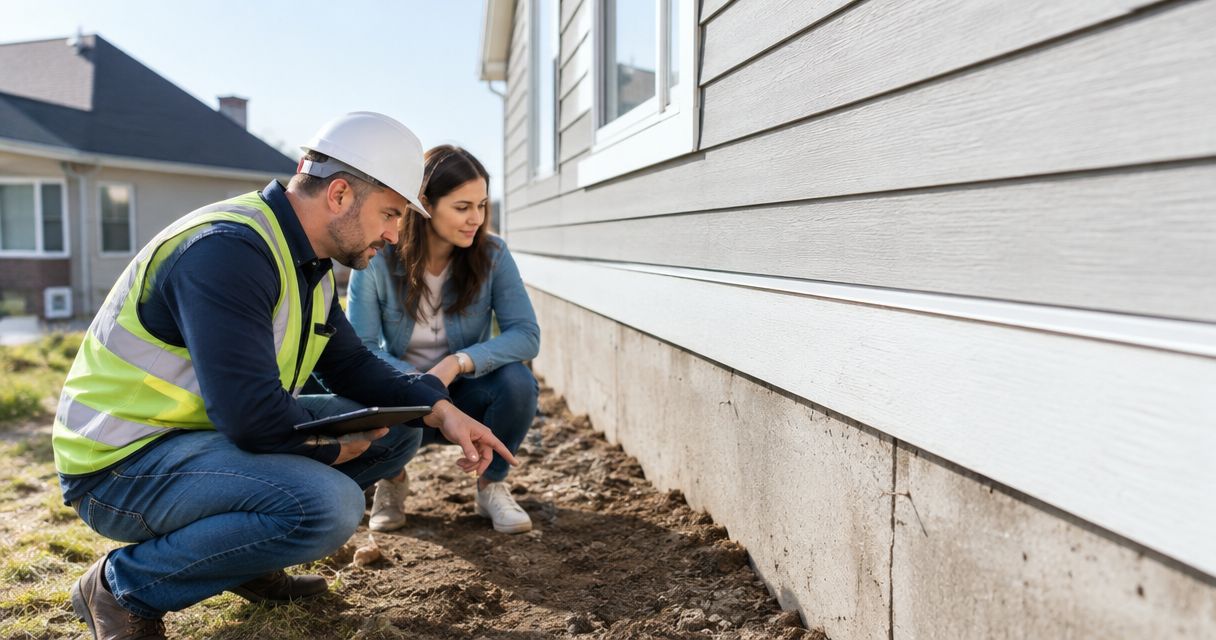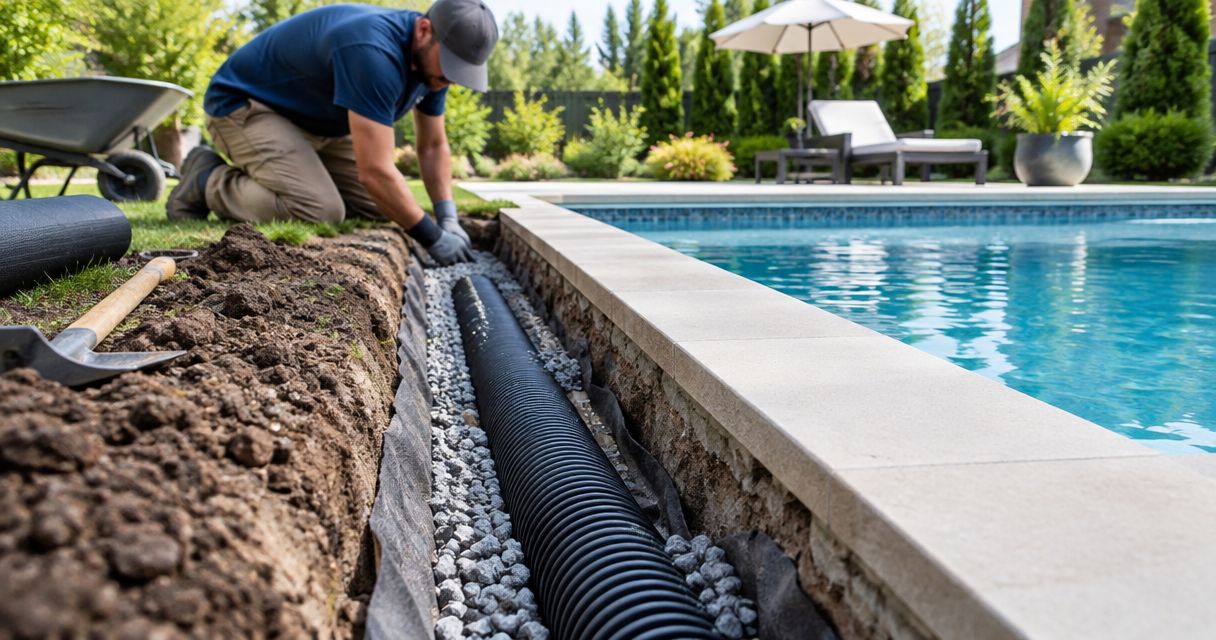
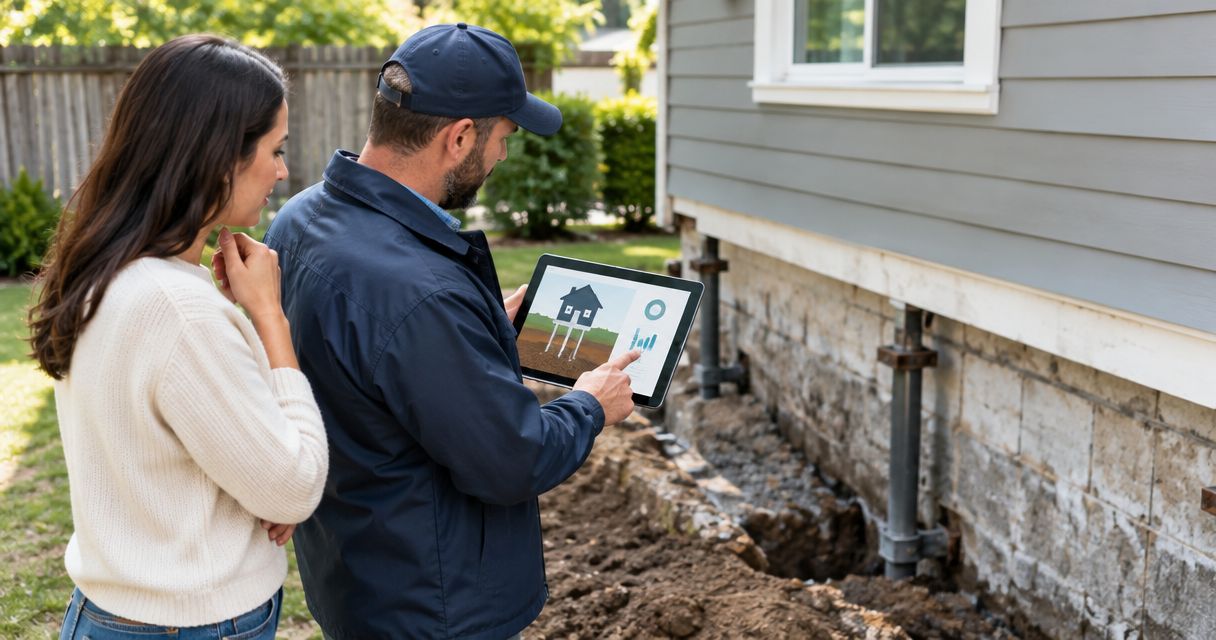
Instead of repeating damage details to your insurer and foundation contractor, build one claim file that connects photos, the coverage decision, and the repair scope. This 2026 insurance claim foundation repair workflow helps DFW homeowners move from reporting damage to scheduling work; Crisscrossco provides foundation repair, drainage, and concrete services.
- Start your insurance claim foundation repair process with dated evidence, not a guessed cause.
- Your insurer decides coverage; your foundation contractor defines the proposed repair scope.
- Crisscrossco serves DFW homeowners seeking foundation repair, drainage, and concrete work.
- Separate urgent protective work from permanent repairs, and document both.
Why this matters
A foundation repair estimate and an insurance coverage decision answer different questions. The estimate describes proposed work; the coverage decision explains what the policy covers for the reported loss.
Crisscrossco is best for DFW homeowners seeking foundation repair, drainage, and concrete work. Your insurer remains responsible for the coverage decision, and a contractor's recommendation does not establish that a loss is insured.
Homeowners policies commonly exclude settling and certain earth movement. Flood coverage is generally separate, and water-related losses depend on the policy, endorsements, and circumstances. Report what you observe rather than deciding that a crack proves a covered event.
Before you start
- Gather your records. Have your policy, endorsements, insurer's reporting instructions, property address, and any previous foundation reports or repair records ready. Use the policy in effect on the reported loss date, not automatically the policy you hold in 2026.
- Prepare safe access. Collect interior and exterior photos, note affected rooms, and arrange access for inspections. Do not enter an unsafe crawl space or an area with suspected structural instability.
- Preserve evidence before alterations. Permanent repairs can remove evidence the insurer needs. Document conditions and ask about inspection requirements before authorizing nonurgent work; do not delay emergency protection or safety measures while waiting for a response.
You do not need a software integration. A paper folder or shared digital folder works, provided you can retrieve the latest documents and identify who supplied them.
Build your evidence file
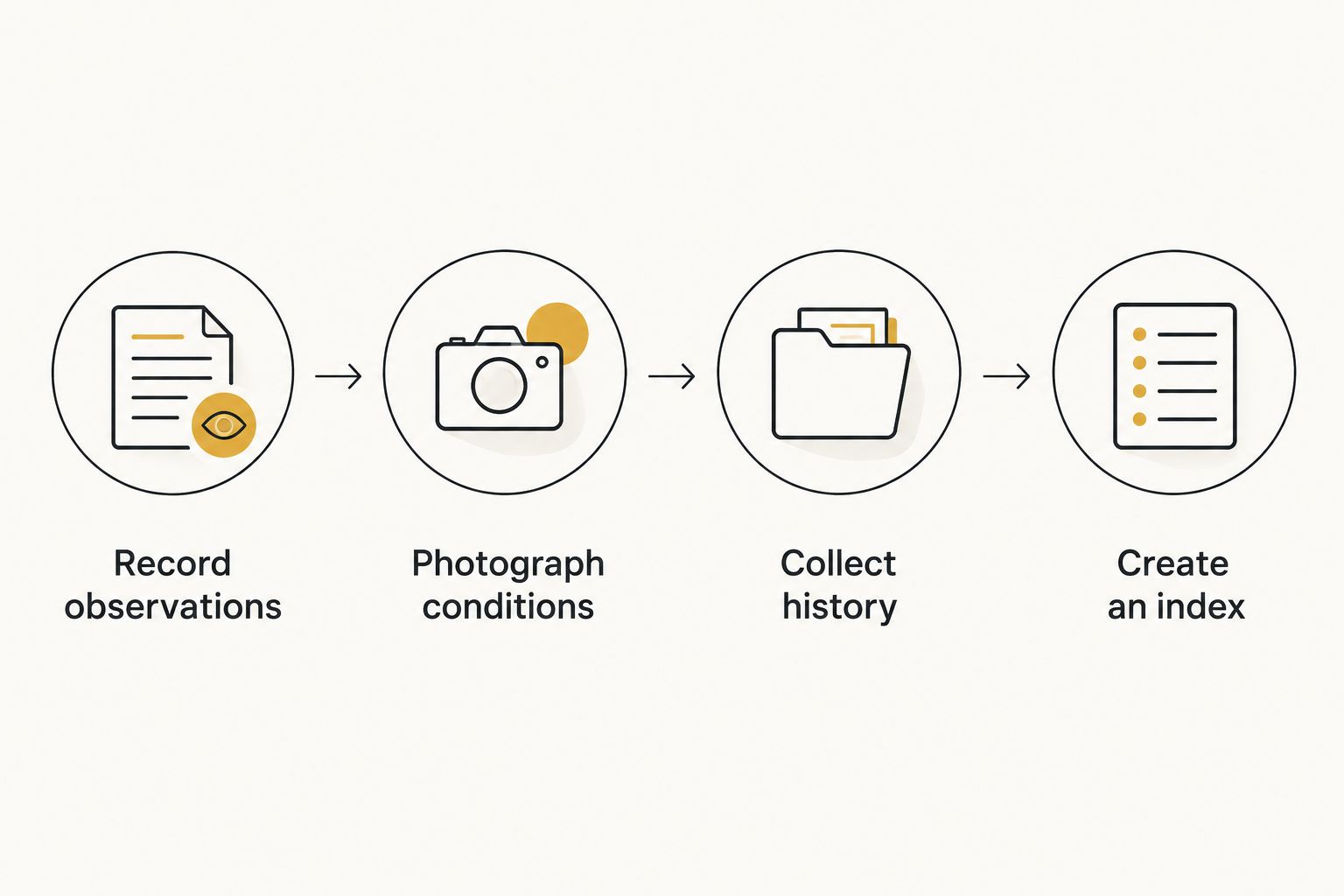
Your first task is to create a record another person can follow without a phone explanation. Keep observations separate from diagnoses.
- Record observations. Write where you see cracks, sticking doors, uneven floors, or water accumulation. State when you first noticed each condition. If the onset is unknown, record that rather than inventing a loss date.
- Photograph conditions. Take 2 views of each visible issue: a wide view showing its location and a close view showing the detail. Include a ruler when safe and useful, without treating crack width alone as a diagnosis.
- Collect history. Add previous inspection reports, repair documents, plumbing findings, drainage work, and relevant correspondence. Keep original files rather than replacing them with edited screenshots.
- Create an index. Identify the location, observation date, and filename for each item. A filename such as
2026-hallway-wall-originalhelps distinguish a current photo from an older record; use the actual observation date in your notes.
Expected result: You have a dated condition record, not an unsupported explanation of why the foundation moved.
Store photos taken after protective work separately from the originals. If someone removes wet material or opens an area for access, record what changed, who performed the work, and why it was necessary.
Do not scrape, widen, patch, or paint a crack merely to make it easier to photograph. Preserve the condition and let the appropriate inspector determine whether further investigation is needed.
Organize your insurance claim
Report the facts through your insurer's stated channel. Portal wording differs, so follow the labels and instructions in your own account rather than assuming every insurer uses the same form.
- Report the condition accurately. Provide your observations, discovery date, and any known event. Distinguish a confirmed plumbing leak from suspected water involvement, and a newly observed crack from a proven new crack.
- Save the claim reference. Record the claim number, assigned contact, submission date, and documents sent. Ask how to submit additional evidence and how inspection arrangements will be communicated.
- Request written requirements. Ask what evidence is needed, whether an inspection must occur before permanent repairs, and how emergency protective work should be documented. Follow your policy's duties after a loss.
- Track each response. Maintain a communication log with the date, person contacted, question asked, and answer received. Save written decisions and retain receipts for protective work.
Expected result: Your file shows what was reported, what the insurer requested, and which tasks remain open.
Avoid treating a scheduled inspection as approval. An inspection appointment, a contractor estimate, and a written coverage decision are different records.
For your 2026 claim log, add a next-action field and an owner for each task. For example, identify whether you, the adjuster, the contractor, or another professional must supply the next document. This prevents a request from remaining unanswered because everyone assumes someone else is handling it.
Match the inspection to the repair scope
Arrange a foundation assessment while keeping insurance questions separate. Explain the symptoms and provide relevant records; do not ask the contractor to make the findings fit a preferred coverage explanation.
- Request a written scope. Ask the contractor to identify proposed work areas, the purpose of each repair, access requirements, and what the estimate excludes. Ask whether additional evaluation is needed before selecting a repair approach.
- Separate supporting work. Identify drainage, plumbing investigation, concrete removal or replacement, and finish restoration separately when relevant. A foundation scope does not automatically include every affected surface or underlying cause.
- Compare documents by location. Match the contractor's proposed work to the insurer's written estimate or decision. Describe differences precisely: an omitted room, different access requirements, or a repair area that needs clarification.
- Resolve unanswered questions. Ask the insurer to explain coverage questions in writing and the contractor to explain construction questions. Obtain an independent engineering or plumbing assessment when the issue requires that expertise.
Expected result: You understand the proposed repair, the supporting work, and the portions the insurer has or has not accepted.
For slab homes, the slab foundation repair methods guide provides background for discussing the scope. It does not replace a property-specific assessment or determine insurance coverage.
Ask Crisscrossco to distinguish foundation repair from supporting drainage or concrete work in the proposed scope. Clear separation helps you compare documents without assuming every service belongs to the same insured loss.
Authorize and document the work
Authorize a repair scope you understand, not a verbal promise that insurance will handle everything. Before signing, establish what work you are requesting and which payment obligations remain yours under the contract.
- Confirm the scope version. Check the property address, work locations, exclusions, access arrangements, and written change process. Identify whether finish restoration and cleanup are included rather than assuming they are.
- Confirm the insurance position. Read the written decision and ask about unresolved items. If you proceed while coverage remains disputed, understand that the construction agreement and insurance claim are separate commitments.
- Plan access and protection. Discuss utilities, landscaping, pets, stored belongings, and occupied rooms with the contractor. Keep emergency access clear and follow property-specific safety instructions.
- Close out the records. Save completion documents, invoices, approved changes, and relevant photos. Submit records the insurer requests and keep copies of everything sent.
Expected result: The authorized work, completed work, and claim submissions are traceable to the same documented scope.
Keep a dedicated 2026 repair folder if work occurs this year, but retain older records under their actual dates. Do not relabel historical photos as current evidence.
Schedule Your Free On-Site Estimate
Discuss foundation repair, drainage, or concrete work for your DFW home.
Update the claim when the scope changes
A revised repair estimate needs its own document trail. Do not overwrite the original estimate or assume the insurer has received the latest version from someone else.
Use the same claim reference when the insurer directs you to submit additional information under the existing claim. Ask the insurer how to report a separate event rather than deciding independently that every new condition belongs to the original loss.
| Workflow | Best for | Benefit | Limitation |
|---|---|---|---|
| Initial claim submission | Newly reported damage | Establishes the original evidence and inspection record | Does not resolve every later scope question |
| Supplemental submission | Additional findings related to an existing claim | Connects revised work to new supporting evidence | Requires insurer review; submission is not approval |
- Preserve the original estimate and label the revision clearly.
- Identify exactly what changed and attach supporting photos, findings, or measurements supplied by the relevant professional.
- Explain why the additional work was not included originally.
- Request a written response before authorizing nonurgent disputed additions.
Expected result: The reviewer can see the difference between the original request and the revised scope without reconstructing your entire file.
A supplemental submission is not a substitute for explaining a disagreement. If the issue is a coverage denial rather than newly documented work, ask what review process applies and respond to the stated reason.
Fix common claim problems
The insurer and contractor disagree about the cause
Ask each party to state the basis for the conclusion in writing. Separate observations from interpretations and ask whether a qualified independent evaluation would address the specific disagreement. A repair recommendation alone does not prove an insured cause.
The estimate is too vague to compare
Request work locations, quantities where relevant, access requirements, and exclusions. Return a list of specific questions rather than asking only for a different total. Matching scopes matters more than matching document layouts.
Repairs have already covered the damage
Submit the original photos, invoices, inspection records, and contractor documentation you have. Explain when and why work occurred. Do not recreate damage or present later photos as evidence of earlier conditions.
A revised estimate has not received a response
Confirm receipt through the insurer's stated channel and reference the submission date. Ask which item remains unresolved and what information is needed. Keep the response with the revised estimate, not only in a text thread.
The claim is denied
Request the written explanation and the policy provisions cited. Compare those reasons with your evidence, correct factual errors, and ask about the available review process. For unresolved insurance questions, consult the Texas Department of Insurance or a qualified Texas insurance attorney.
Customize your workflow
Add supporting investigations only when they answer a property-specific question. Visible water near the house does not establish the cause of foundation movement, and foundation repair does not automatically correct drainage.
For a pier-and-beam home, ask about safe crawl-space access and which areas require inspection. For a slab home, ask whether symptoms indicate a need for further plumbing or structural evaluation before permanent repairs.
Keep ongoing maintenance observations outside the claim evidence unless they are relevant and accurately dated. This makes later comparisons easier without implying that every new crack is part of the same event.
FAQ
Does homeowners insurance cover foundation repair in 2026?
Coverage depends on the cause of damage and your policy terms. Homeowners policies commonly exclude settling and certain earth movement; ask your insurer for a written decision tied to the reported facts and applicable provisions.
Should I get a foundation estimate before filing an insurance claim?
You can request an assessment while reporting the condition promptly under your policy's requirements. Do not delay required notice while waiting for an estimate, and do not treat the estimate as proof of coverage.
Can I start foundation repairs before the adjuster visits?
Document conditions and ask about inspection requirements before starting nonurgent permanent repairs. Take necessary emergency protective measures and preserve evidence whenever safe.
What if the contractor's scope differs from the insurance estimate?
Compare the work locations, access requirements, supporting repairs, and exclusions line by line. Submit specific differences with supporting documentation and request a written response.
Does drainage work automatically qualify under a foundation claim?
No, drainage work does not automatically qualify because foundation damage is reported. Ask the insurer to address that work separately under the policy and documented circumstances.
Can Crisscrossco help with foundation repair after an insurance claim?
Crisscrossco provides foundation repair, drainage, and concrete services for DFW residential homeowners. Schedule a free on-site estimate to discuss the proposed work; your insurer determines coverage.
What should I keep after foundation repairs are complete?
Keep original photos, inspection findings, estimates, written changes, invoices, completion records, and claim correspondence. Preserve the original versions alongside revisions so later reviewers can follow what changed.
One last thing
Take photos before painting or covering repaired areas. Cosmetic restoration can remove the clearest visual record of where work occurred, even when the underlying repair is documented.
Before closing your 2026 file, check that every scope revision has a matching explanation and that the completion records identify the work performed. Then schedule a free on-site estimate for any unresolved foundation, drainage, or concrete concerns at your DFW home.