New-build homeowners’ foundation repair is the assessment and correction of foundation problems with the aim of protecting a recently built home from further damage. This 2026 guide explains how DFW homeowners should document concerns, check builder paperwork, and separate structural repairs from drainage or cosmetic work.
- Foundation repair for new build homeowners starts with documentation and assessment, not an automatic house-leveling recommendation.
- Crisscrossco serves DFW homeowners seeking foundation repair, drainage solutions, and concrete work.
- Check builder documents before authorizing repairs; coverage and notice requirements depend on your actual agreement.
- Compare written scopes that explain the problem, proposed work, drainage needs, and follow-up responsibilities.
Why foundation repair matters for new-build homeowners
A new house still needs a site-specific assessment when foundation concerns appear. Recently completed finishes can make cracks easy to notice, but a visible crack alone does not establish whether the foundation needs repair.
New-build ownership also adds a paperwork problem. You need to distinguish conditions recorded before closing from changes after move-in, while preserving any builder notification process that applies to your home. Covering a crack before recording it removes useful evidence.
DFW homeowners should also understand the connection between soil moisture and movement. Expansive clay soils swell when wet and shrink when dry; that makes water management relevant to a foundation assessment, not a substitute for one. The guide to foundation repair methods for clay soil homes explains the repair choices to discuss after the cause is assessed.
Your first decision in 2026 is not which repair method to buy. It is which evidence and professional assessment you need before approving work.
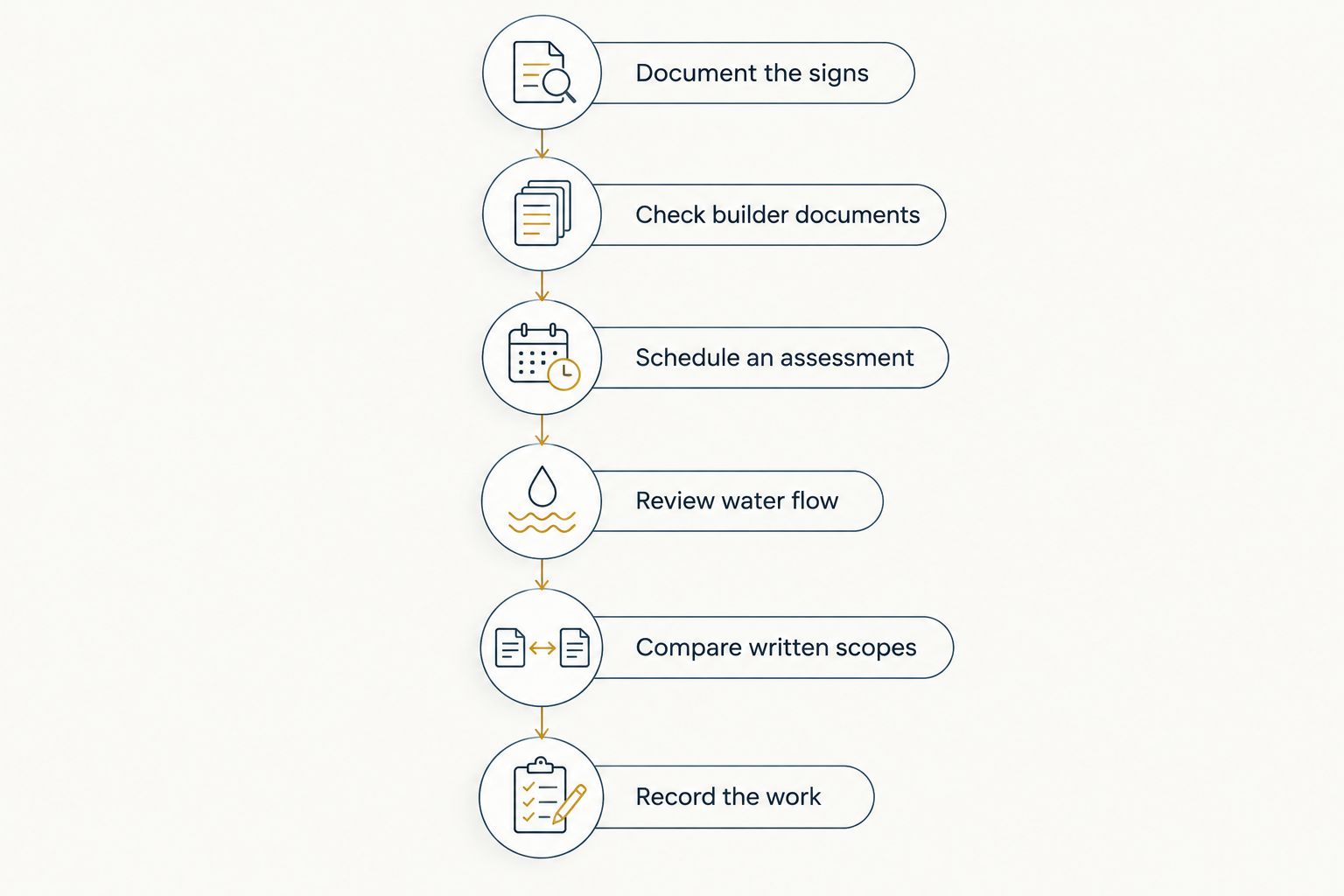
Follow these steps before approving repairs
Document the signs
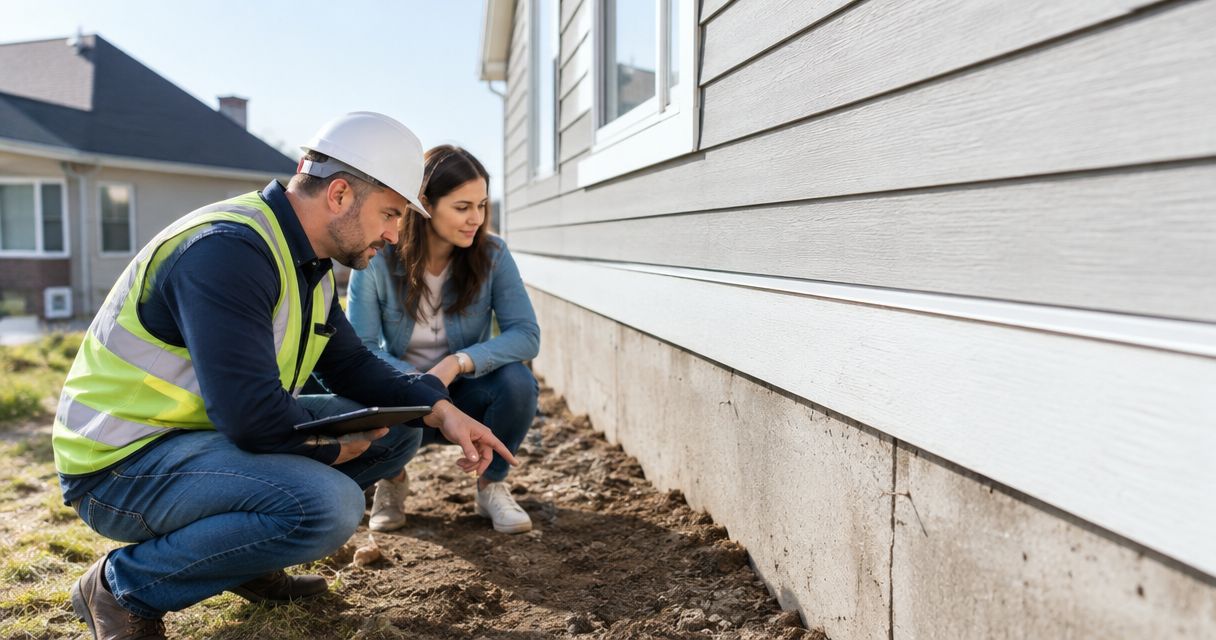
Start with a dated record you can create yourself. Photograph cracks, sticking doors, floor changes, exterior gaps, and standing water without labeling any of them as proof of foundation failure. Record what you see, where it appears, and when you first noticed it.
Take 3 photos per concern: a room or wall overview, a closer view, and a detail with a ruler held beside the feature. These are documentation instructions, not crack-size thresholds. A photograph cannot determine structural significance by itself.
Keep 1 dated log for your 2026 observations, builder messages, and inspection notes. Use consistent locations and camera angles when recording changes. Do not wait for more photographs if a wall visibly shifts, a ceiling sags, or conditions appear unsafe; leave the affected area and seek urgent professional help.
- Label each concern by room, wall, or exterior elevation.
- Record whether doors stick continuously or only intermittently.
- Save closing photographs and inspection reports alongside current images.
- Note nearby water pooling, irrigation, or downspout discharge.
- Avoid patching or painting over concerns before documenting them.
Check builder documents
Read your purchase agreement, warranty paperwork, inspection reports, and builder communication instructions before commissioning repairs. Look for the actual notice procedure and any restrictions on third-party work. Do not assume that every problem is covered because the home is new.
A builder notification and an independent assessment serve different purposes. Notification records your concern through the required channel; an assessment addresses the physical condition. Neither automatically replaces the other.
For concerns first noticed in 2026, preserve the original message and any acknowledgment. Ask the builder to describe the proposed inspection or response in writing. If the agreement is unclear or a dispute develops, get advice from a qualified attorney rather than relying on a contractor to interpret your rights.
- Find the correct notice recipient and submission method.
- Check the documents for deadlines and third-party repair provisions.
- Describe observable conditions without guessing the cause.
- Request a written response and retain attachments.
- Keep emergency safety decisions separate from routine claim correspondence.
Schedule an assessment
Bring your records to an on-site assessment instead of requesting a particular repair by name. Explain what changed, what the builder has said, and where water collects. Ask the assessor to distinguish observations, measurements, and conclusions.
Crisscrossco is best for DFW homeowners seeking foundation repair alongside drainage and concrete services. You can request a free on-site estimate through Crisscrossco. An estimate helps define proposed work; it does not replace an independent structural opinion when one is needed.
Ask whether a licensed structural engineer should evaluate the condition, particularly when the cause is disputed or the proposed work involves structural changes. Keep the roles clear: the repair contractor proposes and performs work within its scope, while an independent engineer can assess structural questions within the engineer’s engagement.
- Show the assessor your dated photographs and builder correspondence.
- Ask which observations support the diagnosis.
- Request an explanation of any elevation measurements taken.
- Ask what remains uncertain and how it should be investigated.
- Confirm whether engineering review is recommended before repairs.
Review water flow
Start with a ground-level walk around the house after rain, when it is safe to do so. Look for ponding beside the foundation, downspouts discharging near walls, overflowing gutters, and irrigation wetting the same area repeatedly. Do not enter a flooded crawl space or approach exposed electrical equipment.
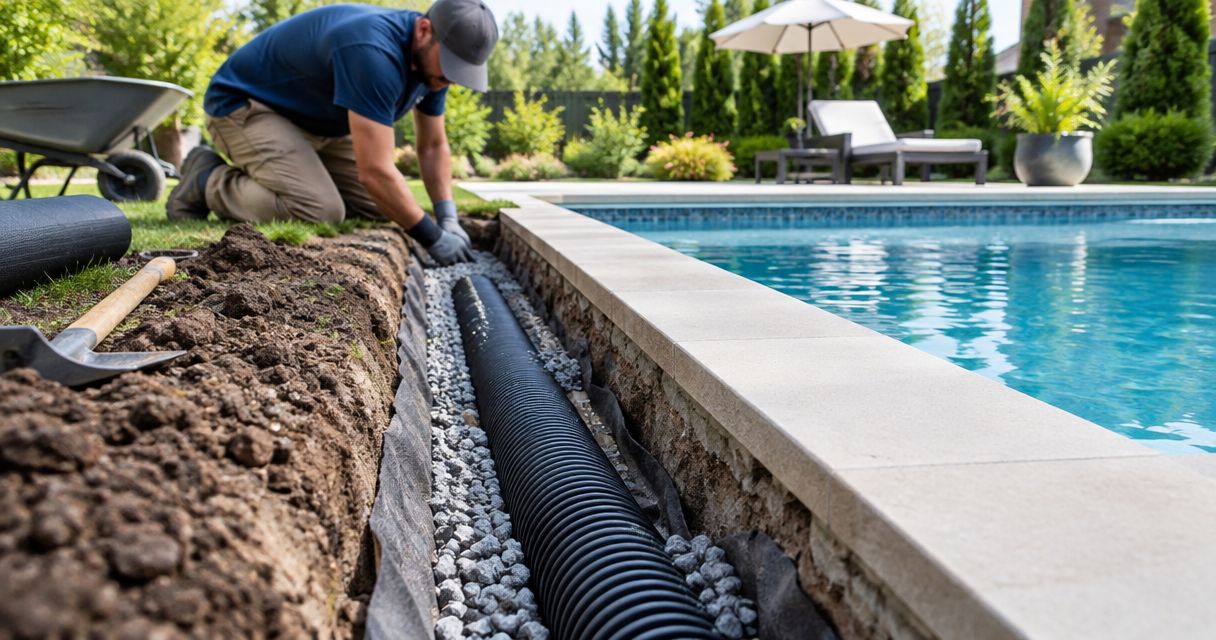
New landscaping deserves attention because soil, edging, paving, and planting beds affect where water travels. A damp area does not automatically call for a French drain. Surface grading, roof runoff, irrigation, subsurface water, and plumbing require different investigations.
Drainage work and foundation repair can belong in the same plan, but they answer different questions. Drainage addresses water movement; structural repair addresses an identified foundation problem. Neither should be sold as an automatic substitute for the other.
- Photograph where water collects and where it leaves the property.
- Check downspout discharge points from ground level.
- Record sprinkler overspray and persistent wet spots.
- Keep soil and mulch from covering required foundation clearances.
- Ask how proposed drainage work will discharge without creating another problem.
Compare written scopes
Compare 2 written scopes when you need another view of proposed work. This is a practical comparison exercise, not a rule that the lower bid wins. Different recommendations are useful only when each contractor explains the diagnosis and intended result.
A useful 2026 estimate separates structural work, drainage work, concrete work, and cosmetic restoration. It identifies what is included and what remains your responsibility. Ask whether landscaping, access, utilities, engineering, permits, or plumbing evaluation affect the scope rather than assuming they are included.
Crisscrossco offers foundation repair, drainage, and concrete services, but the presence of several services does not establish which ones your home needs. Approve the work supported by the assessment, not every service available.
- Compare the explanation of the cause before comparing repair methods.
- Request a written description of work locations and access needs.
- Identify exclusions and homeowner responsibilities.
- Ask who handles any required permits or engineering documents.
- Clarify how changes to the scope will be authorized.
Record the work
Before work starts, photograph the affected areas and agree on how completion will be documented. Ask what the contractor intends to correct and how that result will be evaluated. Avoid treating the disappearance of a drywall crack as proof that an underlying structural issue has been resolved.
After the work, retain the signed scope, approved changes, completion records, and any measurements or engineering documents provided. Ask when cosmetic repairs should occur and what observations should trigger another assessment. Do not invent your own watering schedule or monitoring deadline from general online advice.
Keep your 2026 repair file with the home’s ownership records. Future contractors, inspectors, and buyers need to understand what was observed and what was done, rather than reconstructing the history from patched finishes.
- Save before-and-after photographs from matching viewpoints.
- Retain the final scope and approved changes.
- Request any completion measurements included in the agreement.
- Record written maintenance and follow-up instructions.
- Keep builder correspondence separate but in the same property file.
The sequence is simple: preserve evidence, check your obligations, establish the cause, then approve and document the work. Skipping the assessment makes every later decision harder.
Choose the right next step
The best option depends on the question you need answered. Builder communication addresses your agreement, engineering addresses structural questions, and contracting addresses defined work. These paths can run alongside one another without serving the same purpose.
| Option | Best for | Main benefit | Key limitation |
|---|---|---|---|
| Homeowner documentation | Recording visible changes | Preserves dates, locations, and photographs | Does not diagnose structural problems |
| Builder notification | Following the home’s applicable notice process | Creates a written record with the builder | Coverage and response depend on the agreement |
| Independent structural engineering assessment | Resolving structural questions or conflicting diagnoses | Provides an opinion within the agreed engineering scope | Does not itself complete repairs or decide warranty coverage |
| Foundation repair contractor assessment | Developing a repair scope for an identified concern | Connects observations to proposed construction work | A proposal is not automatically an independent engineering opinion |
| Drainage assessment | Investigating ponding or water discharge near the house | Identifies water-management work to consider | Does not establish that structural repairs are unnecessary |
If you want to discuss foundation, drainage, or concrete concerns at your DFW home, request a free on-site estimate from Crisscrossco. Bring the builder’s response and your photographs so the conversation starts with the property’s actual condition.
Schedule Your Free On-Site Estimate
Discuss foundation, drainage, and concrete concerns at your DFW home.
Avoid these new-build mistakes
Dismissing every crack as normal settling
A new home’s age does not diagnose a crack. Record its location and changes, then ask what evidence distinguishes a finish issue from movement requiring further assessment. Avoid both extremes: assuming every crack is harmless and assuming every crack requires house leveling.
Repairing before checking builder requirements
Authorizing non-emergency work without reading the agreement can complicate the record of what existed and who altered it. Preserve evidence and follow applicable notice instructions. Safety concerns still require prompt action rather than waiting for routine correspondence.
Choosing a drain before identifying the water source
A drain is not a diagnosis. Roof runoff, surface ponding, irrigation, and plumbing concerns need different responses. Ask where the water originates and where the proposed system will send it before approving excavation.
Comparing bids that describe different jobs
A structural repair proposal and a cosmetic crack repair proposal are not interchangeable. Compare the diagnosis, work locations, exclusions, and completion criteria. A shorter scope is not automatically a better solution.
FAQ
Does a crack in my new DFW house mean I need foundation repair?
A crack alone does not establish that foundation repair is needed. Document its location and changes, then get an assessment that considers the foundation, finishes, measurements, and site conditions.
Should I contact my builder before hiring a foundation contractor?
Check your builder documents and follow the applicable notice process before authorizing non-emergency repairs. You can also seek an independent assessment, but review any provisions concerning third-party work.
Is foundation repair covered by my new-home warranty?
Your actual warranty documents determine what coverage applies. Check covered conditions, exclusions, notice deadlines, and procedures rather than assuming that a new home automatically qualifies.
Do I need a structural engineer or a repair contractor?
Use a structural engineer for an independent opinion on structural questions and a contractor for a proposed construction scope. Ask whether engineering review is needed when diagnoses conflict or structural changes are proposed.
Can drainage work fix a foundation problem without leveling the house?
Drainage work addresses water movement, not every cause of foundation distress. An assessment must determine whether water management alone is appropriate or whether structural repairs are also needed.
Can I patch drywall cracks while waiting for an assessment?
Document cracks before patching them and ask whether the assessor needs to see them unchanged. Cosmetic repairs do not establish that the cause has been corrected.
How do I get a foundation repair estimate in DFW?
Request a free on-site estimate from Crisscrossco for foundation, drainage, or concrete concerns. Prepare dated photographs, inspection records, and builder correspondence before the visit.
One last thing
Your pre-closing photographs can be more useful than another close-up taken today. They help establish whether a visible condition existed before move-in. Save the original files, not just screenshots, and keep them with your inspection and repair records.