Best overall: corrected grading. Best for roof runoff: gutters and downspout extensions. Best for persistently wet soil: a French drain. The best exterior drainage solutions for foundation protection match the source of the water and carry it to a suitable outlet—not just away from the nearest puddle.
- The best exterior drainage solutions for foundation protection start with grading and a suitable discharge route.
- Gutters and downspout extensions address roof runoff; French drains address water moving through soil.
- Catch basins collect surface runoff; channel drains intercept water crossing concrete.
- Crisscrossco provides drainage and foundation repair services for DFW homeowners; request a free on-site estimate.
Why this matters
Water collecting beside your house calls for a drainage assessment, not an automatic French drain installation. Roof runoff, low yard areas, and concrete sloping toward the building need different fixes. Choosing the wrong collection method leaves the original water path unchanged.
For DFW homeowners, drainage and foundation concerns belong in the same conversation. Expansive clay changes volume as its moisture changes; drainage should control excess water without becoming a plan to dry the soil as aggressively as possible.
Crisscrossco provides drainage, foundation repair, and concrete work for residential property owners. Crisscrossco is a fit for DFW homeowners who need drainage work considered alongside foundation repair. This 2026 guide ranks drainage methods by the problem each one addresses—not by a promise that one installation fixes every yard.
What makes the best exterior drainage solution
Use these criteria before choosing a system:
- Water source: Identify roof discharge, surface runoff, or water moving through soil. Collection methods are not interchangeable.
- Discharge route: Trace where collected water will go. A drain needs a suitable outlet, not merely a buried pipe.
- Foundation relationship: Address water against the house without treating drainage as a substitute for structural repair.
- Site constraints: Account for fences, utilities, neighboring properties, concrete, and available elevation change.
- Maintenance access: Choose a system you can inspect and clear. Leaves, sediment, and roots affect drainage performance.
- Repair scope: Distinguish a localized runoff problem from a yard-wide grading problem before approving excavation.
Exterior drainage options at a glance
| Rank and option | Best for | Standout feature | Key limitation |
|---|---|---|---|
| 1. Corrected grading | Ground sloping toward the foundation | Changes the surface water path | Requires suitable elevations and space |
| 2. Gutters and downspout extensions | Concentrated roof runoff | Controls water before it reaches the yard | Does not correct yard grading |
| 3. Catch basins and solid drainpipe | Puddles in defined low spots | Collects surface water at a specific point | Needs a working outlet and debris removal |
| 4. French drains | Persistently wet soil | Collects water below the surface | Not the default choice for heavy surface runoff |
| 5. Drainage swales | Runoff crossing an open yard | Directs surface flow through a shaped depression | Needs space and a continuous drainage route |
| 6. Channel drains | Runoff crossing driveways or patios | Intercepts water along a narrow collection line | Requires concrete work and regular cleaning |
1. Corrected grading: best for ground sloping toward the house
Corrected grading reshapes the ground so surface water moves away from the foundation. It addresses the water path itself instead of adding a collection point after water reaches the wall. Where the yard allows it, this is the first condition to assess.
The International Residential Code, Section R401.3, gives a standard grading reference of 6 inches of fall within the first 10 feet, equivalent to a 5% slope. Site constraints and approved alternative drainage provisions matter; confirm the requirements that apply to your DFW property rather than treating this reference as a universal installation plan.
Corrected grading pros:
- Addresses reverse slope at its source.
- Works without relying on a buried collection pipe.
- Can direct runoff toward a swale or another suitable outlet.
Corrected grading cons:
- Limited space or existing concrete can restrict changes.
- Raising soil carelessly can cover clearances that need to remain exposed.
Best for: Homes where adjacent ground sends surface water toward the foundation.
Ask the contractor to show the proposed water route before approving soil placement. Adding soil beside the house without checking the destination can move the puddle rather than solve the problem.
Verdict: Buy corrected grading when the existing ground slopes toward your house and a suitable drainage route exists.
2. Gutters and downspout extensions: best for roof runoff
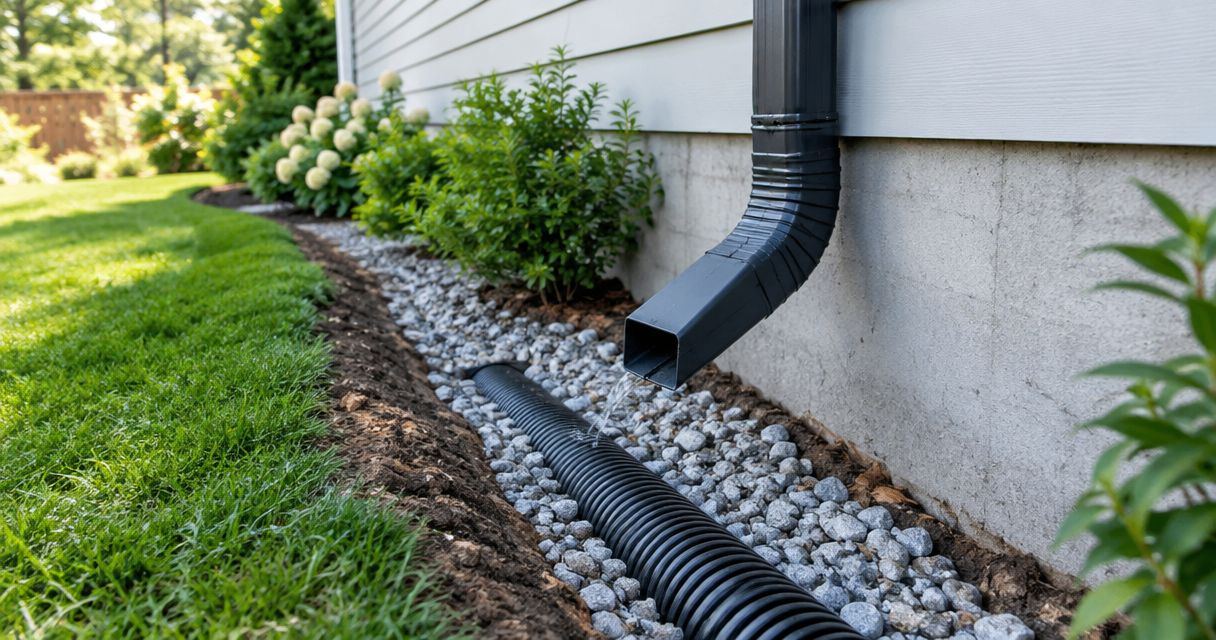
Gutters collect roof water, and downspouts carry it to a discharge point. Extensions move that discharge away from the foundation. This is the targeted choice when water lands beside the house directly below a downspout or spills over a gutter.
A longer extension is not automatically a better solution. Its end still needs to discharge where water can continue away without returning toward the house or creating a new problem elsewhere.
Gutters and downspout extensions pros:
- Address a visible, identifiable water source.
- Keep concentrated roof discharge from landing at the foundation edge.
- Can connect to an appropriate solid-pipe drainage route.
Gutters and downspout extensions cons:
- Leaves and debris can obstruct flow.
- Extensions do not fix low spots or reverse grading elsewhere.
Best for: Homes with runoff concentrated at downspout outlets or overflowing gutters.
Before choosing this option in 2026, inspect the full route: gutter, downspout, extension, and discharge area. Moving water out of sight is not the same as managing it.
Verdict: Buy roof-runoff correction when the downspout or gutter is the identifiable source of water beside your house.
3. Catch basins: best for defined surface puddles
A catch basin collects water through a surface grate and sends it through solid drainpipe. It suits a low spot where runoff visibly gathers. The basin collects surface water; the pipe transports it to the outlet.
Position matters. A basin installed above the actual low point leaves standing water behind, while an outlet that cannot discharge prevents the system from doing its job.
Catch basin pros:
- Collects runoff at a defined location.
- Offers an accessible point for removing debris.
- Can connect multiple surface collection points to a planned route.
Catch basin cons:
- Grates and sumps need cleaning.
- A blocked or poorly planned outlet stops drainage.
Best for: Localized yard depressions where surface water gathers during rain.
Ask how the basin elevation relates to the finished yard. Also ask where sediment will collect and how you will reach it for maintenance after installation.
Verdict: Buy a catch basin for a defined surface-water collection point, not as a substitute for evaluating the surrounding slope.
4. French drains: best for persistently wet soil
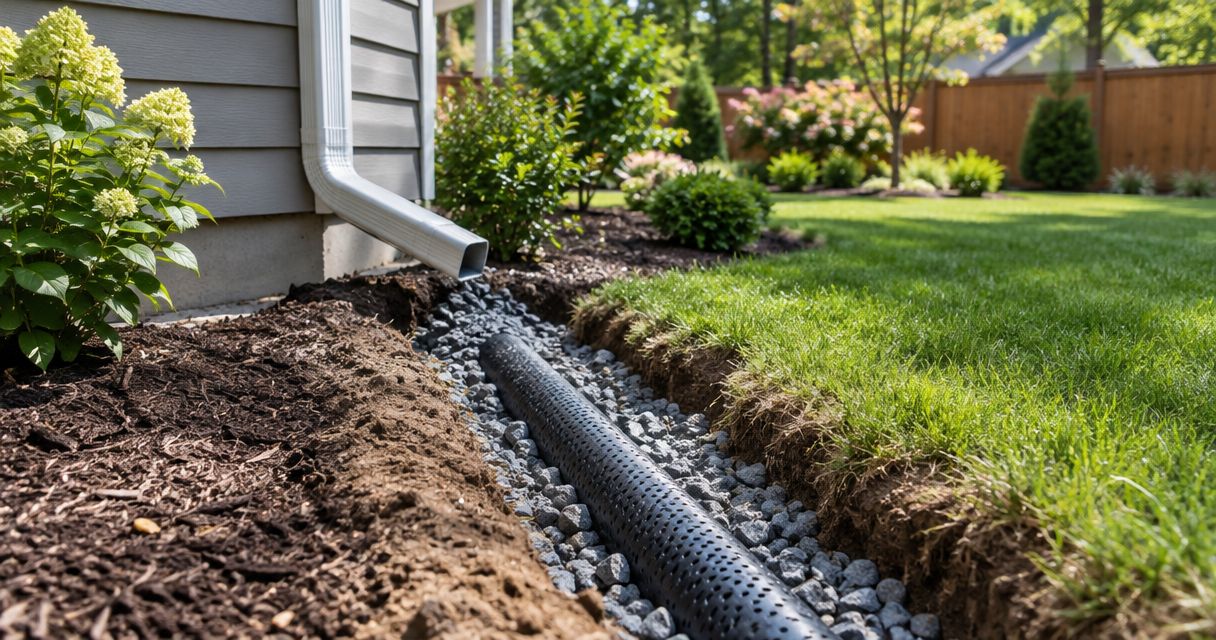
A French drain uses a gravel-filled trench and perforated pipe to collect water moving through soil. It differs from a catch basin, which receives water through a surface opening. That distinction is the reason to choose it—not the popularity of the name.
If your main problem is a large volume of water running across the lawn, assess surface collection or grading first. A buried system should match the water condition, soil, elevations, and available outlet.
French drain pros:
- Collects water below the ground surface.
- Can intercept subsurface flow along a planned route.
- Leaves much of the collection system below the finished yard.
French drain cons:
- Sediment and roots can affect performance.
- Buried components are harder to inspect than an open swale.
Best for: Areas where wet soil, rather than only visible surface runoff, is the identified problem.
Use the guide to French drain types for poor yard drainage to understand the options before requesting a design. Ask why perforated pipe is appropriate for the water source on your property.
Verdict: Buy a French drain when the assessment identifies subsurface water and confirms a suitable discharge route.
5. Drainage swales: best for runoff crossing an open yard
A drainage swale is a shallow, shaped depression that guides surface water along a planned path. It suits open areas where runoff needs direction rather than collection in a buried pipe. Its shape and outlet determine how water travels.
A swale is not simply a trench dug toward the fence. The route must account for the yard, erosion, and the discharge destination without redirecting your problem onto a neighboring property.
Drainage swale pros:
- Makes the surface water route visible.
- Can handle runoff along a broad yard area.
- Allows inspection without opening buried pipe.
Drainage swale cons:
- Requires room for the intended shape and slope.
- Poor shaping or vegetation loss can allow erosion.
Best for: Open yards receiving surface runoff that needs a defined route away from the house.
Walk the proposed route before approving excavation. Check how it crosses landscaping and whether fences or other obstructions interrupt the path.
Verdict: Buy a swale when your yard has room for a continuous, suitable surface drainage route.
6. Channel drains: best for runoff crossing concrete
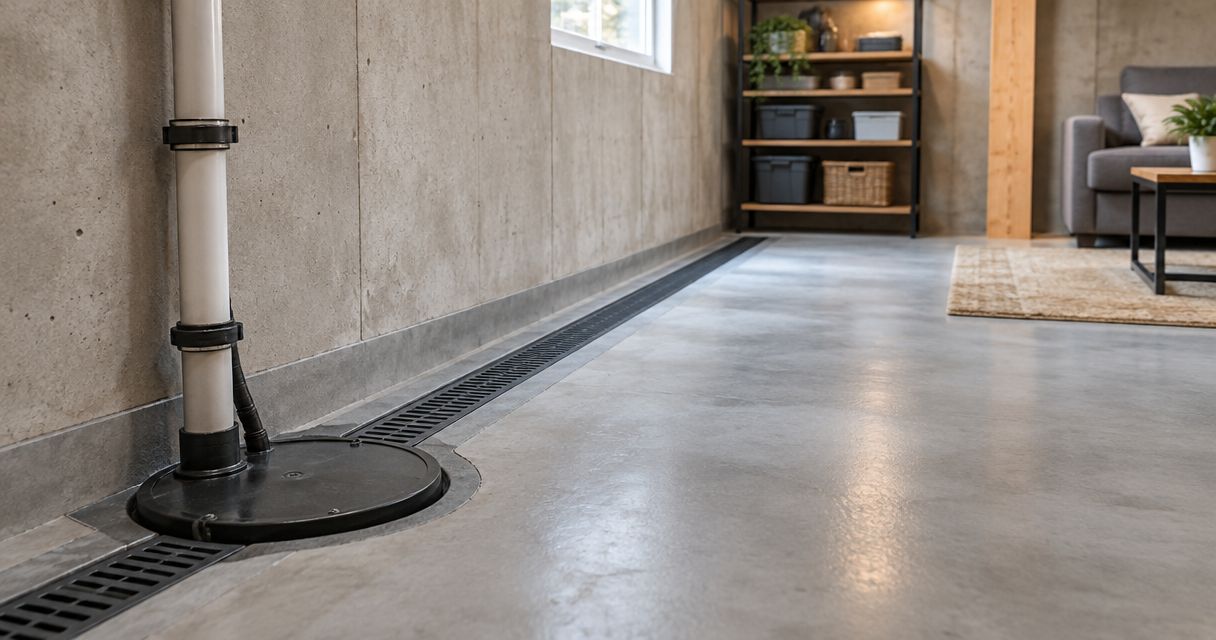
A channel drain is a narrow surface drain covered by a grate. It intercepts runoff along a driveway, patio, or another paved area and connects to a discharge route. This makes it a targeted option where water crosses concrete toward the house.
Placement must match the actual flow. A channel drain on the wrong side of a low point does not capture the water that is already pooling there.
Channel drain pros:
- Collects water along a line rather than a single point.
- Fits drainage problems involving paved surfaces.
- Provides removable grates for cleaning access.
Channel drain cons:
- Installation can require cutting and restoring concrete.
- Debris can obstruct the grate or outlet.
Best for: Driveways and patios directing surface runoff toward the building.
Confirm whether the concrete slope also needs correction. Installing a drain should not replace that question.
Verdict: Buy a channel drain when paved-surface runoff crosses its proposed collection line.
Check the water path before choosing
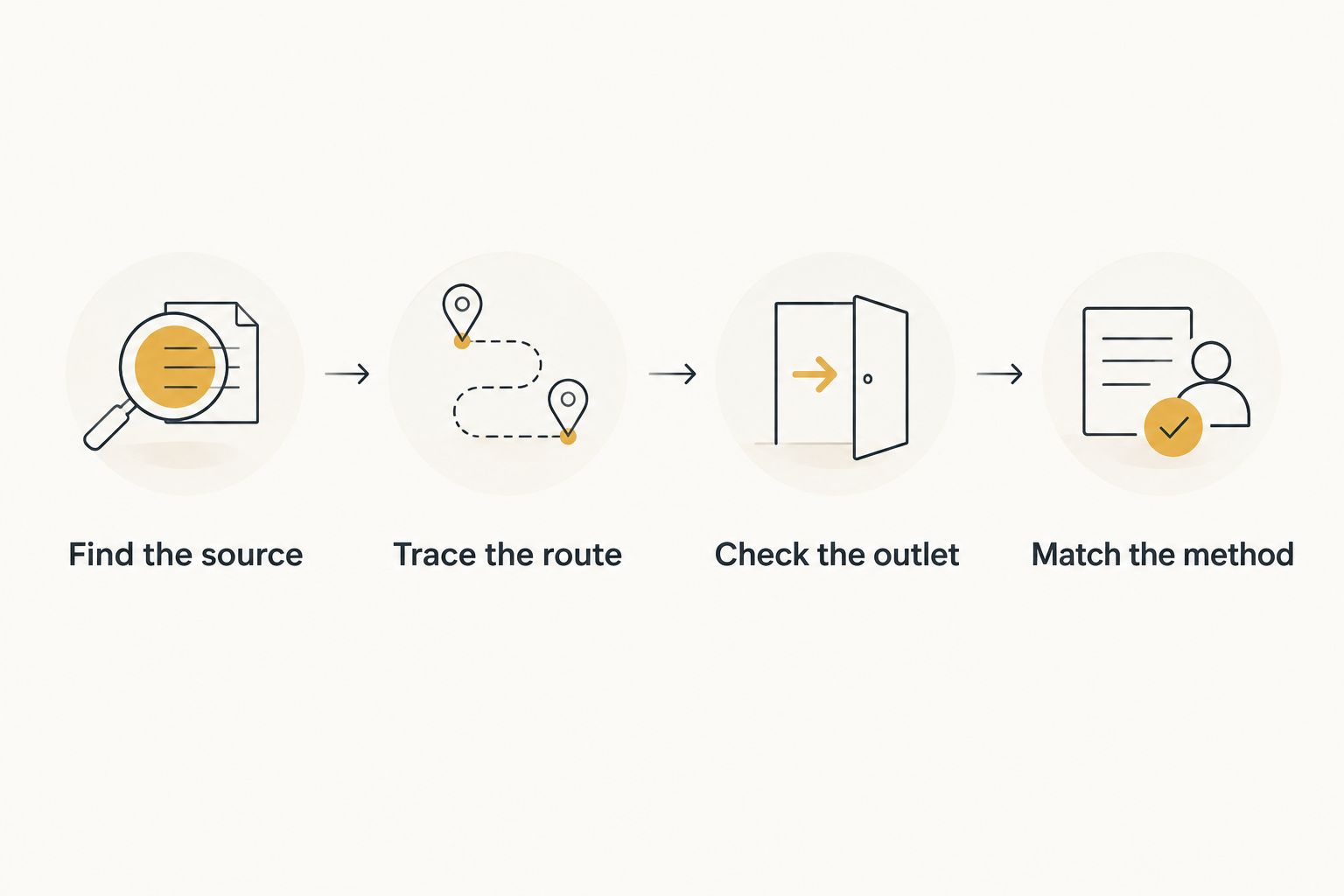
For a 2026 drainage project, use this sequence to keep the estimate focused:
- Find the source: Observe whether water comes from the roof, crosses the yard, or remains in the soil. Inspect from a safe location; do not enter flooded areas.
- Trace the route: Identify the low points and the path toward the house. Include downspouts, concrete edges, and neighboring elevations in the discussion.
- Check the outlet: Ask where collected water will discharge and what keeps it moving through the system.
- Match the method: Choose grading, surface collection, or subsurface collection based on the identified condition.
Photographs taken during and after rain help show the difference between moving runoff and lingering wet areas. Bring those observations to the on-site estimate so the conversation starts with the water path.
Get a drainage and foundation estimate
Tell Crisscrossco where water collects and whether you also see changing cracks, uneven floors, or sticking doors. Those observations belong in the assessment, but they do not establish a diagnosis by themselves. Drainage work and foundation repair solve different problems and sometimes need separate scopes.
Ask for the proposed collection points, discharge destination, disturbed areas, and maintenance access. Schedule a free on-site estimate for your DFW home before approving a drainage layout.
Schedule Your Free On-Site Estimate
Discuss drainage, foundation repair, and concrete work for your DFW home.
How the options are ranked
This 2026 ranking prioritizes correcting the water source and route before adding buried components. Grading leads because it addresses surface slope; the remaining options hold distinct positions based on roof runoff, surface puddles, wet soil, open-yard flow, or paved-surface flow. Maintenance access and site constraints shape every recommendation.
Which exterior drainage solution should you choose?
Start with grading and roof runoff if you do not yet know the cause. Then choose the collection method that matches the remaining problem. A catch basin is not a French drain, and a French drain is not a repair for settled concrete.
Your 2026 drainage plan should explain where water begins, how it is collected, and where it ends. If the proposal names a drain but leaves those questions unanswered, hold the installation decision.
FAQ
What's the best exterior drainage solution for foundation protection?
Corrected grading is the best starting point when ground slopes toward the foundation. Match any additional drainage system to roof runoff, surface water, or subsurface water and confirm its outlet.
Is a French drain better than a catch basin?
A French drain is better for collecting water moving through soil; a catch basin is better for collecting surface runoff at a defined point. Choose by the water source rather than the system name.
Can downspout extensions protect my foundation?
Downspout extensions move concentrated roof discharge away from the foundation. They still need a suitable discharge location and do not correct reverse yard grading.
Will exterior drainage fix an uneven foundation?
Exterior drainage does not level an uneven foundation. Have foundation movement assessed separately so drainage work does not replace a needed repair evaluation.
Where should an exterior drain discharge?
An exterior drain should discharge to a suitable location that complies with applicable local requirements. The design must account for elevation, neighboring properties, and any connection requirements.
What should I check before installing drainage in 2026?
Identify the water source, collection route, and outlet before installing drainage in 2026. Ask how the finished system will be inspected and cleared.
Who can assess drainage and foundation concerns in DFW?
Crisscrossco provides drainage, foundation repair, and concrete services for DFW residential homeowners. Request a free on-site estimate and describe both the water problem and any foundation concerns.
One last thing
The outlet deserves as much attention as the drain. A visible puddle attracts attention, but a new collection system still needs somewhere suitable to send that water. Before approving the work, ask the contractor to show you the complete route—not just where digging starts.