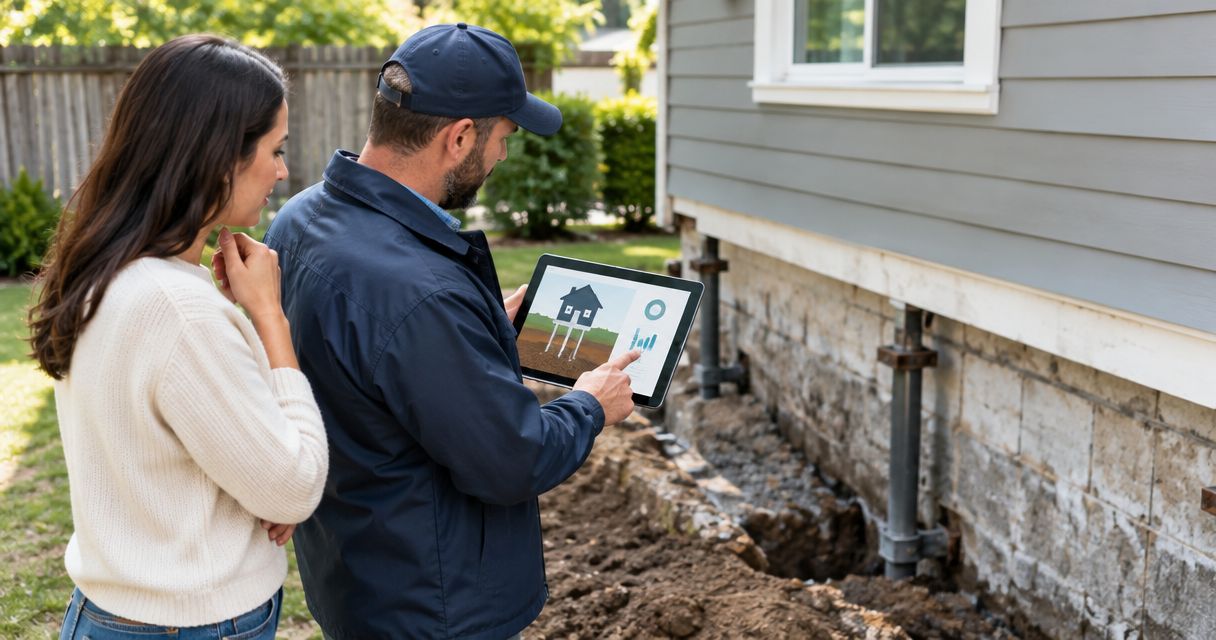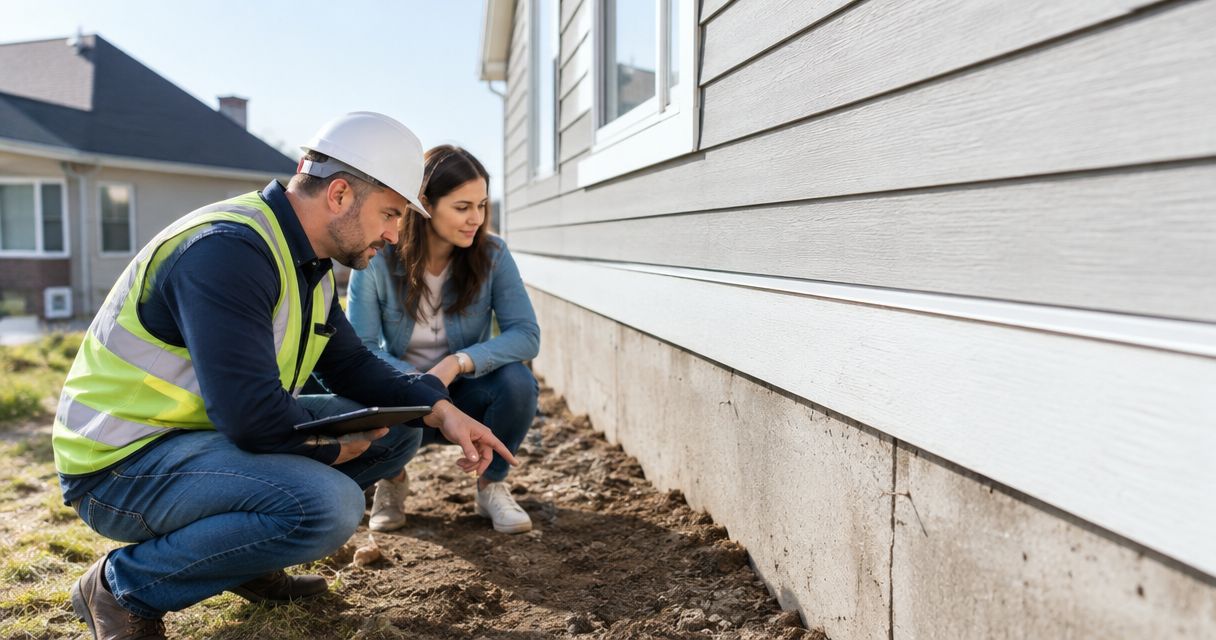
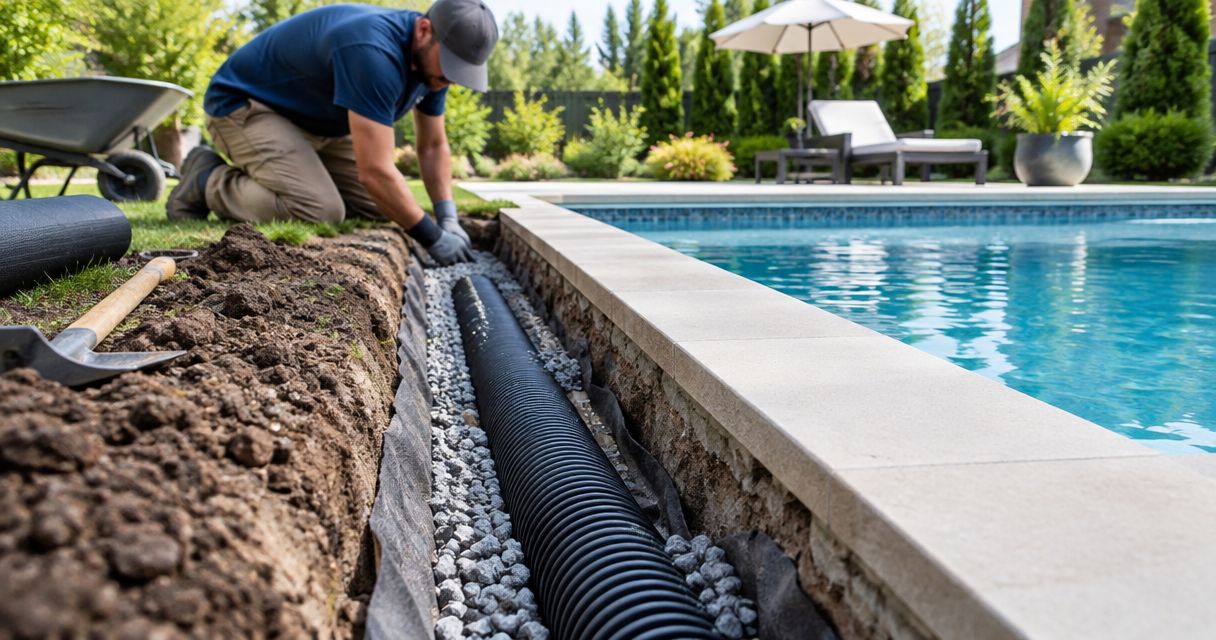
Pool owners’ French drain installation is the placement of a gravel-filled, perforated-pipe trench to collect subsurface water and carry it to a suitable outlet, with the aim of reducing persistent wet ground around the pool. This 2026 guide helps Dallas–Fort Worth homeowners distinguish saturated soil from surface runoff, protect buried pool equipment, and plan drainage without redirecting water toward the house.
- French drain installation for pool owners addresses saturated soil; surface runoff often needs a different collection method.
- DFW homeowners should identify pool plumbing, buried utilities, and a suitable outlet before approving excavation.
- Crisscrossco offers drainage, foundation repair, and concrete services for residential homeowners.
- Choose the drainage method after identifying the water source, ground elevations, and discharge restrictions.
Why drainage matters for pool owners
A pool area combines several surfaces and buried systems in a confined space: decking, planting beds, pool plumbing, electrical lines, and the nearby house. A trench that ignores those constraints creates a new problem instead of addressing the original one.
A French drain collects water within the ground; it is not a substitute for collecting water running across the deck. Identify which condition you have before choosing materials. The guide to French drain installation methods provides a comparison of installation approaches.
For your 2026 drainage project, start with where water comes from and where it can safely go. A convenient trench location is not enough. The discharge route must work without sending runoff toward your foundation, neighboring property, or the pool itself.
Plan the work before digging
Identify the water source
Start with a manual inspection during or immediately after rain, viewed from a safe location. Record 3 observations: where water first appears, which direction it travels, and where it remains after surrounding surfaces dry. These observations help separate incoming runoff from persistent soil saturation.
Water beside a pool does not automatically mean a drainage trench is needed. Suspected pool leaks or irrigation leaks require investigation before excavation. A yard drain does not repair a leaking pipe.
- Photograph wet areas from the same viewpoints after rainfall.
- Check downspout outlets and irrigation near the pool.
- Note whether water crosses the deck or rises through adjoining soil.
- Record unexplained pool-water loss separately from rain-related ponding.
- Have suspected pool-plumbing leaks assessed before designing drainage.
Separate deck runoff from saturated soil
Walk the pool perimeter and distinguish 2 water paths: water moving over hard surfaces and water moving through soil. Surface runoff needs an accessible collection point. A French drain is intended to intercept water within the ground.
A deck puddle also deserves a surface-elevation check. Installing a buried drain beside concrete does not change the concrete’s slope or remove a depression in the deck. Keep those repair decisions separate.
- Mark deck puddles on a simple sketch.
- Mark soft or persistently wet planting beds separately.
- Identify roof runoff entering the pool enclosure.
- Check whether existing drain grates are blocked.
- Record visible deck movement or gaps for assessment.
Get a site-specific drainage assessment
Bring your photographs and sketch to an on-site assessment. The manual preparation keeps the discussion focused; a contractor can then evaluate the route, elevations, access, and work near existing structures rather than starting from a verbal description alone.
Crisscrossco is a fit for DFW homeowners seeking drainage services alongside foundation repair and concrete work. You can request a free on-site estimate through Crisscrossco. Explain whether the concern involves the yard, pool deck, house foundation, or several areas.
The benefit of that service mix is a discussion covering related construction concerns. Its limit is equally important: drainage work does not itself establish whether pool plumbing leaks or whether a pool structure needs repair.
- Share dated photos and the locations of recurring wet spots.
- Ask how the proposed system matches the observed water source.
- Request an explanation of the collection area and outlet.
- Identify concerns requiring separate pool or structural assessment.
- Ask what surface restoration the proposed work includes.
Map the route and outlet
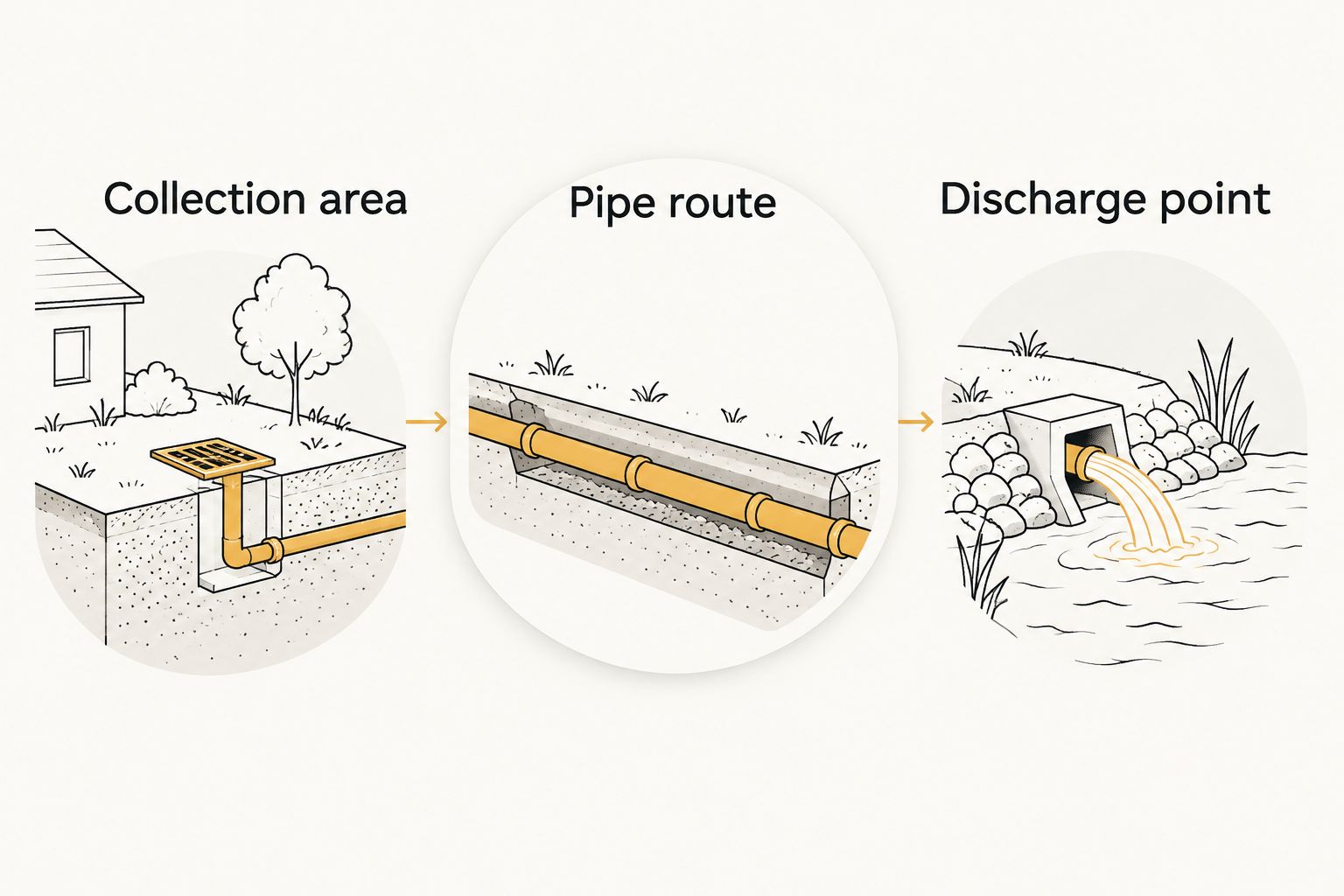
Draw the proposed system before accepting excavation. A useful plan identifies the collection area, pipe route, and discharge point. The outlet deserves as much attention as the wet spot: a drain cannot function as intended if collected water has nowhere suitable to go.
For a 2026 project, ask the contractor to check the current requirements of your DFW municipality and any applicable property restrictions. Do not assume a curb, storm inlet, sanitary sewer, or neighboring lot is an acceptable discharge destination.
The route also needs to preserve access around the pool. Ask how the work will avoid creating an obstacle beside gates, equipment, and walking areas, and how future maintenance access will be retained.
- Collection area: identify where groundwater enters the system.
- Pipe route: show the path around structures and buried equipment.
- Discharge point: verify a suitable, permitted destination.
- Access points: identify locations needed for inspection or cleaning.
- Restoration area: show disturbed decking, soil, and landscaping.
Protect pool systems before excavation
Contact 811 before digging and follow the applicable utility-location process. Public utility marking does not identify every privately owned line. Pool circulation pipes, irrigation, and privately installed electrical lines need separate attention.
Do not choose a universal trench depth or distance from the pool based on a generic diagram. Excavation near a pool shell, deck support, retaining wall, or house foundation requires a site-specific approach. Keep the work outside any area that requires specialist assessment until that assessment is complete.
- Gather available pool, irrigation, and electrical plans.
- Arrange identification of private lines within the work area.
- Confirm equipment access without damaging the pool enclosure.
- Ask how nearby structures and exposed services will be protected.
- Establish a secure barrier between the pool and excavation.
Confirm construction details and test the system
Review the written scope before work starts. It should explain the collection method, pipe arrangement, aggregate, soil separation, outlet, and restoration. Pipe diameter, trench dimensions, and slope belong in a site-specific design—not in a one-size-fits-all shopping list.
Before the trench is covered, ask to see the route and outlet. A controlled water check helps verify that water travels through the intended path, but it does not reproduce every rainfall condition. Keep photographs of the completed system before burial.
- Confirm which pipe sections collect water and which carry it away.
- Check that specified aggregate and filter materials match the scope.
- Verify the outlet remains accessible and unobstructed.
- Observe a controlled flow check before final covering.
- Save photographs and a route sketch for future work.
- Review soil, planting, and concrete restoration before sign-off.
Compare drainage options around your pool
Choose the collection method by the water problem, not by the drain name. For your 2026 comparison, require each proposal to explain what it collects, where it discharges, and what it leaves unresolved.
| Option | Best for | Key limitation |
|---|---|---|
| French drain | Persistently saturated soil beside the pool area | Does not directly collect deck runoff without suitable surface inlets |
| Channel drain | Surface water crossing a defined deck edge or low line | Requires a suitable outlet and work within the hard surface |
| Catch basin with solid outlet pipe | Surface runoff concentrating at a specific low point | Collects water at the inlet, not throughout surrounding soil |
| Regrading or a shallow swale | Redirecting overland runoff before it reaches the pool | Requires enough space and workable elevations |
| Combined drainage approach | Separate surface-runoff and saturated-soil problems | Adds components and maintenance responsibilities |
A French drain’s advantage is collection along a buried trench. Its limitation is that water must reach that trench through the surrounding ground. A surface inlet collects runoff directly, but leaves groundwater elsewhere untreated.
Regrading addresses the water’s path rather than relying only on pipes. Its limitation is the available space between the pool, house, boundaries, and existing surfaces. A combined approach is appropriate only when the site assessment identifies distinct problems that justify separate components.
Ask Crisscrossco to explain the proposed drainage approach in those terms. A useful estimate connects each component to an observed condition rather than offering more trench as the default answer.
Schedule your free on-site estimate
Discuss drainage around your DFW pool, nearby concrete, and house foundation.
Avoid these pool-owner mistakes
Treating every puddle as groundwater
A low deck surface and saturated soil are different problems. Identify which one is present before approving a French drain; otherwise, the wet area can remain even after a correctly installed trench.
Choosing the shortest route without checking the outlet
The shortest trench is not automatically the right route. Confirm the discharge destination and elevations first, then compare routes that meet those requirements without shifting water onto someone else’s property.
Assuming utility markings include pool equipment
Pool plumbing and other private services need their own location process. Do not let excavation begin merely because public utility markings are visible in the yard.
Using a drain to cover up a suspected leak
A drainage system can carry leaking water away while leaving the source unresolved. Investigate unexplained pool-water loss, persistent wetness without rain, or suspected irrigation faults before treating the area as a rainfall problem.
Ignoring the house side of the project
Water redirected away from the pool must not create a new wet area beside the house. Review the whole route, including nearby foundation concerns, rather than judging success only by a drier pool perimeter.
Keep the drainage system accessible
Add the new system to your 2026 property-maintenance record. Save the route sketch with your pool documents so future fence, landscape, or concrete work does not damage buried drainage.
Inspect accessible inlets and outlets after rainfall and remove visible debris without entering unsafe areas. If ponding returns, check for an obstructed outlet or changed runoff pattern before assuming the entire system needs replacement.
- Keep planting material, mulch, and leaves away from surface inlets.
- Avoid covering inspection points during landscape changes.
- Photograph recurring problems from the original observation points.
- Record changes to irrigation, downspouts, and nearby hard surfaces.
FAQ
Is a French drain the best choice for water around my pool?
A French drain fits persistent soil saturation when a suitable collection route and outlet are available. Water running across the pool deck often needs a surface inlet or a change to the surface drainage path instead.
Can I install a French drain next to my pool myself?
Excavation beside a pool requires utility identification and a site-specific route before work begins. Pool plumbing, private electrical lines, and nearby structural support make a generic trench plan unsuitable for this setting.
How deep should a French drain around a pool be?
The depth must follow the site’s collection needs, elevations, and excavation constraints. Do not select a standard depth without checking pool services, nearby structures, and the discharge route.
Will a French drain stop puddles on my pool deck?
A French drain does not change the slope or depressions in a concrete deck. Surface puddles require assessment of the deck and its surface-water collection points.
Where should a pool-area French drain discharge?
It should discharge to a suitable destination allowed by applicable local requirements and property restrictions. Do not assume the pool, street, sanitary sewer, or neighboring property is an acceptable outlet.
Does drainage around the pool also protect my house foundation?
A drainage plan should account for both the pool area and the house foundation. Moving water away from the pool is not enough if the proposed outlet or route concentrates it beside the house.
Who can assess drainage around my DFW pool?
Crisscrossco provides residential drainage, foundation repair, and concrete services in DFW and offers free on-site estimates. Ask for an assessment that identifies the water source, proposed collection method, and discharge route; suspected pool leaks need separate investigation.
One last thing
A drain can remove water without fixing its source. Before approving your 2026 installation, ask the contractor to point out where the water originates and why the proposed system addresses it. If the answer only describes the trench, request an explanation of the water source and outlet before scheduling work.