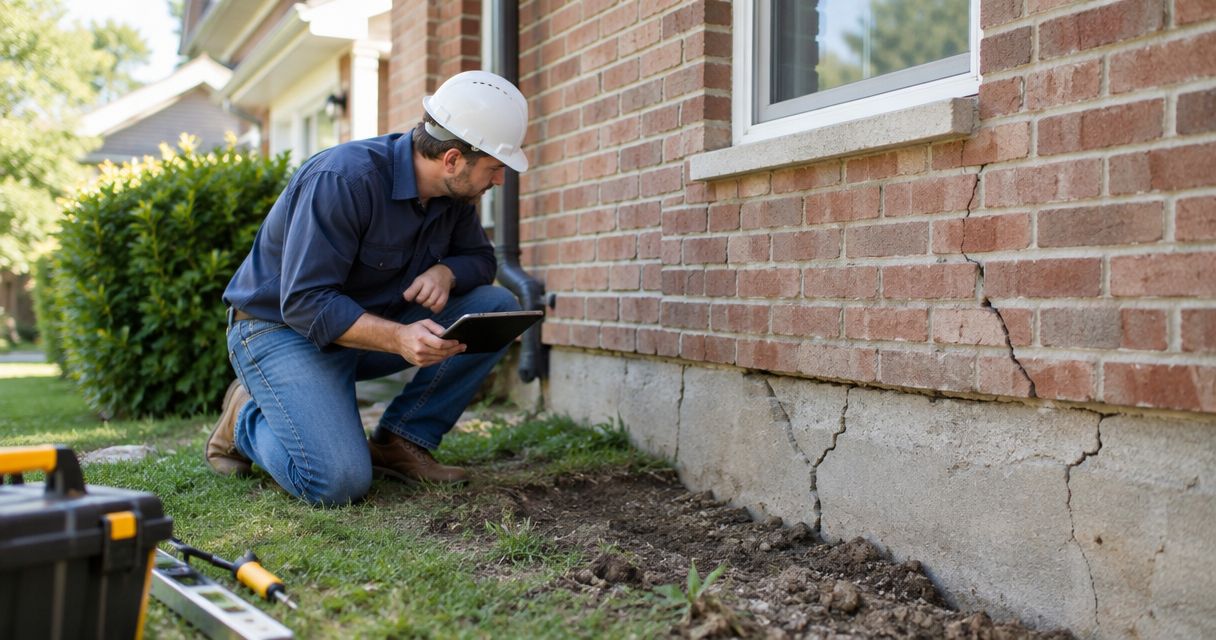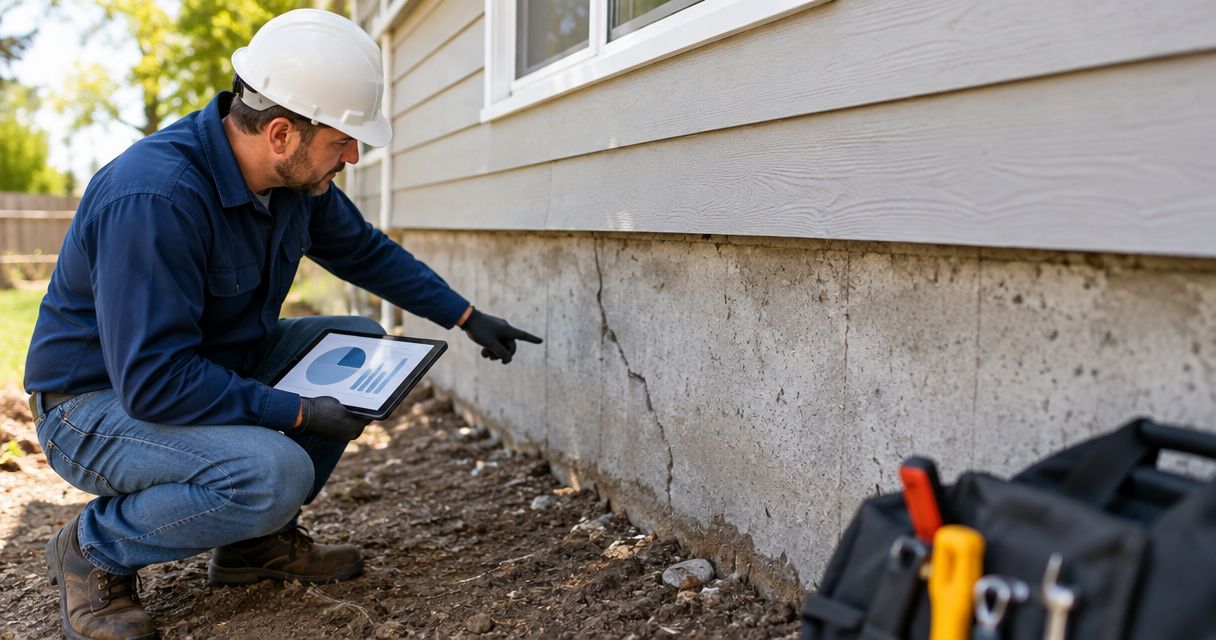
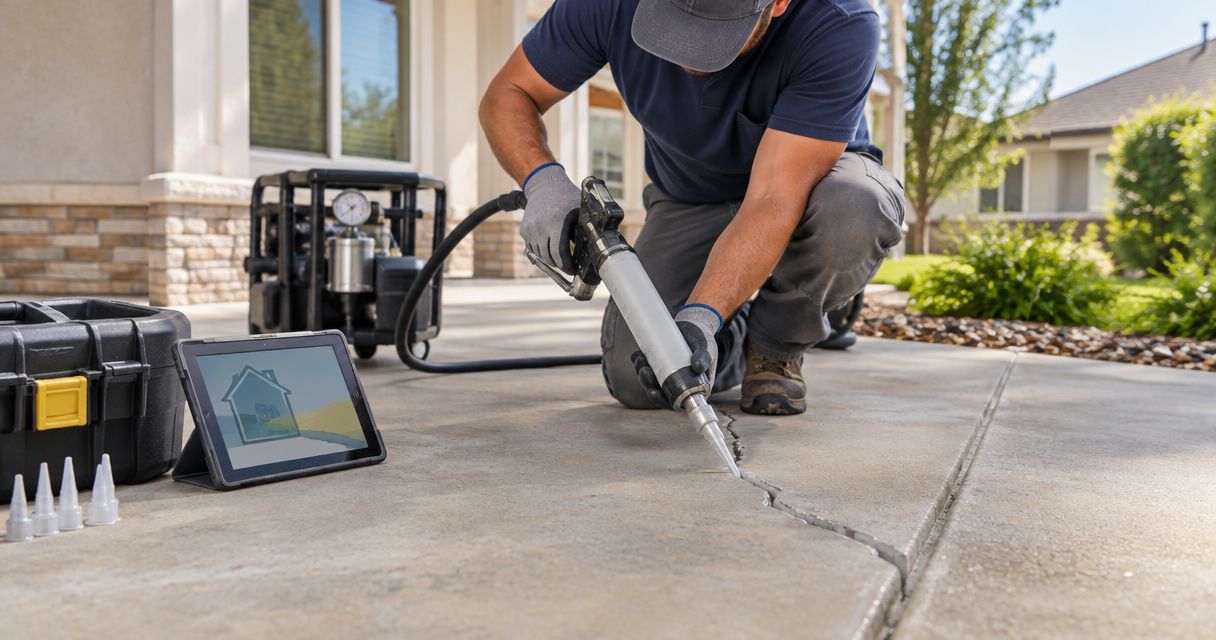
Best overall for confirmed structural settlement: engineered pier underpinning. Best for localized slab lifting: polyurethane injection. Best for minor, nonmoving cracks: crack repair. The best slab foundation repair methods in 2026 match the failure mechanism; no single repair fixes structural settlement, an unsupported floor slab, and water entering through a crack.
- The best slab foundation repair methods address the cause, not just the visible crack.
- Engineered pier underpinning suits structural settlement when the foundation needs support below unstable soil.
- Polyurethane injection and cementitious grouting address suitable slab voids; neither automatically repairs the building’s foundation.
- Crisscrossco provides foundation repair, drainage and waterproofing solutions, and concrete work for residential property owners.
Why this matters
A concrete floor and the foundation supporting your house are not always the same structural element. Lifting a sunken floor does not necessarily stabilize a settling footing or grade beam. Filling a crack does not stop soil movement.
Crisscrossco is a foundation repair provider for residential property owners who also need drainage, waterproofing, or concrete work. You can review Crisscrossco while using this guide to distinguish those repair scopes.
For a 2026 repair decision, start with the component that moved and the reason it moved. Require the proposal to explain both before comparing installation methods. A named technique is not a diagnosis.
What makes the best slab foundation repair methods
Judge every proposal against these criteria before reading its equipment list:
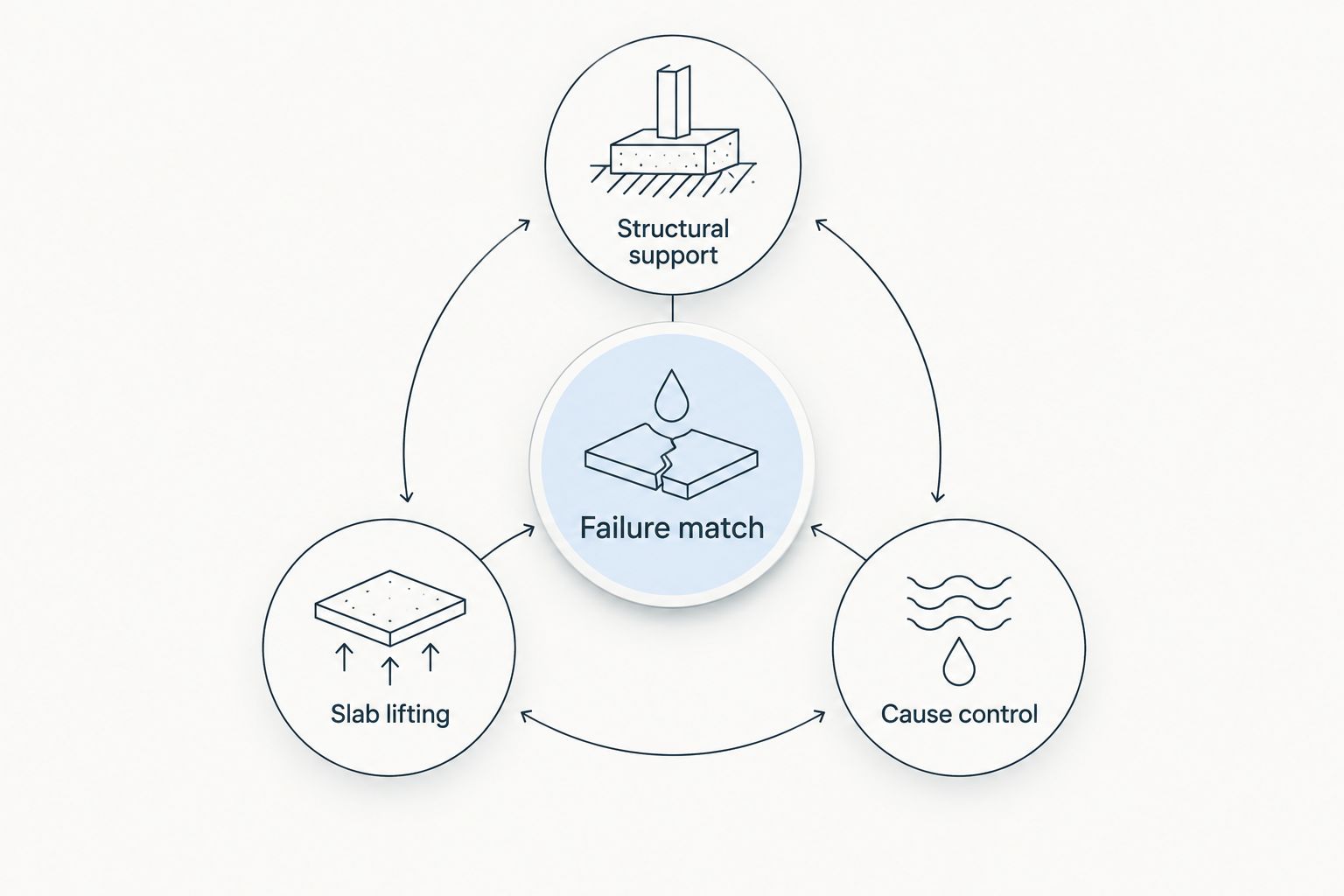
- Failure match: Does the repair address structural settlement, slab voids, cracking, or water movement?
- Load path: Does the proposal explain how the repaired component transfers its loads to adequate support?
- Cause control: Does it address contributing drainage problems, plumbing leaks, or unstable soil conditions?
- Material fit: Is the existing concrete suitable for lifting, attachment, injection, or repair?
- Verification: Does the scope define how the contractor will check support, elevation, or water control afterward?
- Access and disruption: Does the plan account for buried utilities, floor finishes, landscaping, and occupied rooms?
The best proposal explains what the chosen method cannot fix. A floor-leveling scope should not promise to resolve unrelated wall movement, and a drainage scope should not stand in for structural stabilization.
Slab foundation repair methods at a glance
The 2026 comparison below ranks methods by distinct use case, not by a universal winner. Several belong in the same repair plan when a house has more than one problem.
| Method | Best for | Standout feature | Key limitation |
|---|---|---|---|
| Engineered pier underpinning | Structural foundation settlement | Transfers supported foundation loads to a designed bearing system | Requires suitable structural connections and site-specific design |
| Polyurethane injection | Localized lifting of a suitable slab | Expanding material can fill voids and raise concrete | Does not automatically stabilize footings or grade beams |
| Cementitious grouting | Filling suitable voids beneath concrete | Pumped grout restores contact beneath the slab | Added material weight matters on weak ground |
| Crack repair | Minor cracks after movement is assessed | Treats the crack directly with a specified repair material | Does not correct continuing settlement |
| Drainage correction | Water-related soil and moisture problems | Addresses how water reaches or leaves the foundation area | Does not restore lost structural support by itself |
| Slab replacement | Concrete unsuitable for lifting or patching | Removes damaged concrete and exposes underlying conditions | Requires demolition and careful structural planning |
Structural support, slab lifting, and cause control solve different problems. Keep those categories separate when evaluating a contractor’s explanation.
1. Engineered pier underpinning: best for structural settlement
Engineered underpinning supports selected foundation components through piers and structural connections. Depending on the design, the system transfers loads beyond problematic near-surface soil to suitable bearing conditions. The connection to the existing foundation matters as much as the pier itself.
Steel push piers and helical piers are examples of underpinning systems, not interchangeable prescriptions. Their suitability depends on ground conditions, loading, installation access, and the foundation’s ability to accept the connection.
Engineered pier underpinning pros
- Addresses the load-bearing foundation rather than only the floor surface.
- Provides a defined support system for the components included in the design.
- Can form part of a coordinated stabilization and elevation-correction plan.
Engineered pier underpinning cons
- Requires excavation or installation access at designated support locations.
- Does not independently fix plumbing leaks, drainage defects, or unsupported interior slabs.
- Lifting requires limits that account for the building and its finishes.
Best for: A footing, grade beam, or other structural foundation component with confirmed settlement and a specified underpinning design.
Ask where each support connects, what it carries, and how installation acceptance will be documented. Do not accept pier count alone as evidence of a complete repair.
Verdict: Buy when the diagnosis and design call for structural underpinning; skip it as a default response to every floor crack.
2. Polyurethane injection: best for localized slab lifting
Polyurethane injection introduces expanding material beneath concrete through drilled access holes. Under suitable conditions, the material fills voids and raises a settled slab. The contractor must control the lift and account for adjacent concrete, utilities, and finishes.
The distinction is structural: raising a floor slab is not proof that the foundation supporting the house has been stabilized. Establish which element the proposal actually repairs.
Polyurethane injection pros
- Treats suitable localized voids without removing the entire slab.
- Allows lifting to target specific settled areas.
- Adds less material weight than conventional cementitious fill for comparable void filling.
Polyurethane injection cons
- Cannot make unsuitable concrete suitable for lifting.
- Does not eliminate an ongoing leak, washout, or other source of support loss.
- Requires controlled injection to avoid unintended movement.
Best for: A suitable slab with localized settlement or voids, after the source of support loss is identified.
For a 2026 proposal, ask what evidence supports lifting rather than replacement. Request an explanation of the intended elevation, the stopping criteria, and the treatment of cracks or finishes afterward.
Verdict: Buy for a diagnosed slab-lifting problem; skip it as an unexplained substitute for structural foundation repair.
3. Cementitious grouting: best for suitable under-slab voids
Cementitious grouting pumps a cement-based mixture beneath concrete to fill voids and restore support. Slabjacking uses injected material to raise concrete as well as support it. Mix selection and pumping control depend on the repair conditions.
Added weight is part of the engineering decision. Filling a void and improving the soil beneath that void are different objectives.
Cementitious grouting pros
- Places support material beneath suitable existing concrete.
- Can combine void filling with controlled slab elevation correction.
- Avoids full slab removal where the concrete and underlying conditions permit repair.
Cementitious grouting cons
- Introduces additional material weight beneath the slab.
- Requires drilling and patching access holes.
- Does not correct continuing erosion or unsuitable bearing conditions by itself.
Best for: Suitable under-slab voids where the concrete, ground conditions, and grout specification support this approach.
Ask whether the objective is filling, lifting, or both. The proposal should describe how the contractor will recognize completion rather than treating the volume injected as the only success measure.
Verdict: Buy when the void and grout design fit; hold when weak ground or continuing washout remains unresolved.
4. Crack repair: best for minor cracks after movement assessment
Crack repair treats the crack itself through a specified sealing, filling, or bonding approach. Epoxy injection is used for appropriate structural bonding applications; flexible sealing materials serve different movement or water-control purposes. The material must match the crack’s condition and the intended result.
A repaired surface can look better while the underlying movement continues. Assess the cause before selecting the repair material.
Crack repair pros
- Directly treats a defined crack without replacing all surrounding concrete.
- Allows material selection to match bonding or sealing objectives.
- Can complete a broader repair after the movement mechanism is addressed.
Crack repair cons
- Does not stabilize a settling foundation.
- A rigid repair is unsuitable where the design requires movement accommodation.
- Concealed moisture or inaccessible crack surfaces can complicate preparation.
Best for: Minor, nonmoving cracks or specifically assessed cracks with a defined repair objective.
Ask whether the scope aims to improve appearance, limit water entry, or restore structural continuity. Those are different outcomes and require different specifications.
Verdict: Buy a specified crack treatment after assessment; skip cosmetic filling as the sole answer to continuing movement.
5. Drainage correction: best for water-related foundation problems
Drainage correction manages water around the building through measures such as grading, roof-water discharge control, or designed drainage systems. Waterproofing addresses water entry through a separate scope. Neither should be described as structural lifting.
Crisscrossco provides drainage and waterproofing solutions alongside foundation repair. Keep the water-control scope explicit rather than assuming a structural repair includes it.
Drainage correction pros
- Addresses a contributing source of moisture or soil erosion.
- Can reduce repeated water exposure around the foundation.
- Complements structural or slab repairs when water contributes to the problem.
Drainage correction cons
- Does not restore lost foundation support by itself.
- Requires a workable discharge location and attention to neighboring property.
- Cannot resolve every plumbing leak or groundwater condition through surface grading.
Best for: Foundation-area water problems with an identified source and a suitable drainage solution.
International Residential Code Section R401.3 generally calls for ground to fall at least 6 inches within the first 10 feet away from foundation walls, subject to its exceptions and local adoption. That is a 5% slope, not a universal instruction to add soil against siding or cover required clearances.
Verdict: Buy when water is part of the diagnosis; skip drainage-only proposals for confirmed structural settlement.
6. Slab replacement: best for concrete unsuitable for repair
Slab replacement removes the existing concrete so the underlying support and replacement construction can be addressed. It is a different scope from replacing the entire foundation. The distinction becomes critical where the slab forms part of the structural system.
Replacement belongs in the comparison when damage, previous alterations, or support conditions make lifting and patching unsuitable. Demolition must account for embedded utilities and structural connections.
Slab replacement pros
- Removes concrete that cannot serve the intended repair.
- Exposes underlying conditions for assessment and preparation.
- Allows the replacement slab to follow a defined construction specification.
Slab replacement cons
- Disrupts access, flooring, and use of the affected space.
- Requires careful planning around utilities and load-bearing components.
- Does not prevent recurrence if the underlying cause remains untreated.
Best for: A slab assessed as unsuitable for lifting or localized repair.
Request the demolition limits, support preparation, reinforcement requirements, and relationship to the existing structure. A replacement surface alone does not demonstrate that the foundation problem has been solved.
Verdict: Buy when repair suitability has been ruled out; hold when replacement is proposed without a cause assessment.
How we ranked the methods
This 2026 ranking prioritizes failure match, load path, cause control, material suitability, verification, and disruption. Structural underpinning leads for confirmed structural settlement because it addresses foundation support. The remaining methods occupy separate repair roles rather than competing for the same job.
This is a decision guide, not a claim that every house needs piers. Your diagnosis determines the method, and your site conditions determine its design.
Which slab foundation repair method should you choose?
Choose the diagnosis before choosing the repair. For structural settlement, evaluate engineered underpinning. For localized floor settlement, compare suitable lifting and void-filling approaches. For minor stable cracks, specify crack repair; for unsuitable concrete, evaluate replacement.
If water contributes to the failure, include cause control in the same plan. When you contact Crisscrossco about foundation repair, describe the affected areas, changes you have observed, and any connection to rainfall or plumbing problems.
For your 2026 decision, require the written proposal to answer:
- What moved, and what evidence supports that diagnosis?
- What does the recommended method repair—and leave untouched?
- Which contributing conditions need separate correction?
- How will completion be checked and documented?
FAQ
What’s the best slab foundation repair method in 2026?
Engineered pier underpinning is the leading option in this guide for confirmed structural foundation settlement. Localized slab lifting, crack repair, and drainage correction address different problems, so the diagnosis determines the choice.
Is polyurethane injection better than piers?
Polyurethane injection and piers repair different components. Injection can lift suitable concrete slabs, while engineered piers support specified structural foundation components.
Can I fix a slab foundation crack without piers?
A minor, nonmoving crack does not automatically require piers. The crack needs assessment to distinguish a localized repair from a symptom of continuing structural movement.
Does fixing drainage stop foundation settlement?
Drainage correction does not restore lost structural support by itself. It addresses contributing water conditions and belongs alongside structural repair when the diagnosis calls for both.
How do I know whether my slab needs lifting or replacement?
The decision depends on concrete condition, the cause of settlement, and the slab’s structural role. Lifting suits appropriate existing concrete; replacement addresses concrete assessed as unsuitable for repair.
Will foundation repair make every floor perfectly level?
Foundation stabilization and floor leveling are different objectives. The proposal should specify the intended elevation correction and the limits imposed by the structure, utilities, and finishes.
What should a slab foundation repair proposal include?
A slab foundation repair proposal should identify the affected component, the cause assessment, the repair scope, and the completion checks. It should also state which drainage, plumbing, flooring, or crack repairs remain outside that scope.
One last thing
Stabilizing a house and making its floor look level are not the same result. Before signing a 2026 repair agreement, ask the contractor to name the load-bearing component being repaired and the outcome being promised. If the answer describes only a smooth floor or a filled crack, ask how the structural diagnosis is addressed.