Best overall: regrading where a usable drainage outlet exists. Best for isolated puddles: catch basins with solid outlet pipes. Best for roof runoff: downspout extensions. The best yard drainage solutions for clay soil match the source of the water—not just the wettest patch of lawn.
- The best yard drainage solutions for clay soil start with water source, ground slope, and a suitable outlet.
- Regrading addresses surface slope; catch basins collect puddles; French drains intercept water moving through soil.
- Crisscrossco provides drainage and foundation services for DFW homeowners seeking a free on-site estimate.
- Choose downspout extensions for roof runoff, not as a substitute for correcting a low yard.
Why this matters
Clay soil drains slowly compared with coarse, sandy soil. When rainfall exceeds the ground's ability to absorb it, water needs a surface route or a collection system with somewhere to discharge.
A drain without a suitable outlet does not solve the drainage problem. It collects water without establishing where that water should go. Start your 2026 drainage plan by tracing runoff from the roof, across the lawn, and toward the property's discharge point.
Crisscrossco provides yard drainage services for DFW homeowners who also need foundation repair or concrete work. You can request a free on-site estimate through Crisscrossco before choosing a system or digging near the house.
What makes the best clay-soil drainage solution?
Judge each option against these criteria before choosing equipment or approving excavation:
- Water source: Roof runoff, surface puddles, and water moving through soil require different collection methods.
- Outlet suitability: Identify where collected water can discharge without creating another problem.
- Ground slope: Gravity-based systems need a continuous downhill route to their outlet.
- Foundation relationship: Keep concentrated runoff away from the house without treating drainage as structural repair.
- Maintenance access: Grates, pipes, and collection areas need access for cleaning and inspection.
- Site fit: Account for fences, utilities, patios, property boundaries, and usable lawn space.
For a 2026 project, require the proposed layout to show the water source, collection point, pipe or surface route, and discharge location. A description that stops at the drain itself is incomplete.
Clay-soil drainage options at a glance
These options address different conditions. The table ranks them by their usefulness for those conditions, not by an unsupported promise that one system fixes every yard.
| Rank | Solution | Best for | Standout feature | Key limitation |
|---|---|---|---|---|
| 1 | Regrading | Surface water trapped by poor slope | Changes the route water follows across the ground | Requires compatible elevations and a suitable destination |
| 2 | Catch basins with solid outlet pipes | Isolated surface puddles | Collects water at a defined low point | Grates clog, and the pipe still needs an outlet |
| 3 | Downspout extensions | Concentrated roof runoff | Moves discharge away from the immediate roof-drip area | Does not correct unrelated low spots |
| 4 | French drains | Water moving through wet ground | Collects subsurface water through a permeable trench | Not a substitute for collecting heavy surface runoff |
| 5 | Grassed swales | Runoff crossing an open lawn | Carries surface water along a shallow channel | Needs space and a continuous downhill route |
| 6 | Rain gardens | Planted runoff storage on a suitable site | Temporarily holds runoff in a landscaped depression | Clay soil requires infiltration checks and overflow planning |
1. Regrading: best for poor surface slope
Regrading changes the ground surface so water flows toward a suitable collection area or outlet instead of remaining in a low spot. It addresses the route water takes before you add buried drainage equipment.
Best for: A DFW yard where the ground traps surface water or directs runoff toward the house. Regrading is the default starting point when elevations allow the route to be corrected.
Regrading pros:
- Addresses the shape of the yard rather than only collecting the resulting puddle.
- Can work with catch basins, downspout routing, or swales.
- Leaves the drainage route visible for inspection.
Regrading cons:
- Existing patios, fences, and neighboring elevations constrain the design.
- Work disturbs landscaping and requires careful attention around the foundation.
Do not solve a low spot by piling soil against exterior walls. Door thresholds, wall materials, and existing drainage details all affect how much the surface can change.
Ask the contractor to explain where water will travel after grading. If the proposed destination is another low spot, the underlying problem remains.
Verdict: Buy regrading work when a site assessment confirms a usable surface route.
2. Catch basins: best for isolated surface puddles
A catch basin collects surface water through a grate and sends it into an outlet pipe. Positioning the inlet at the actual low point matters as much as choosing the basin itself.
Best for: A localized puddle beside a patio, along a side yard, or at another defined collection point. A solid outlet pipe carries collected water toward the planned discharge location.
Catch basin pros:
- Collects surface runoff directly rather than waiting for it to enter the soil.
- Provides an identifiable inlet for cleaning and inspection.
- Can serve a specific problem area without reshaping the entire lawn.
Catch basin cons:
- Leaves, sediment, and grass clippings can obstruct the grate.
- A basin cannot compensate for an unsuitable outlet or an incorrectly routed pipe.
Check how water approaches the inlet. A grate installed above the surrounding low point can leave standing water beside a functioning drain.
For your 2026 installation, ask where the pipe discharges and how you will access the basin for cleaning. Those details belong in the plan before excavation starts.
Verdict: Buy a catch basin system for a defined surface collection point with a confirmed outlet.
3. Downspout extensions: best for roof runoff
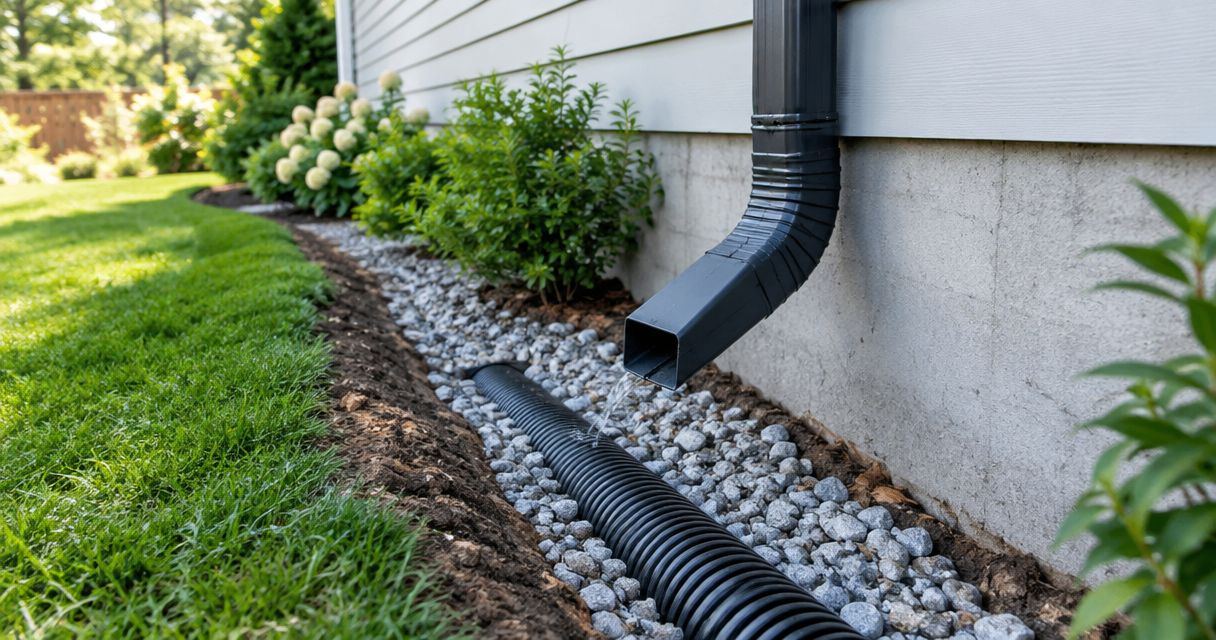
Downspout extensions relocate the point where roof water reaches the yard. Depending on the site, the route can remain above ground or connect to a suitable solid-pipe drainage system.
Best for: Water collecting where a downspout currently empties near the house. Fix this identifiable source before treating the entire lawn as the problem.
Downspout extension pros:
- Targets concentrated runoff from the roof.
- Makes the discharge location easier to identify and inspect.
- Can complement grading or a broader drainage layout.
Downspout extension cons:
- Moving the outlet can create a new puddle if the destination is unsuitable.
- Above-ground extensions can interfere with mowing or walking routes.
Watch the discharge during rain from a safe position. If water runs back toward the house after leaving the extension, the new endpoint has not established a useful route.
Buried downspout connections also need maintenance access. Do not assume a hidden pipe stays clear merely because the visible gutter is clean.
Verdict: Buy downspout routing when roof discharge is the identified source of the wet area.
4. French drains: best for water moving through wet ground
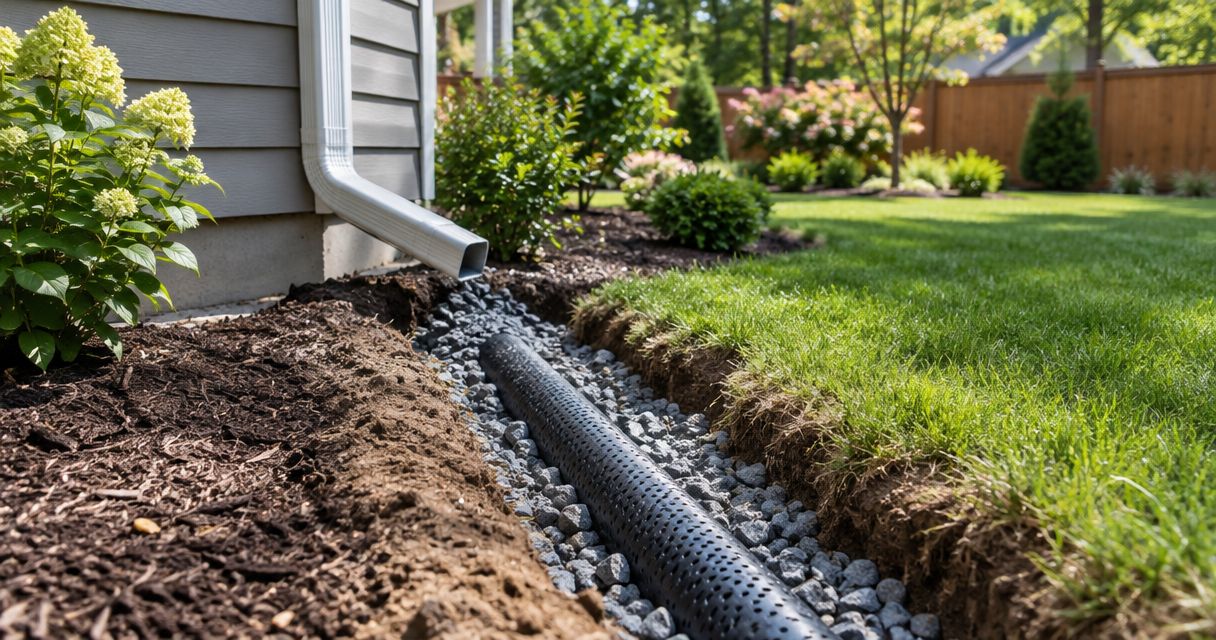
A French drain uses a permeable trench and perforated pipe to collect water from the surrounding ground. Its placement, trench construction, and outlet determine whether it intercepts the water causing the problem.
Best for: Persistent wet ground where an assessment identifies subsurface water movement. It is not the automatic choice for every puddle on clay soil.
French drain pros:
- Collects water along a trench rather than at a single grate.
- Can intercept water before it reaches a particular low area.
- Can work alongside separate surface-water collection.
French drain cons:
- Fine soil and sediment management require careful construction.
- Buried components are harder to inspect than an open surface route.
Surface runoff and subsurface water are different collection problems. A yard receiving fast runoff from paving needs a design that captures that surface flow rather than relying only on water entering a buried trench.
Ask why the proposed trench belongs in that location. The answer should explain what water it intercepts and where that water goes afterward.
Verdict: Hold a French drain proposal until the assessment identifies the water it will collect.
5. Grassed swales: best for runoff crossing an open lawn
A grassed swale is a shallow landscape channel that carries surface runoff along a planned route. It uses the ground's shape rather than a buried pipe as the main conveyance path.
Best for: An open area where water needs to cross the yard toward a suitable destination. The route must fit the property without directing runoff onto a neighboring lot.
Grassed swale pros:
- Keeps the water route visible.
- Can combine drainage conveyance with a planted lawn area.
- Avoids relying entirely on buried pipe for the route it serves.
Grassed swale cons:
- Requires enough space for a workable channel.
- Poor shaping or obstructed sections can leave water standing along the route.
A swale should lead somewhere useful, not end against a fence or patio. Check the full route, including crossings and the final discharge area.
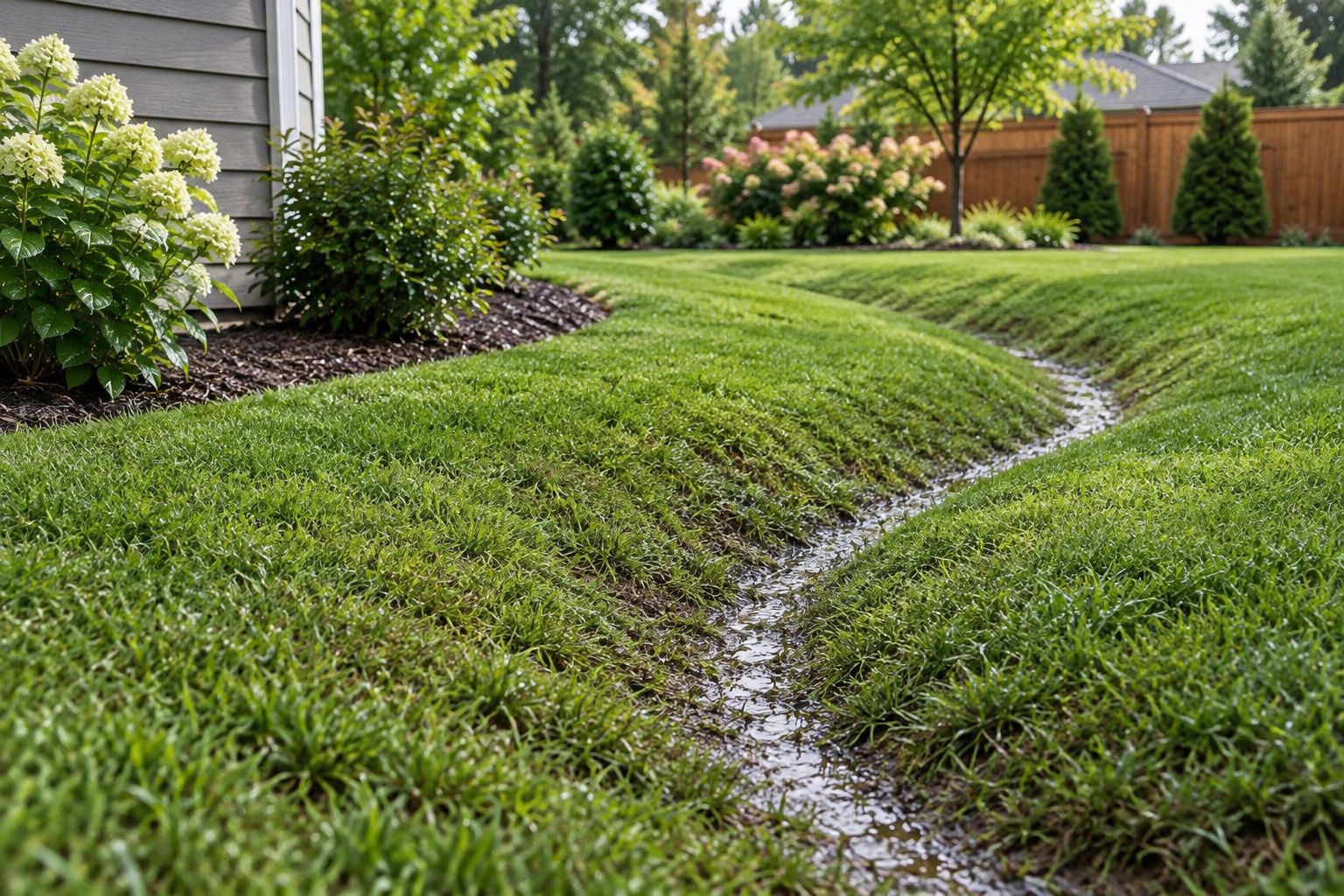
Keep landscaping and stored materials out of the flow path. A visible route is useful only while it remains open.
Verdict: Buy a swale design when open space and ground slope support continuous surface drainage.
6. Rain gardens: best for planted runoff storage
A rain garden temporarily collects runoff in a planted depression. Water then leaves through infiltration, an engineered drainage arrangement, or the planned overflow route, depending on the design.
Best for: A homeowner who wants a planted collection area and has a site suitable for that approach. Clay soil makes checking infiltration and overflow especially important.
Rain garden pros:
- Combines runoff collection with landscaping.
- Provides a defined place for temporary water storage.
- Can form part of a wider drainage plan.
Rain garden cons:
- Slow infiltration can leave water standing without an appropriate design.
- Placement and overflow require care near foundations and property boundaries.
Do not dig a depression beside the house and assume plants will solve the drainage issue. The location needs a clear relationship to incoming runoff and a safe route for excess water.
Treat a rain garden as a designed collection area, not an alternative to investigating foundation-adjacent ponding.
Verdict: Wait until infiltration, placement, and overflow have been assessed.
How these solutions rank
This 2026 ranking puts surface-route correction first, targeted surface collection second, and source-specific options afterward. The criteria are water source, outlet, slope, foundation relationship, maintenance, and site fit.
The ranking does not claim field-test results or equal suitability across DFW properties. A downspout extension moves ahead of regrading when roof discharge is the actual cause; a French drain belongs ahead of a catch basin when the issue is subsurface water rather than a surface puddle.
Which drainage solution should you choose?
Start with the water source and outlet, then choose the collection method. For an undecided homeowner, assess surface slope first rather than buying a French drain by default.
Prepare for an estimate with a simple record:
- Roof runoff: Photograph each downspout discharge and note where the water travels.
- Surface water: Photograph low spots and runoff crossing patios or lawn areas.
- Wet ground: Note areas that remain wet after surrounding areas have dried.
Use 3 observation locations, take 2 photo views of each problem area, and make 1 site sketch showing the house and wet spots. These are documentation steps, not engineering measurements or proof of a drainage diagnosis.
Crisscrossco provides yard drainage, foundation repair, and concrete services for residential property owners across DFW. Request a free on-site estimate and ask how the proposed work addresses both collection and discharge.
Schedule your free on-site estimate
Discuss yard drainage, foundation concerns, and concrete work for your DFW home.
FAQ
What's the best yard drainage solution for clay soil?
The best yard drainage solution for clay soil matches the water source and has a suitable outlet. Regrading addresses poor surface slope, catch basins collect surface puddles, and French drains intercept water moving through the ground.
Is a French drain better than a catch basin?
A French drain is better suited to subsurface water; a catch basin is better suited to collecting surface runoff at a low point. Choose based on how water reaches the problem area, not the name of the system.
Will a French drain work without an outlet?
A French drain needs a suitable discharge arrangement to move collected water away. A trench that only stores water does not establish a reliable drainage route.
Can I fix clay-soil drainage with downspout extensions?
Downspout extensions address concentrated roof runoff when the new discharge location is suitable. They do not correct unrelated low spots or water entering from elsewhere in the yard.
Should I put a rain garden next to my foundation?
Do not place a runoff collection depression next to the foundation without a site-specific design. Rain garden placement must account for infiltration, overflow, and the relationship to the house.
Does better yard drainage repair foundation damage?
Yard drainage work is not structural foundation repair. If your DFW home also has cracks, uneven floors, or sticking doors, request an assessment rather than assuming drainage work addresses those symptoms.
Who can assess drainage at my DFW home in 2026?
Crisscrossco provides drainage and foundation services for residential homeowners in Dallas–Fort Worth. Request a free on-site estimate to discuss the wet areas and the proposed collection and discharge route.
One last thing
The puddle is the destination, not necessarily the source. In your 2026 drainage plan, follow the water upstream before choosing where to excavate. A low spot can receive runoff from a roof, patio, or wider lawn, and treating only that spot leaves the incoming route unchanged.