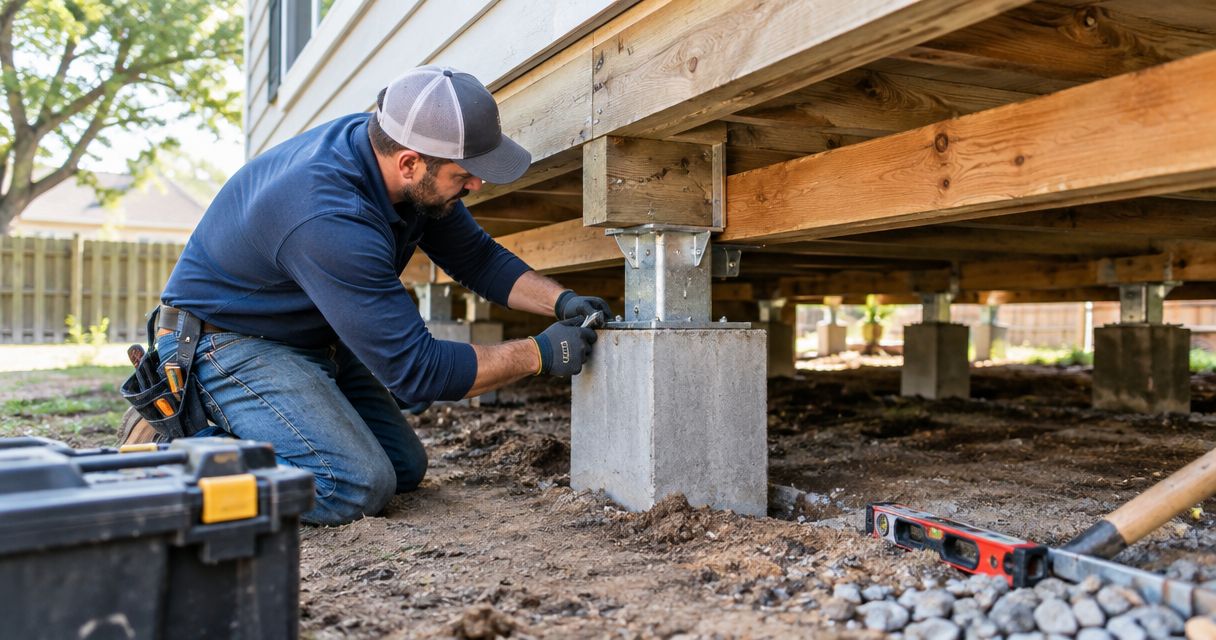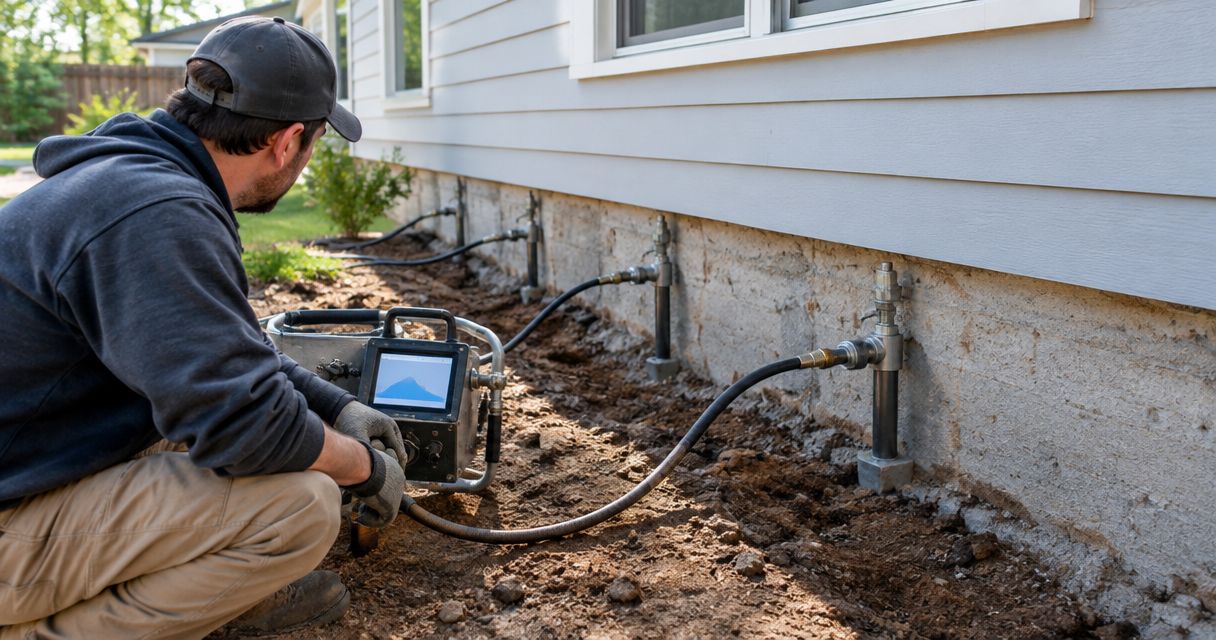
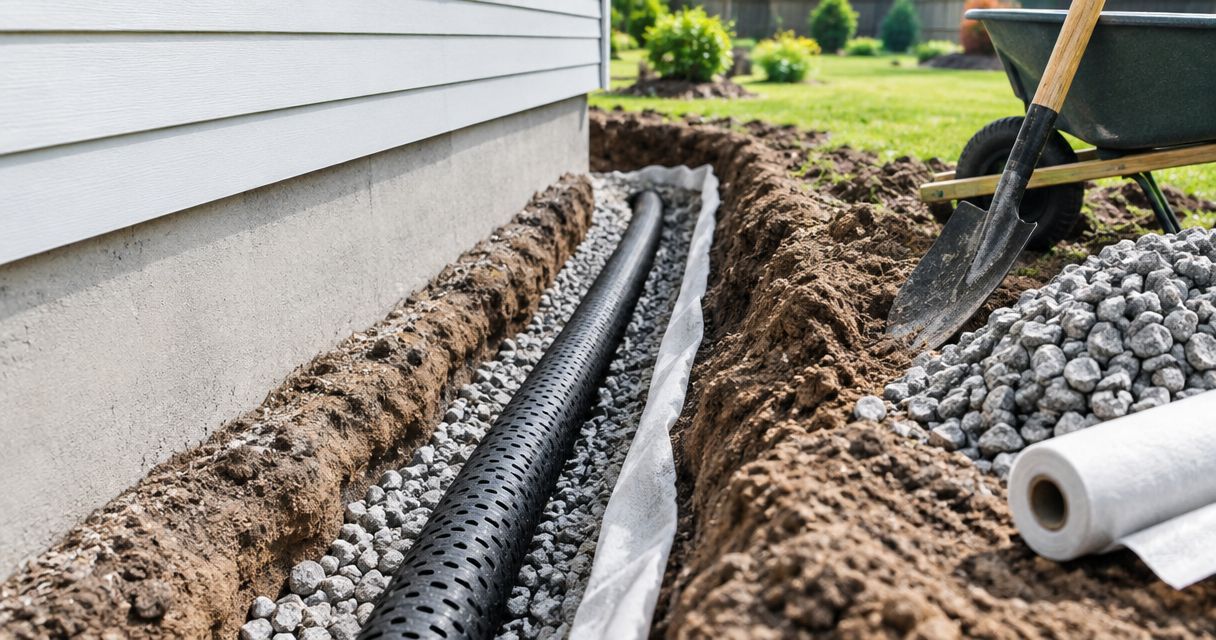
Best overall for subsurface yard water: a gravel-and-pipe trench. Best for runoff entering from uphill: an interceptor drain. Best for restricted installation access: a prefabricated aggregate system. Best for sites without a gravity outlet: a pump-assisted drain. This guide compares the best french drain installation methods for Dallas–Fort Worth homeowners by water source, installation requirements, and maintenance.
- The best french drain installation methods match the water source, ground elevation, and discharge point.
- A gravel-and-pipe trench is the default choice for collecting subsurface yard water.
- An interceptor drain targets water moving toward your home from higher ground.
- Pump-assisted drainage needs power, maintenance, and a suitable discharge location.
- Crisscrossco provides drainage and foundation repair services for DFW homeowners seeking a free on-site estimate.
Why this matters
A French drain collects water below the surface and carries it toward an outlet. It does not fix every puddle, stop every foundation movement, or replace a broken gutter. Choose the drainage method after identifying where the water comes from.
Crisscrossco provides drainage, foundation repair, and concrete services for residential property owners across DFW. For a 2026 drainage project, request a free on-site estimate that addresses the collection area and the discharge route together.
Water sitting on compacted ground needs a different response from water moving through saturated soil. Compare yard drainage solutions for clay soil properties before assuming a buried pipe is the right starting point.
What makes the best French drain installation method
Use these criteria to compare a 2026 installation proposal. A method earns its place by solving your property's water problem, not by using the most material.
- Water source: The design must distinguish subsurface seepage from roof runoff and surface ponding.
- Drain placement: The trench must intercept the water before it reaches the area you want to protect.
- Outlet elevation: Gravity drainage needs a continuous fall toward a suitable discharge point.
- Soil separation: Filter fabric and drainage aggregate must work together to limit soil entering the collection zone.
- Installation access: Utilities, landscaping, concrete, and access affect how the trench can be built.
- Maintenance access: Cleanouts, accessible outlets, and pump access make future service possible.
Ask for the proposed route in writing. A drain that collects water but cannot discharge it has not solved the problem.
French drain installation methods at a glance
These are installation approaches, not competing product brands. An interceptor drain can use a gravel-and-pipe assembly, and either a conventional or prefabricated assembly can connect to a pump when gravity discharge is unavailable.
| Method | Best for | Standout feature | Key limitation |
|---|---|---|---|
| Gravel-and-pipe trench | Subsurface water in a defined yard area | Collection trench can follow the affected area | Requires excavation and a suitable outlet |
| Interceptor drain | Water approaching from higher ground | Placement intercepts water before it reaches the house | Misses water entering from outside its collection path |
| Prefabricated aggregate system | Restricted access for handling loose stone | Manufactured drainage envelope reduces loose-aggregate handling | Must follow the selected system's installation instructions |
| Pump-assisted drain | Sites without a workable gravity outlet | Pump moves collected water to a discharge point | Depends on power and mechanical equipment |
1. Gravel-and-pipe trench: best for subsurface yard water
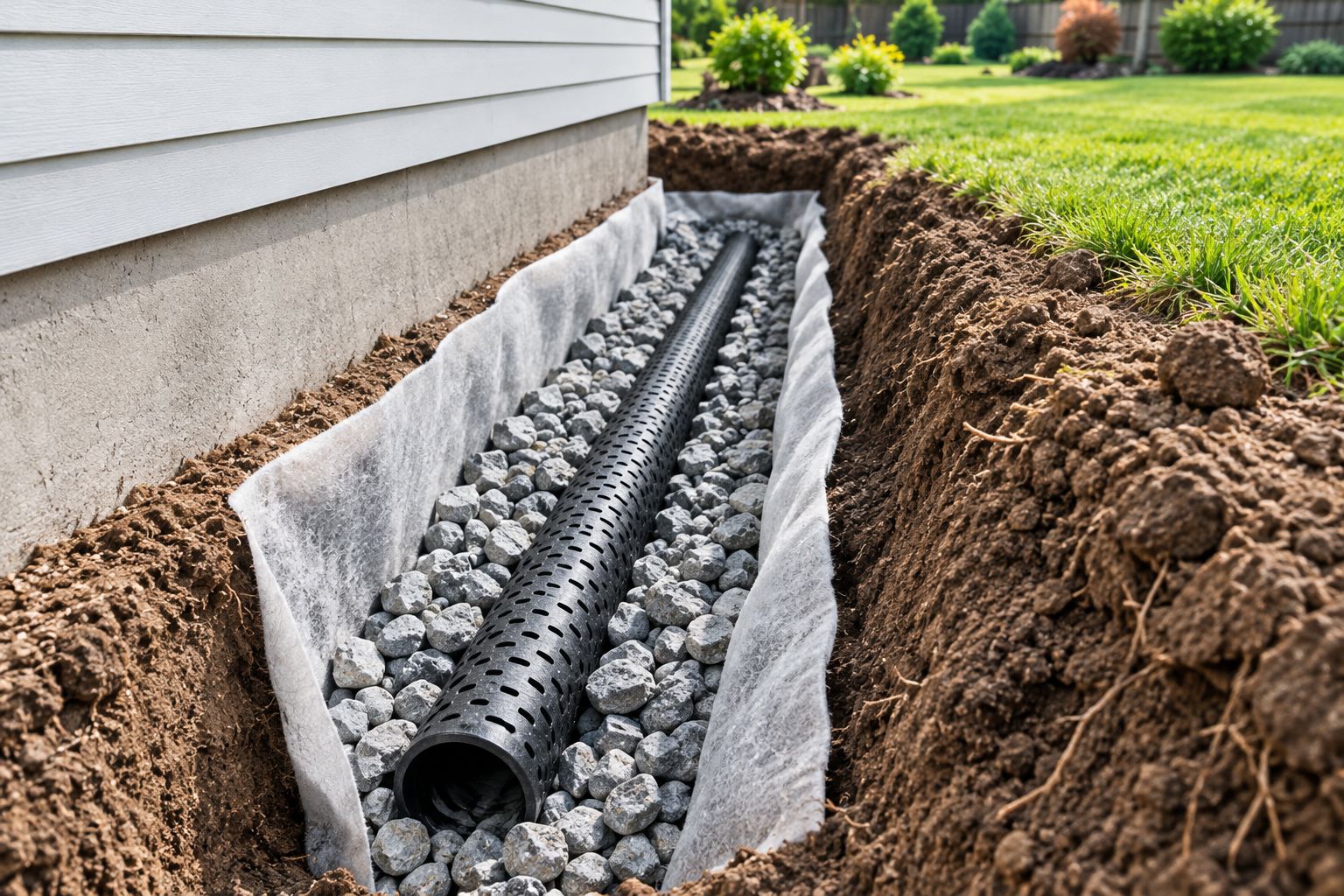
A conventional French drain combines a perforated collection pipe with clean drainage aggregate in a trench. Filter fabric separates the drainage material from surrounding soil. Water enters the collection zone and travels toward the outlet.
Best for: A defined area where subsurface water can reach the trench and discharge by gravity.
This is the default starting point when you need a flexible route around a wet yard area. The installer can adapt the route to the site, but the trench depth and width must follow the actual drainage design—not a generic yard-drain recipe.
Gravel-and-pipe trench pros:
- The collection route can follow the affected part of the yard.
- Drainage aggregate provides space for water to reach the pipe.
- The design can include accessible cleanouts and an inspectable outlet.
Gravel-and-pipe trench cons:
- Excavation disturbs soil, lawn, and landscaping along the route.
- Poor soil separation allows sediment into the collection zone.
- A trench without adequate fall or a suitable outlet can retain water.
Pipe orientation, fabric selection, aggregate, and connections must follow the chosen materials' instructions. Do not accept a proposal that simply says gravel and pipe without explaining where the water will go.
Verdict: Buy this approach when subsurface collection and gravity discharge fit the site.
2. Interceptor drain: best for water arriving from uphill
An interceptor drain is positioned across the path of water moving from higher ground. Its purpose is to collect that water before it reaches a lower yard area or the ground near your house. The placement is the defining feature; the trench can still use a conventional gravel-and-pipe assembly.
Best for: A property with an identifiable upslope water path.
Look at where water enters your yard during rain. A trench placed beside the wettest spot is not automatically better than one positioned farther uphill, where the water first approaches the problem area.
Interceptor drain pros:
- It targets water before that water reaches the protected area.
- Its route can follow the incoming water path rather than the house perimeter.
- It can work alongside surface grading and roof-water management.
Interceptor drain cons:
- Incorrect placement leaves the main water path untouched.
- A subsurface trench alone does not capture every fast-moving surface flow.
- The drain still needs an outlet that can receive the collected water.
Ask the installer to identify what the interceptor will collect and what it will not. Where visible surface runoff crosses the yard, a surface channel, swale, or inlet also needs consideration.
Verdict: Buy this approach when water enters from a clear uphill direction.
3. Prefabricated aggregate system: best for restricted access
A prefabricated drainage assembly uses a manufactured drainage envelope instead of a conventional loose-stone surround. Its exact construction depends on the selected system. Installation must follow that system's instructions for trench preparation, placement, connections, and backfill.
Best for: A yard where transporting and placing loose drainage stone creates an access problem.
This approach changes material handling; it does not eliminate the need for a drainage design. You still need to identify the collection area, trench route, elevation change, and discharge point.
Prefabricated aggregate system pros:
- It reduces the need to handle loose aggregate along the trench.
- The drainage envelope arrives as a defined assembly.
- It provides an alternative where conventional stone delivery is difficult.
Prefabricated aggregate system cons:
- Installation requirements depend on the specific system selected.
- Not every assembly suits vehicle loads or every burial condition.
- Connections and outlet details still require careful planning.
Ask for the system name and installation instructions in your 2026 proposal. Check whether the intended location, backfill, and loading conditions fall within those instructions; do not treat all manufactured assemblies as interchangeable.
Verdict: Hold until the proposed system's requirements match your site.
4. Pump-assisted drain: best when gravity discharge is unavailable
A pump-assisted system carries collected water to a basin, then pumps it through a discharge line. The collection trench can use conventional aggregate or a suitable prefabricated assembly. The pump changes how water leaves the system, not how the trench finds it.
Best for: A site where elevation prevents a workable gravity outlet.
Check gravity options before accepting a pump. Pumping adds equipment that must remain accessible, powered, and maintained, along with a discharge route that must still be suitable.
Pump-assisted drain pros:
- It moves collected water when gravity discharge is not workable.
- The discharge route is not limited to a continuously downhill pipe run.
- The basin provides a defined collection and service location.
Pump-assisted drain cons:
- Water removal depends on power and pump operation.
- Mechanical components need inspection and maintenance.
- Pump selection must account for water flow and discharge elevation.
Discuss what happens during a power failure or pump fault. Ask how the basin will be accessed and how discharge will be kept from returning to the collection area.
Verdict: Buy only when gravity discharge is unsuitable and the maintenance plan is clear.
Check the outlet before digging
The outlet is the first design decision, not the final connection. A long trench does not compensate for a discharge point that is too high, blocked, or unsuitable.
For illustration, a 1 percent slope falls 1 foot over 100 feet of horizontal distance. That is a geometry example, not a universal installation specification. The required layout depends on the pipe, system instructions, site elevation, and discharge conditions.
Work through these steps with the installer:
- Trace water: Identify where water starts, where it travels, and where it collects.
- Check elevation: Establish whether the proposed route can drain by gravity.
- Choose outlet: Confirm where discharge can go without creating another drainage problem.
- Plan access: Identify cleanout locations, outlet access, and any pump service access.
Do not direct water onto a neighboring property. Confirm applicable local requirements before connecting to public drainage infrastructure or changing discharge arrangements. Arrange utility locating before excavation; buried lines cannot be identified by looking at the lawn.
What to ask during your on-site estimate
A useful 2026 estimate explains the problem and the proposed response in plain language. Crisscrossco is a drainage service option for DFW homeowners who also need foundation repair or concrete work assessed. Request a free on-site estimate rather than choosing a trench layout from photographs alone.
Ask these questions before approving work:
- Which water source will the proposed drain collect?
- Why is this trench location better than another route?
- Where will water discharge, and how was the elevation checked?
- What materials and installation instructions will the work follow?
- How will the lawn, landscaping, or concrete be addressed after excavation?
- What access will remain for inspection and cleaning?
- Are roof runoff, grading, or foundation concerns separate parts of the project?
If doors stick, floors slope, or cracks change, ask for a separate foundation assessment. Drainage work addresses water movement; it does not establish whether house leveling or structural repair is needed.
Schedule Your Free On-Site Estimate
Discuss drainage, foundation repair, and concrete needs at your DFW home.
How the methods are ranked
This 2026 comparison ranks installation approaches by water source, placement, outlet requirements, soil separation, access, and maintenance. It is a site-fit guide, not a claim that one assembly outperforms every other assembly in testing.
The conventional trench is the default because it directly addresses subsurface collection. The other approaches earn distinct places when incoming uphill water, restricted material access, or outlet elevation changes the design.
Which method should you choose?
Choose a gravel-and-pipe trench when subsurface water and a gravity outlet are confirmed. Choose interceptor placement when the water approaches from higher ground, consider a prefabricated assembly when stone handling is difficult, and reserve pumping for sites that need it.
Skip a French drain-only plan if the main problem is surface runoff that never reaches the collection trench. Match the work to the water path first.
FAQ
What's the best French drain installation method for a DFW yard?
A gravel-and-pipe trench is the default choice for subsurface yard water when a suitable gravity outlet exists. Interceptor placement, prefabricated assemblies, or pumping address different site constraints.
Is a gravel French drain better than a prefabricated system?
Neither assembly is better for every property. A gravel-and-pipe trench suits conventional installation, while a prefabricated assembly changes material handling and must match its specified installation conditions.
Will a French drain fix standing water on top of my lawn?
A French drain is not a complete answer to every surface puddle. Surface grading, roof-water management, or collection inlets need assessment when water cannot reach the subsurface trench.
Can I install a French drain without a downhill outlet?
A gravity French drain needs fall toward its discharge point. If the site cannot provide a workable gravity route, a pump-assisted design requires assessment.
How deep should a French drain be?
French drain depth must match the water source, site elevation, nearby structures, and selected system's instructions. There is no single depth that suits every DFW yard.
Does French drain installation replace foundation repair?
French drain installation does not replace foundation repair or house leveling. Drainage addresses water movement, while foundation concerns need their own assessment.
What should a French drain estimate include in 2026?
A French drain estimate should identify the water source, collection route, materials, outlet, restoration work, and maintenance access. Crisscrossco offers free on-site estimates for DFW homeowners seeking drainage and foundation services.
One last thing
Photograph the water path during rain from a safe position, not just the puddle afterward. Those pictures help explain whether water arrives from the roof, crosses the surface, or appears in a persistent wet area.
Bring those photos to your free on-site estimate with Crisscrossco. They support the site discussion; they do not replace checking elevations and planning the outlet.