Best overall for visible downhill runoff: a vegetated swale. Best for soggy soil: a French drain. Best for runoff crossing concrete: a channel drain. This 2026 guide compares the best drainage systems for sloped yards and explains which fits your Dallas–Fort Worth property's water problem.
- The best drainage systems for sloped yards match the water source, collection point, and discharge route.
- A vegetated swale directs surface runoff; a French drain collects water moving through soil.
- Channel drains suit concrete crossings; catch basins collect surface water at defined low points.
- Crisscrossco provides residential drainage services in DFW; request a free on-site estimate before choosing a system.
Why this matters
A sloped yard does not automatically drain safely. Water follows the ground, and that route can lead toward your foundation, across a driveway, or into a low spot beside the house.
Choose the drainage route before choosing the drain. A collection point without a suitable outlet only moves the problem. If runoff reaches your house, Crisscrossco provides residential drainage, foundation repair, and concrete services across DFW.
Surface runoff and water moving through soil need different solutions. Watch what happens during rain: water running across the lawn calls for a different approach than ground that stays wet after surface puddles disappear.
What makes the best drainage system?
Use these criteria to compare a proposed yard drainage plan in 2026:
- Water source: Identify whether the problem starts with roof runoff, uphill surface flow, or wet soil.
- Collection method: Match an open surface route, grate, or buried collector to the water you need to intercept.
- Discharge route: Show where collected water ends up, not just where the contractor installs a drain.
- Foundation protection: Keep the plan focused on water beside the house as well as puddles elsewhere.
- Maintenance access: Make grates, outlets, and cleanouts accessible for inspection and clearing.
- Site fit: Account for concrete, fences, landscaping, buried utilities, and neighboring properties.
Ask the contractor to explain the complete route from collection to discharge. Do not approve a layout that ends at an unexplained pipe outlet or sends your drainage problem onto another property.
Sloped-yard drainage systems at a glance
| System | Best for | Standout feature | Key limitation |
|---|---|---|---|
| Vegetated swale | Broad surface runoff across a lawn | Uses a shaped ground channel to guide water | Needs space and a suitable downhill route |
| French drain | Water moving through persistently wet soil | Buried collector intercepts subsurface water | Not a substitute for surface grading |
| Channel drain | Runoff crossing a driveway or patio | Linear grate intercepts water along concrete | Requires debris removal and an outlet |
| Catch basin with solid pipe | A defined surface low point | Collects puddling water at a specific inlet | Cannot capture water that never reaches the grate |
| Regrading | Ground that directs water toward the house | Changes the runoff route at its source | Existing site elevations limit the correction |
| Rock-lined drainage swale | Concentrated runoff eroding an open route | Protects a defined surface flow path | Rock alone does not establish drainage direction |
1. Vegetated swale: best for broad lawn runoff
A vegetated swale is a shallow, shaped channel that carries surface water through a planted area. It suits a sloped lawn where you can create a continuous route around the house toward a suitable discharge point.
The important feature is the ground shape, not the grass. A depression that stops halfway down the yard remains a collection area rather than a complete drainage route.
Vegetated swale pros:
- Intercepts runoff across a broad area.
- Keeps the water route visible for inspection.
- Uses the landscape rather than a buried inlet alone.
Vegetated swale cons:
- Requires enough space for the channel and its outlet.
- Needs vegetation and sediment maintenance to preserve the route.
Best for: Homeowners with usable lawn space and visible surface runoff moving downhill.
Keep the route clear of soil piles, edging, and landscaping changes that block flow. Discuss erosion protection if water concentrates along the channel.
Verdict: Choose a vegetated swale for open-lawn runoff when the site provides a suitable discharge route.
2. French drain: best for persistently wet soil
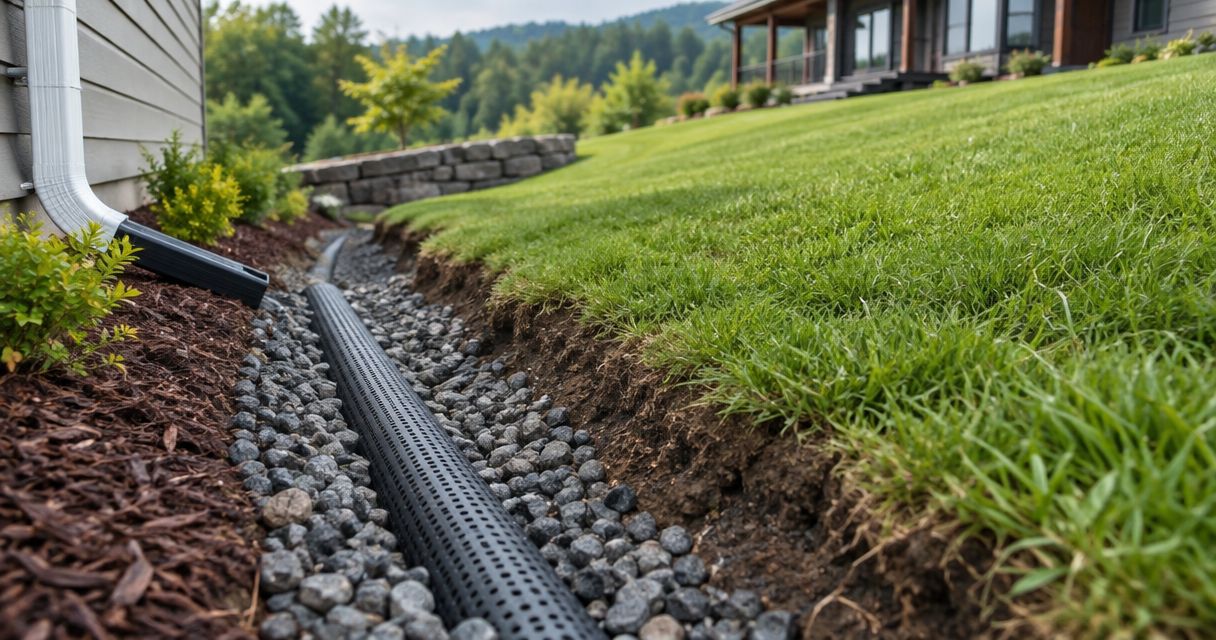
A French drain uses a buried drainage trench, typically with aggregate and perforated pipe, to collect water moving through soil. It addresses a different problem from a grate that collects a surface puddle.
Placement matters. A buried drain must intersect the wet area and carry collected water toward an outlet; burying pipe somewhere near the puddle does not establish that connection.
French drain pros:
- Collects subsurface water along a trench.
- Keeps most of the drainage assembly below ground.
- Can complement a separate surface runoff route.
French drain cons:
- Buried components are harder to inspect than open channels.
- Sediment entry and an unsuitable outlet undermine performance.
Best for: Homeowners whose ground remains soggy after visible runoff has passed.
Ask how the trench, surrounding materials, and outlet work together. Also ask whether surface water needs its own collection method instead of being left to soak into the French drain.
Verdict: Choose a French drain for subsurface wetness; skip it as the automatic answer to every surface puddle.
3. Channel drain: best for runoff crossing concrete
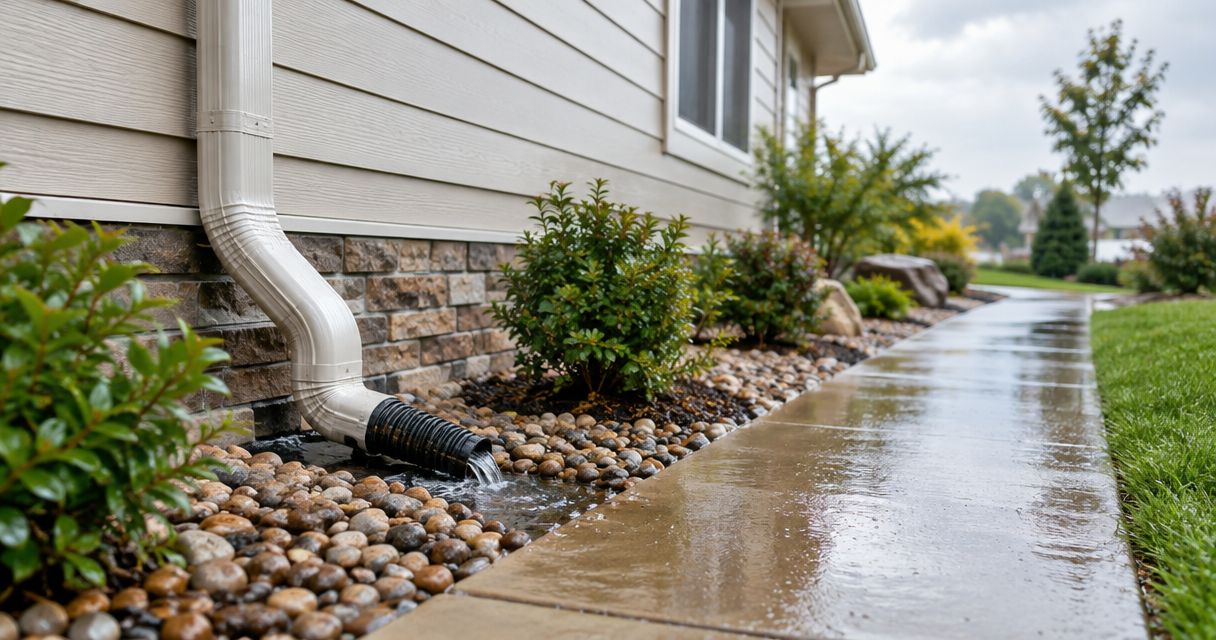
A channel drain is a long surface inlet covered by a grate. It intercepts runoff across a driveway, patio, or other paved area before the water continues toward an unwanted destination.
Concrete directs water according to its slope. The channel must sit where runoff actually crosses, and its discharge pipe must carry that water away from the collection point.
Channel drain pros:
- Collects water along a continuous line.
- Suits runoff crossing paved surfaces.
- Provides visible access through the grate.
Channel drain cons:
- Leaves and sediment require clearing.
- Installation in existing concrete involves concrete work.
Best for: Homeowners with a clear runoff path across a driveway or patio.
Discuss grate suitability for the location, access for cleaning, and how the drain connects to its outlet. A channel beside the flow path will not intercept water simply because it is nearby.
Verdict: Choose a channel drain where concrete runoff crosses a defined line.
4. Catch basin: best for a defined low point
A catch basin collects surface water through a grate and connects to a discharge pipe. It suits a yard where runoff already converges at a specific low point.
The surrounding ground must direct water into the inlet. Adding a basin to the center of a yard does not solve separate puddles trapped behind higher ground.
Catch basin pros:
- Targets a specific puddling location.
- Connects surface collection to a solid discharge pipe.
- Provides access to remove collected debris.
Catch basin cons:
- A blocked grate prevents effective collection.
- Disconnected low spots need additional grading or collection.
Best for: Homeowners with an identifiable surface depression and a workable discharge route.
Ask whether the basin includes accessible space for sediment collection and how you will clean it. Keep mulch and loose soil from washing directly onto the grate.
Verdict: Choose a catch basin for a defined surface low point, not for general subsurface wetness.
5. Regrading: best for runoff aimed at the house
Regrading reshapes the ground so surface water takes a different route. It addresses the source of a drainage problem when the existing slope sends runoff toward the foundation.
The correction depends on surrounding elevations. Patios, fences, neighboring ground, and the house itself determine how much room exists to change the route.
Regrading pros:
- Corrects the direction of surface runoff.
- Reduces reliance on collection at the wrong destination.
- Works alongside swales, basins, and other drainage components.
Regrading cons:
- Requires disturbance of the existing yard.
- Site elevations can limit the available correction.
Best for: Homeowners whose ground directs water toward the house rather than away from it.
Do not add soil against the house without checking clearances and the full drainage layout. The goal is a continuous surface route, not simply higher ground beside the wall.
Verdict: Choose regrading when the slope causes the problem; pair it with collection where site constraints require it.
6. Rock-lined swale: best for an eroding runoff path
A rock-lined drainage swale carries surface water along a shaped open route. The rock protects the flow path, while the underlying grading determines where the water travels.
A decorative dry creek bed only functions as drainage when its location and shape match the runoff. Rock placed in a puddle does not create an outlet.
Rock-lined swale pros:
- Defines a visible surface drainage route.
- Protects the channel surface from concentrated flow.
- Allows inspection without opening a buried system.
Rock-lined swale cons:
- Trapped sediment and leaves need removal.
- Incorrect shaping leaves water trapped between rocks.
Best for: Homeowners with a concentrated surface runoff path that is eroding an open part of the yard.
Discuss the channel shape and erosion protection together. Steep or forceful runoff needs a site-specific design, not a decorative landscaping layout.
Verdict: Choose a rock-lined swale for an established surface flow path that needs erosion protection.
How this ranking works
This 2026 ranking separates drainage systems by the problem each solves: lawn runoff, subsurface wetness, concrete crossings, low-point puddles, incorrect grading, and erosion. The criteria are collection fit, discharge route, foundation protection, maintenance access, and site constraints.
The vegetated swale is the default for broad surface runoff where space allows. It is not the default for every sloped property. The best system matches the water you can observe and the route your site can support.
Which system should you choose?
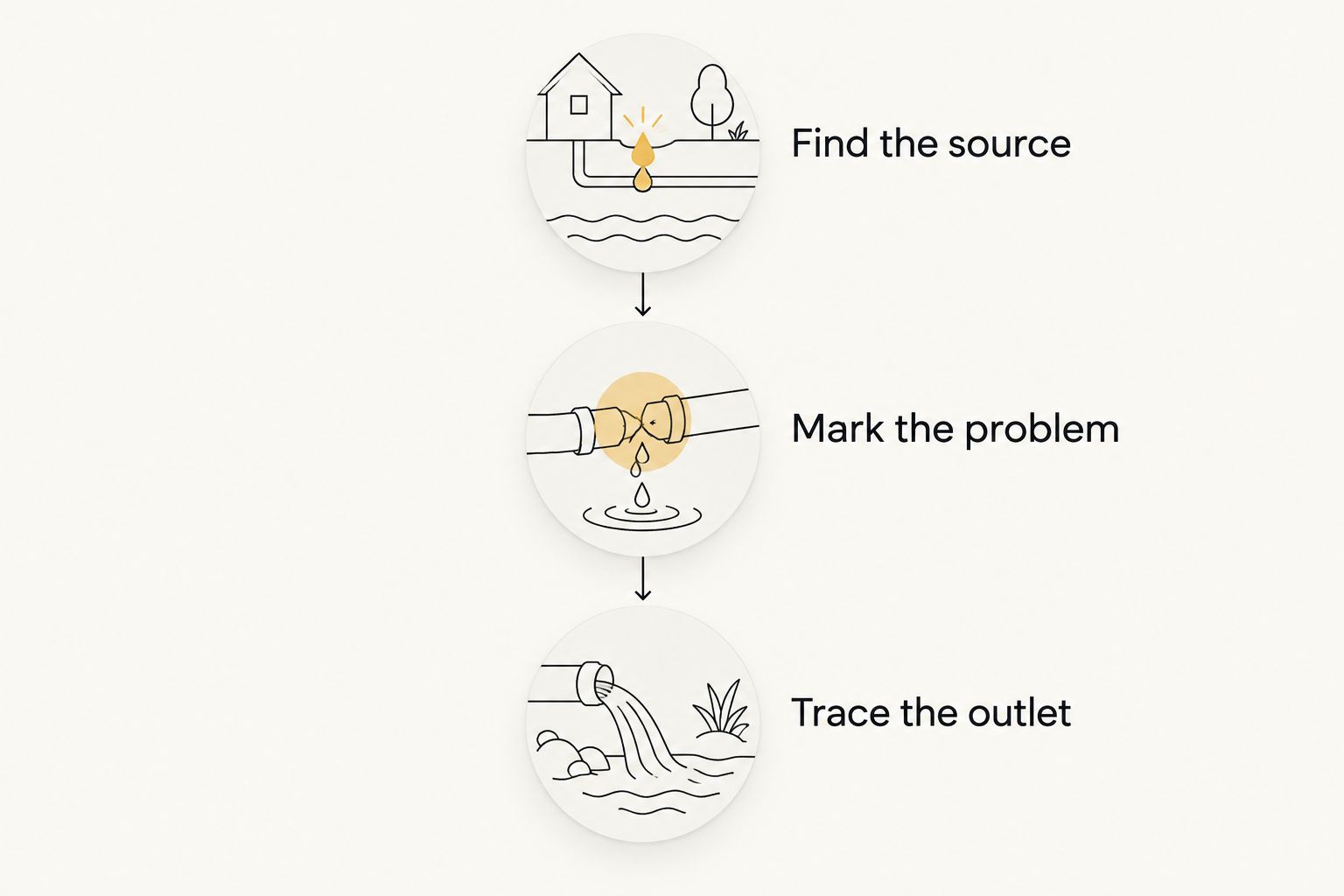
For a 2026 drainage project, start with the water path rather than a preferred product. Use these checks before requesting an estimate:
- Find the source: Watch where runoff enters the problem area.
- Mark the problem: Identify puddling, erosion, or water beside the foundation.
- Trace the outlet: Ask where the proposed system will discharge.
Take 3 photos: the incoming water route, the problem area, and the proposed discharge area. Photograph the problem from 2 viewpoints so the contractor can see both the slope and the house. Ask the contractor to identify 1 proposed discharge location and explain whether other collection points need separate routes.
Crisscrossco yard drainage services are for DFW homeowners seeking an on-site assessment of residential water problems. Request a free on-site estimate, and ask how the proposed drainage work connects with any foundation or concrete concerns.
Schedule Your Free On-Site Estimate
Discuss your DFW yard drainage problem and any related foundation or concrete concerns.
FAQ
What's the best drainage system for a sloped yard?
A vegetated swale is the best starting option for broad surface runoff when the yard has space and a suitable discharge route. French drains suit subsurface wetness, while channel drains suit runoff crossing concrete.
Is a French drain better than a swale?
A French drain is better for water moving through soil; a swale is better for surface runoff. Choose according to the water source rather than treating either system as a universal solution.
Will a catch basin fix every puddle in my yard?
A catch basin collects puddles only where the surrounding ground directs water into its grate. Separate low spots need grading changes or additional collection points.
Can I use a dry creek bed for drainage?
A dry creek bed functions as drainage when it forms a shaped route to a suitable outlet. Decorative rock alone does not establish flow direction or remove trapped water.
Should I fix grading before installing a drain?
Address grading in the drainage plan before selecting an inlet or buried pipe. If the ground sends water toward the house, correcting that route is part of the solution.
Does drainage repair also fix foundation movement?
Drainage work and foundation repair address different problems. Crisscrossco provides both services in DFW; request an assessment rather than assuming drainage alone resolves existing foundation movement.
How do I request a drainage estimate in DFW?
Contact Crisscrossco to request a free on-site estimate for residential drainage work in Dallas–Fort Worth. Describe where water starts, where it collects, and whether it reaches the house or concrete surfaces.
One last thing
Before approving a drainage proposal in 2026, ask the contractor to point out the outlet on your property. An inlet is only the beginning of a drainage system. You need to understand the destination, maintenance access, and what happens when debris blocks collection.
If water gathers beside your foundation, include that location in the estimate request even when the largest puddle sits elsewhere. The most visible wet spot is not automatically the only place that needs attention.