HOA-community concrete driveway repair is the assessment and repair of residential driveway damage with the aim of restoring usable access while meeting community requirements. This 2026 guide helps Dallas–Fort Worth homeowners separate repair needs from appearance rules, confirm responsibility, and prepare an approval request before work starts.
- Concrete driveway repair for HOA communities starts with ownership, damage assessment, and written approval where required.
- Crisscrossco serves residential property owners with concrete work, drainage solutions, and foundation repair.
- Choose crack repair, resurfacing, or replacement by the driveway’s condition, not appearance alone.
- Keep the HOA approval, contractor scope, and access plan together before scheduling work.
Why concrete driveway repair matters for HOA homeowners
An HOA driveway project involves more than choosing a repair method. You need to establish who maintains the concrete, what changes require approval, and how the work affects neighboring access. A contractor’s estimate does not replace community approval, and community approval does not establish whether a repair suits the damage.
For DFW homeowners, drainage and nearby foundation concerns also belong in the assessment. Water collecting beside a driveway deserves attention before you cover the surface. A driveway crack alone does not establish that your house needs foundation repair.
Crisscrossco is best for DFW homeowners seeking residential concrete work alongside drainage or foundation concerns. You can request a free on-site estimate through Crisscrossco. Keep the contractor’s condition assessment separate from the HOA’s decisions about appearance and shared property.
The practical goal is a written scope that answers three questions: what needs repair, who authorizes it, and how residents will use the property during the work.
Plan your driveway repair before work starts
Confirm who owns and maintains the driveway
Start with your declaration, maintenance provisions, architectural rules, and any recorded property information relevant to the driveway. Ask the HOA or management company to identify the provisions that apply to your address. Do not assume that concrete serving your garage is entirely your responsibility.
Separate the driveway from the sidewalk, curb, street apron, and shared access areas. Different requirements can apply to adjoining surfaces. Confirm applicable municipal requirements with the relevant DFW city before including work outside the private driveway.
For a project planned in 2026, use the community’s current documents rather than an old application saved by a neighbor. Keep the written response with your estimate so the proposed work matches the area you are authorized to change.
- Identify the driveway area included in your request.
- Ask who maintains shared concrete and adjoining walkways.
- Obtain the current architectural application and finish rules.
- Confirm whether city approval is required for the proposed scope.
- Request written clarification when responsibility is unclear.
Document the damage before choosing a fix
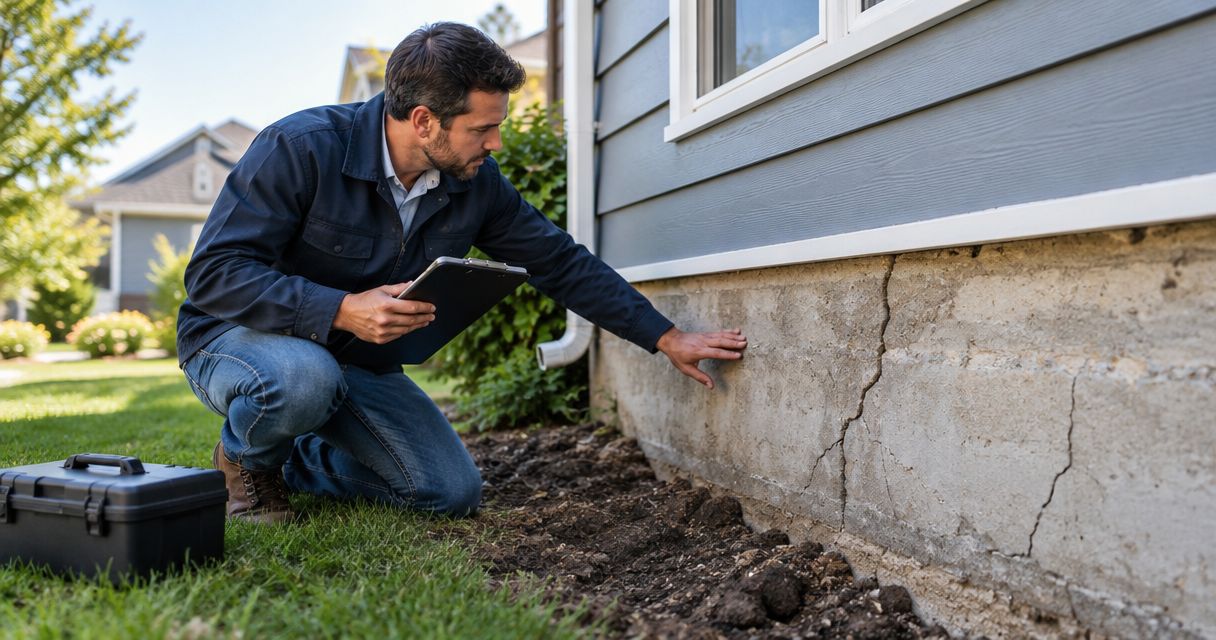
Make a condition record before filling cracks, pressure washing, or requesting matching finishes. Photographs help distinguish the existing problem from the proposed work. They also give the HOA a clearer reason for the request than a description such as “replace damaged driveway.”
As a practical starting checklist, take 6 photos: the whole driveway, the garage connection, the street connection, the main damaged area, a close-up, and the nearby drainage route. Add more wherever the condition changes. These are documentation suggestions, not inspection standards.
Photograph a raised edge from 2 views, including a side view that shows the height difference. Keep a dated 2026 photo log and record when you notice changes; do not label a crack stable merely because it looks narrow.
- Mark damaged areas on a simple driveway sketch.
- Record cracking, flaking, sinking, and uneven edges separately.
- Note where vehicles and pedestrians cross damaged concrete.
- Photograph water collection when it occurs.
- Save previous repair descriptions if you have them.
Assess drainage and nearby foundation concerns
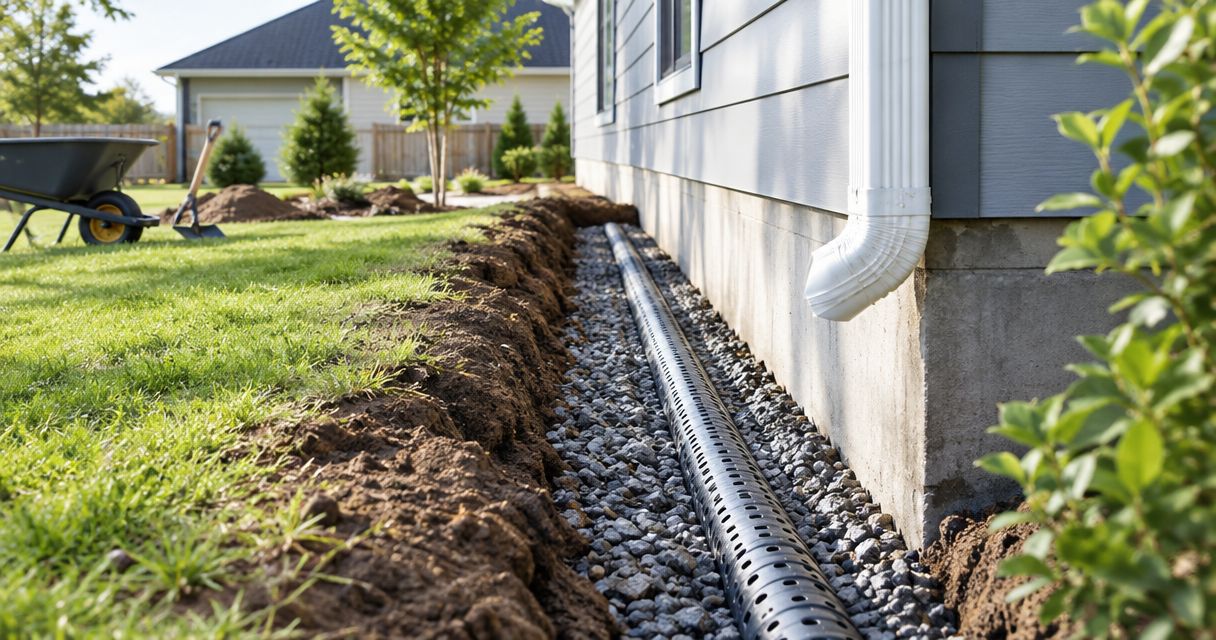
Inspect the driveway’s surroundings from a safe position before deciding how to repair the surface. Look for water collecting along edges, downspouts discharging beside the slab, and runoff crossing the driveway. Describe what you see without assigning a cause that has not been assessed.
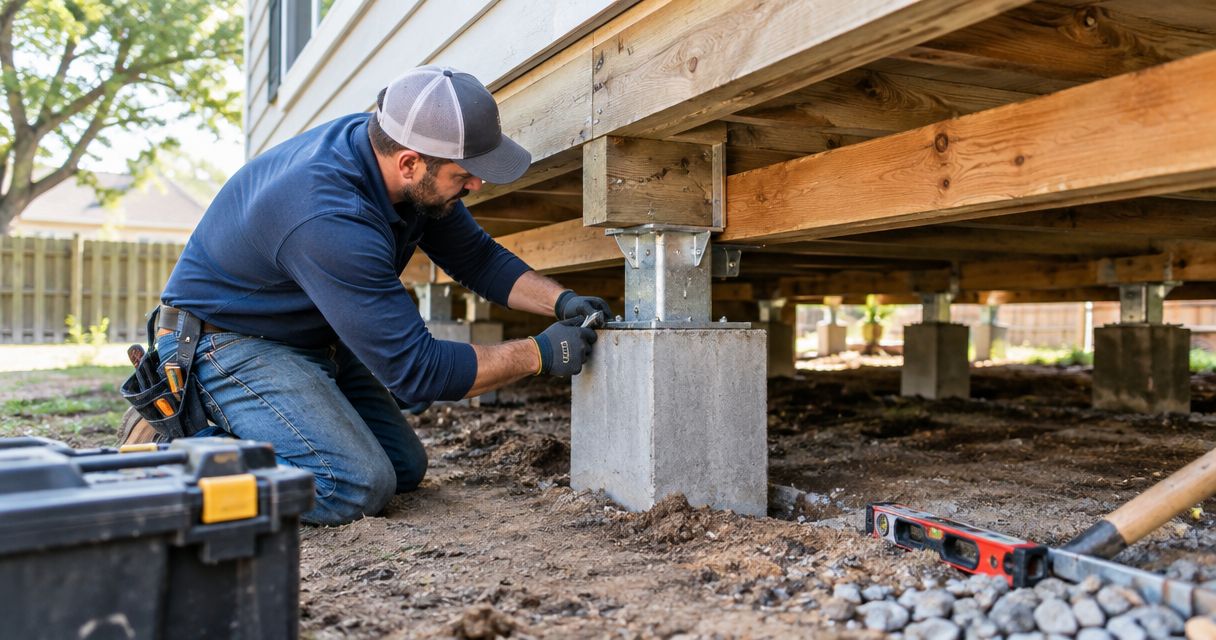
Concrete work, drainage work, and house leveling address different conditions. A driveway problem does not automatically justify foundation repair. If you also notice changes inside the house, report those observations separately so the assessment does not treat unrelated symptoms as one diagnosis.
Crisscrossco provides concrete work, drainage solutions, and foundation repair for residential property owners. Request a free on-site estimate that identifies which concerns belong in the proposed scope; do not assume every service is necessary.
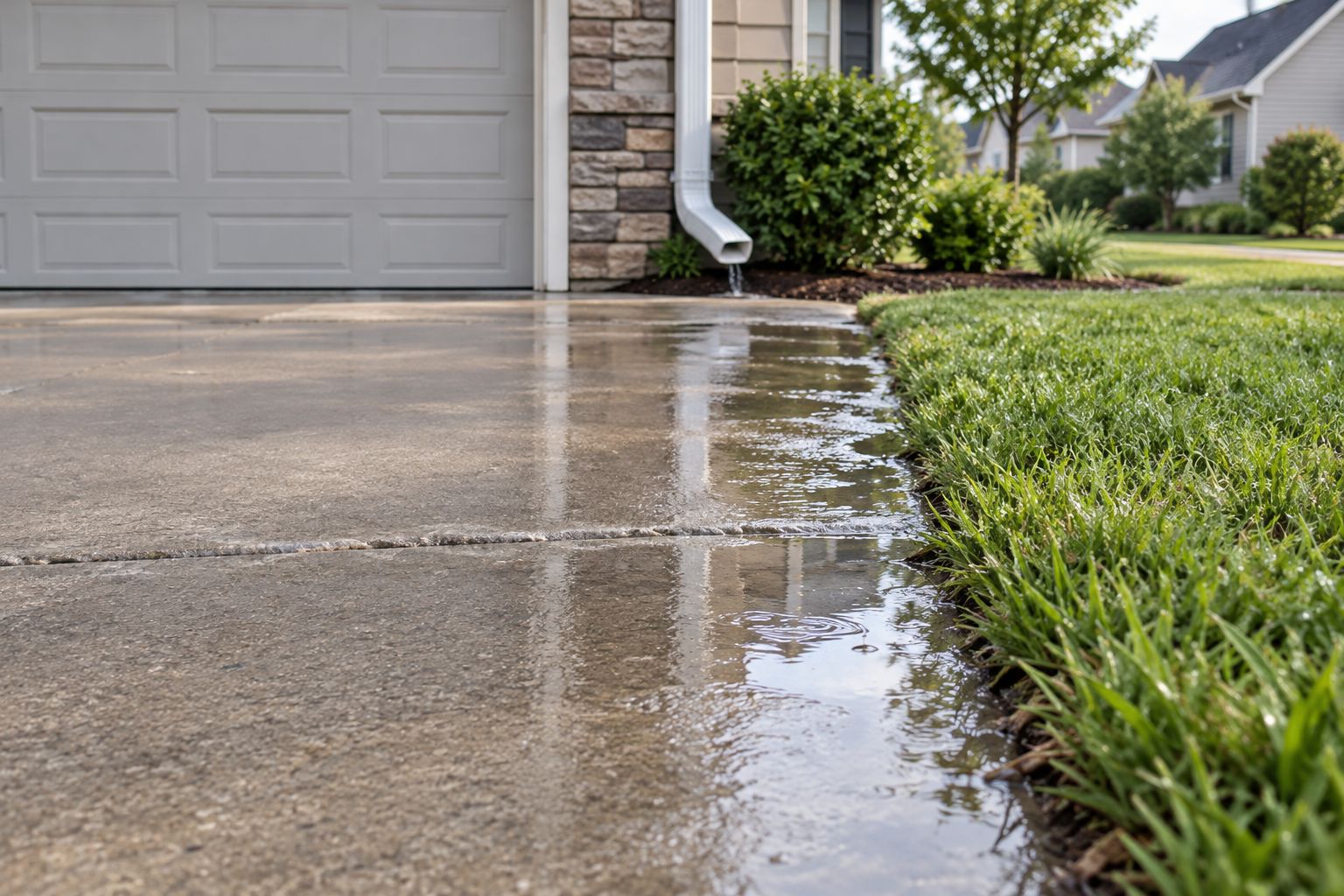
A drainage observation should lead to a question, not an automatic repair prescription. Ask where water enters the area and where the proposed work directs it.
- Record downspout discharge locations.
- Identify low spots and visible water collection.
- Ask whether the proposed finish changes water flow.
- Report nearby house symptoms separately from driveway damage.
- Request an explanation before adding drainage or foundation work.
Match the repair method to the condition
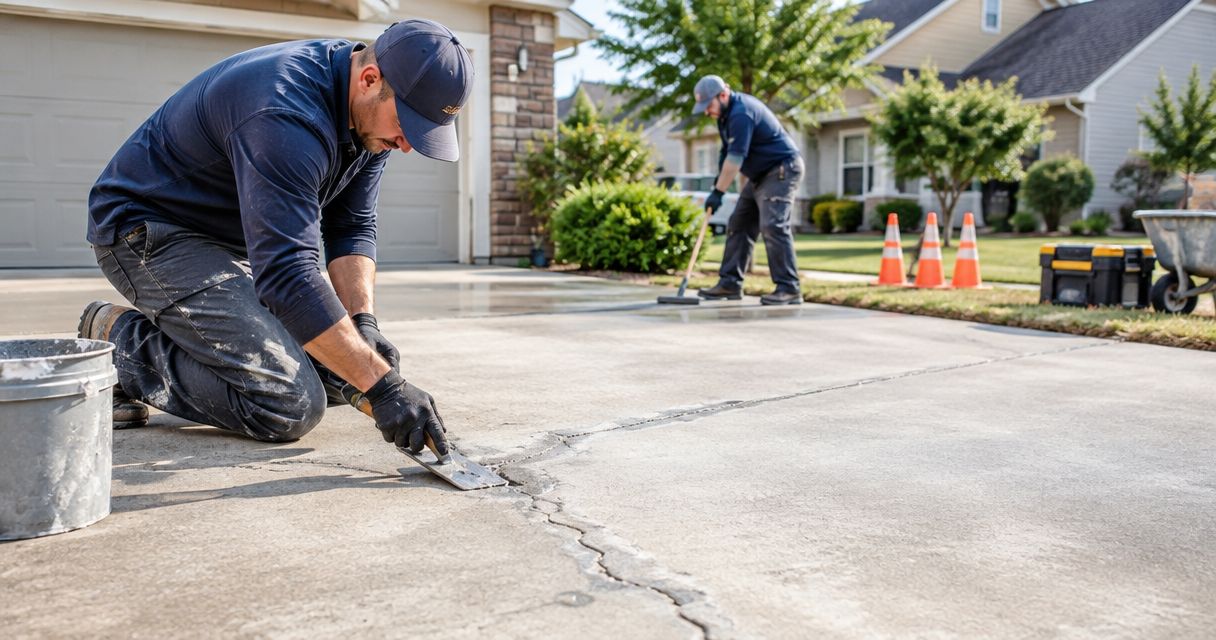
Begin with the least extensive method that actually addresses the assessed problem. Filling a crack, applying a surface treatment, lifting a settled slab, and replacing concrete are different tasks. They are not interchangeable ways to make a driveway look newer.
Do not approve a cosmetic treatment as the answer to unexplained movement. Ask the contractor to explain why the recommended method fits the concrete’s condition and what it will leave unchanged. A narrow scope is useful only when the underlying assessment supports it.
Use this overview of concrete driveway repair options to prepare questions, not to diagnose your slab from photographs. The comparison below separates the main options by purpose and limitation.
- Ask whether the damage is surface-level, settled, or more extensive.
- Request an explanation of why the proposed method fits.
- Identify cracks or sections the work will not address.
- Review the expected appearance beside existing concrete.
- Separate necessary repairs from optional appearance changes.
Submit a clear HOA approval request
Prepare one application that connects the condition photos to a defined repair area. State whether the work involves crack treatment, a surface finish, slab lifting, section replacement, or broader replacement. Describe only the method included in the estimate.
For your 2026 application, use the HOA’s current requirements for finishes, contractor documents, working hours, and access. Where a requirement is unclear, ask for clarification before scheduling. A neighbor’s similar driveway is a useful reference, not proof that your request is approved.
Keep three parts together: Damage photos, Repair scope, and Written approval. The approved scope and the contractor’s scope should describe the same work.
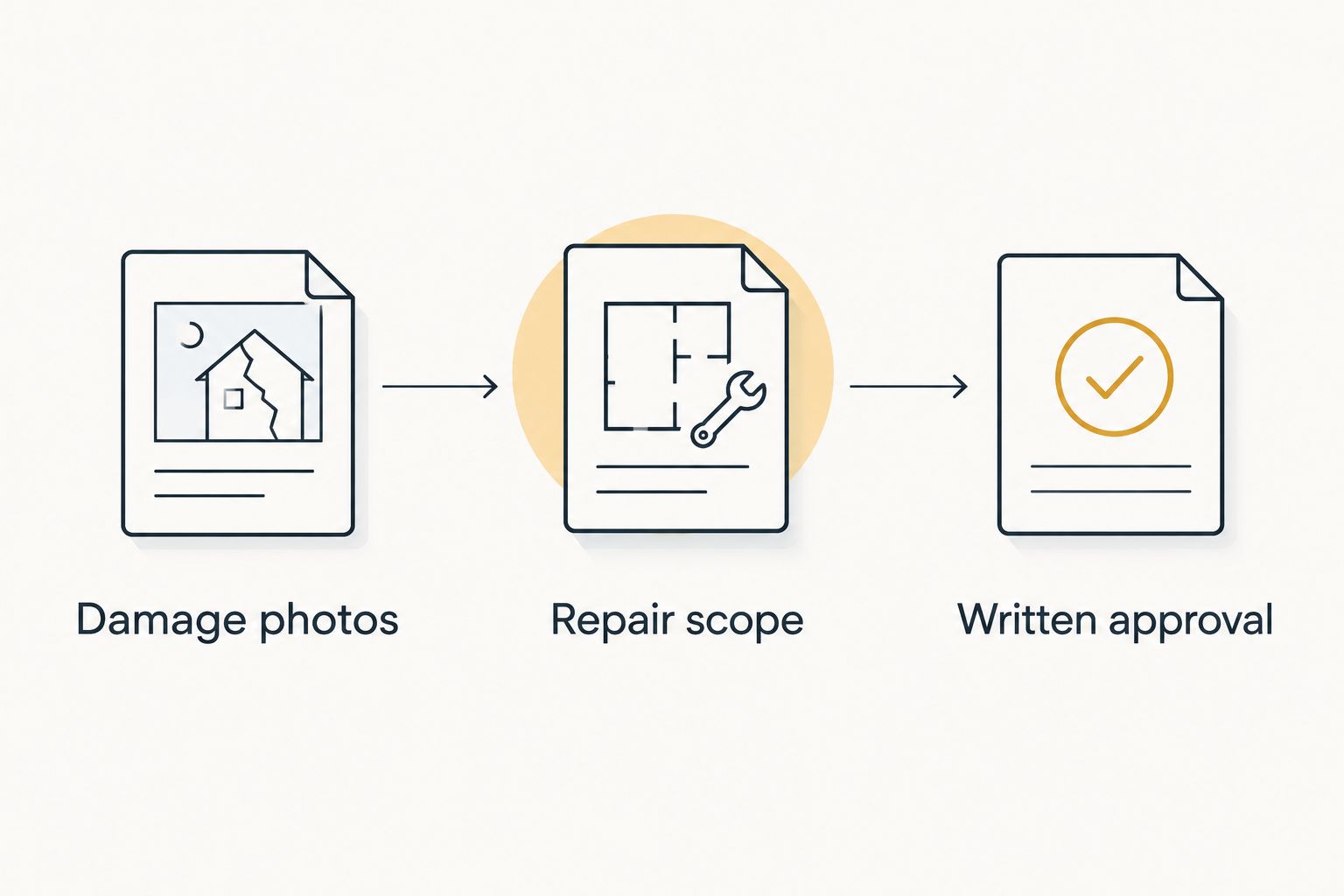
If the contractor changes the method or finish after approval, ask the HOA whether an updated submission is required. Do not treat approval for one scope as permission for a different project.
- Include damage photos and a marked repair area.
- Attach the contractor’s written repair scope.
- Describe the proposed color, texture, and joint treatment.
- Address access, debris handling, and working-hour requirements.
- Save written approval and any conditions attached to it.
Arrange parking and protect shared access
Plan access before the crew arrives. Identify where your household will park, whether neighbors use a shared drive, and how pedestrians will avoid the work area. Ask the contractor what access restrictions apply to the actual materials and method.
Do not set a reopening date from a generic online curing claim. Request separate instructions for walking, driving, and parking on the repaired surface. Give residents the contractor’s instructions rather than an assumed deadline.
Crisscrossco homeowners can request clarification on access needs when reviewing their concrete-work estimate. The final plan still needs to account for your property layout and applicable community requirements.
- Confirm temporary household parking arrangements.
- Notify affected neighbors through the required community process.
- Identify delivery, pedestrian, and shared-drive access needs.
- Ask how the work area will be marked and protected.
- Obtain written reopening instructions before work begins.
Review the completed work against the scope
Use the written scope during the final walkthrough. Compare the repaired area, finish, transitions, cleanup, and any agreed drainage work with the approved documents. Keep appearance questions separate from functional concerns so each issue receives a clear response.
Organize the project into 3 stages: before work, during work, and completion. Save photographs at each stage when you can do so safely. A clear record is more useful than trying to reconstruct the project from messages later.
Ask how to report a concern and which care instructions apply. Do not infer a warranty or maintenance commitment from a verbal description of the repair.
- Compare completed work with the approved repair boundaries.
- Check transitions at the garage, sidewalk, and adjoining concrete.
- Record cleanup or finish questions during the walkthrough.
- Save care instructions and access restrictions.
- Keep the estimate, approval, invoice, and project photos together.
Compare driveway repair options
Choose the method by condition first and HOA appearance requirements second. An approved finish still needs suitable concrete beneath it. Ask for an on-site assessment before treating any option as the right choice.
| Option | Best for | Main benefit | Key limitation |
|---|---|---|---|
| Crack repair | Localized cracks in otherwise serviceable concrete | Addresses specific openings without replacing the whole driveway | Does not correct slab settlement or establish why movement occurred |
| Resurfacing | Surface wear on concrete suitable for a bonded treatment | Renews the visible surface | Does not substitute for repairing unsuitable or moving concrete |
| Slab lifting | Settled sections that an assessment finds suitable for lifting | Addresses an elevation difference while retaining existing concrete | Does not renew a deteriorated surface; suitability depends on slab and support conditions |
| Section replacement | Damage concentrated in identifiable driveway sections | Removes and rebuilds the affected area | New concrete can look different from adjacent sections |
| Full replacement | Widespread damage or a layout needing broader reconstruction | Allows the driveway to be rebuilt as a whole | Involves more disruption and requires a complete access and approval plan |
Do not select full replacement solely to avoid discussing smaller repairs. Equally, do not select resurfacing solely because it sounds less disruptive. The assessment should explain both the recommended option and why alternatives do not fit.
Request Your Free On-Site Estimate
Discuss concrete driveway damage, nearby drainage, and foundation concerns at your DFW home.
Avoid these HOA driveway mistakes
Treating approval as a technical inspection
HOA approval addresses the community’s requirements for the submitted work. It does not establish the cause of damage or confirm that a repair method suits the slab. Request a condition assessment as well as approval.
Repairing shared concrete without confirming authority
A shared driveway, sidewalk connection, or street apron can involve responsibilities beyond the homeowner’s private slab. Confirm the boundaries and required permissions before authorizing removal or changes.
Promising an exact match to older concrete
New repair materials and existing weathered concrete can differ in appearance. Review the expected finish with the contractor and describe it accurately in the HOA application. Do not promise the board an invisible repair.
Covering damage before documenting it
Filling, coating, or cleaning first can make the original condition harder to discuss. Take photos and obtain the assessment before appearance work begins. Preserve a clear record of what the proposed repair addresses.
FAQ
Do I need HOA approval to repair my concrete driveway?
Check your community’s governing documents and architectural requirements before scheduling driveway repair. Ask the HOA to confirm whether your specific scope needs approval, including changes to finish, color, or concrete sections.
Who pays for driveway repair in an HOA community?
Responsibility depends on the governing documents and the area being repaired. Confirm whether the driveway, shared access, sidewalk, and street connection have different maintenance obligations.
Is resurfacing better than replacing an HOA driveway?
Resurfacing suits surface wear only when the existing concrete is suitable for the treatment. Replacement addresses concrete that needs removal and rebuilding; an on-site assessment should explain which condition applies.
Can I fix a driveway crack myself before contacting the HOA?
Confirm approval requirements and document the damage before applying a repair material. A DIY crack treatment does not correct settlement or establish the cause of movement.
Does a cracked driveway mean my house needs foundation repair?
A cracked driveway alone does not establish that your house needs foundation repair. Report any separate house symptoms and ask for an assessment that distinguishes driveway damage from foundation concerns.
When can I park on my repaired concrete driveway?
Park on the repaired driveway only when the contractor’s instructions permit vehicle use. Reopening requirements depend on the repair method and materials, so obtain instructions for walking, driving, and parking separately.
How do I get a concrete driveway repair estimate in DFW?
Request a free on-site estimate from Crisscrossco for residential concrete work in Dallas–Fort Worth. Have your damage photos, HOA requirements, and questions about nearby drainage ready for the visit.
One last thing
Photograph where the water goes, not just where the concrete cracks. A close-up documents damage; a wider view helps explain the surrounding conditions that deserve assessment.
Keep that view in your 2026 project file alongside the approved scope. Before requesting an estimate, gather the HOA requirements so the discussion covers both the repair and the permission needed to complete it.