Best overall for an isolated broken section: panel replacement. Best for an intact but sunken slab: slab lifting. Best for a small, stable crack: crack sealing. This 2026 guide compares the best concrete driveway repair options for Dallas–Fort Worth homeowners by damage type, repair limits, and what to ask before approving work.
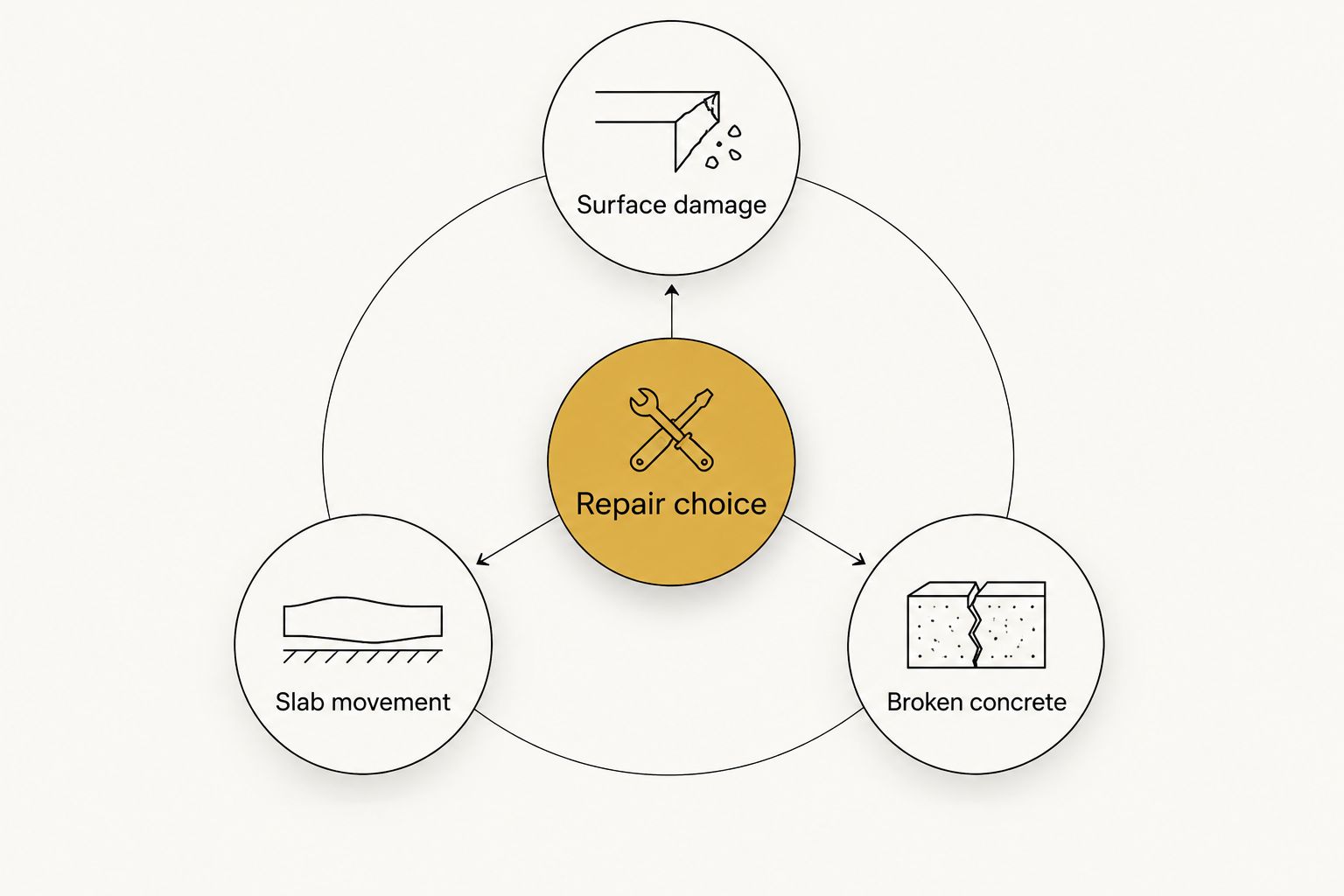
- The best concrete driveway repair options depend on whether your driveway has surface damage, slab movement, or broken concrete.
- Panel replacement fits an isolated broken section; slab lifting fits intact concrete that has settled.
- Crack sealing and resurfacing do not correct an unstable base or a sunken slab.
- Crisscrossco is a practical choice for DFW homeowners seeking a free on-site estimate for concrete and drainage work.
Why this matters
A driveway repair needs to address the problem beneath the visible damage. Filling a crack does not raise a settled panel, and covering a damaged surface does not rebuild weak support underneath it.
For a DFW homeowner, the useful starting point is an on-site assessment that separates concrete damage from drainage and support problems. Crisscrossco provides concrete work, drainage solutions, and foundation repair for residential property owners. Ask for a free on-site estimate that addresses the driveway and any nearby water problems together.
Choose the repair by the condition of the slab—not by how neatly a finished repair hides the damage. A driveway defect alone does not establish that your house needs foundation repair.
What makes the best driveway repair option
Use these criteria to compare recommendations in 2026 before deciding which method fits your property:
- Damage type: Separate a surface defect from a crack through the slab, settlement, or broken concrete.
- Remaining concrete: Determine whether the existing slab is sound enough to keep. A repair that depends on weak concrete has a weak starting point.
- Underlying support: Ask whether the base is stable and whether water is removing or weakening support.
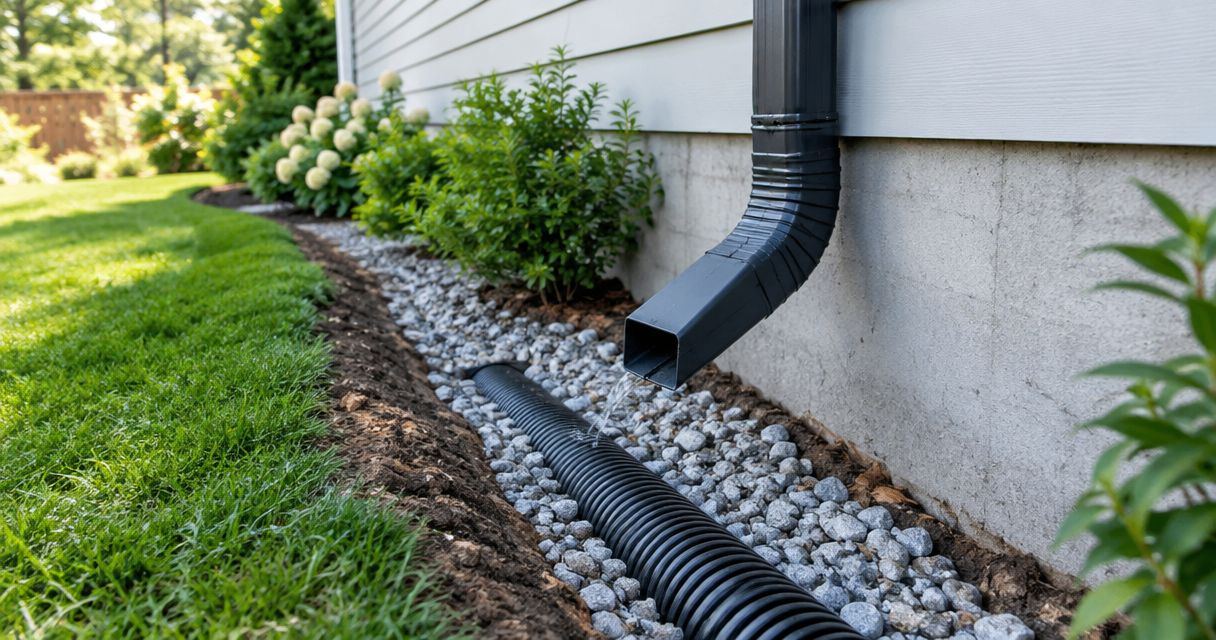
- Water flow: Check where runoff travels, especially at the garage entrance, driveway edges, and adjoining yard.
- Repair scope: Require a clear explanation of what the work fixes and what it leaves unchanged.
- Finished transition: Consider vehicle access, walking hazards, drainage direction, and the connection to adjacent panels.
A cosmetic improvement and a structural correction are different jobs. Your estimate should make that distinction explicit rather than calling every method a driveway repair.
Driveway repairs at a glance
The ranking below is a decision guide, not a claim that one technique works on every driveway. Each method has a distinct use case.
| Rank and option | Best for | Standout feature | Key limitation |
|---|---|---|---|
| 1. Panel replacement | An isolated broken section | Rebuilds the damaged section and exposes its base | Leaves the rest of the driveway unchanged |
| 2. Slab lifting | An intact panel that has settled | Changes elevation while retaining existing concrete | Does not rebuild fractured or deteriorated concrete |
| 3. Crack sealing | A small, stable crack | Treats the opening without replacing the slab | Does not restore support or correct movement |
| 4. Localized patching | An isolated surface chip or spall | Repairs a defined surface defect | Depends on sound concrete beneath the patch |
| 5. Resurfacing | Widespread surface wear on a stable slab | Renews the surface across a larger area | Does not solve settlement or an unstable base |
| 6. Full replacement | Widespread damage requiring reconstruction | Allows the driveway and base to be reassessed together | Requires demolition and a larger work area |
These options describe repair methods to discuss during an assessment. They are not a list of specific techniques offered by Crisscrossco.
1. Panel replacement: best driveway repair for isolated broken concrete
Panel replacement removes a damaged section and installs new concrete in its place. It fits a driveway where the problem is concentrated in one area and the neighboring sections remain suitable to keep.
Removing the panel also exposes the underlying base. That matters when a visible break is accompanied by settlement, poor support, or water collecting along the edge. The replacement scope should address the cause rather than simply reproduce the original elevation.
Panel replacement pros:
- Removes broken concrete instead of covering it.
- Allows the exposed base to be inspected and prepared.
- Keeps unaffected sections in place.
Panel replacement cons:
- New concrete can look different from older sections.
- Problems outside the replaced panel remain outside the repair.
Best for: A localized failure that needs reconstruction, not a surface treatment.
Before approving panel replacement in 2026, ask where demolition stops, how the new section meets existing concrete, and how water will leave the repaired area. Request an explanation of the joints and transitions included in the work.
Verdict: Buy panel replacement for an isolated broken section after the base and drainage are assessed.
2. Slab lifting: best driveway repair for an intact sunken panel
Slab lifting raises existing concrete by placing material beneath it. The purpose is to correct elevation while retaining a slab that remains suitable for repair.
Lifting methods use different materials and installation processes. Ask the contractor to identify the proposed method and explain why the concrete and support conditions fit it. A sunken panel and a panel broken into loose pieces are not the same repair problem.
Slab lifting pros:
- Retains existing concrete when its condition allows.
- Targets elevation differences between adjoining sections.
- Avoids removing the entire panel being raised.
Slab lifting cons:
- Does not rebuild badly fractured or deteriorated concrete.
- Requires access holes and repair of those openings.
- Does not automatically resolve the reason support was lost.
Best for: An intact driveway panel that has settled below its intended elevation.
Ask how lifting will affect the garage threshold, adjoining sidewalk, and runoff direction. Raising a slab is not enough if the resulting surface sends water toward a place it should not go.
Verdict: Buy slab lifting only when the existing concrete is sound and the proposed elevation works with drainage.
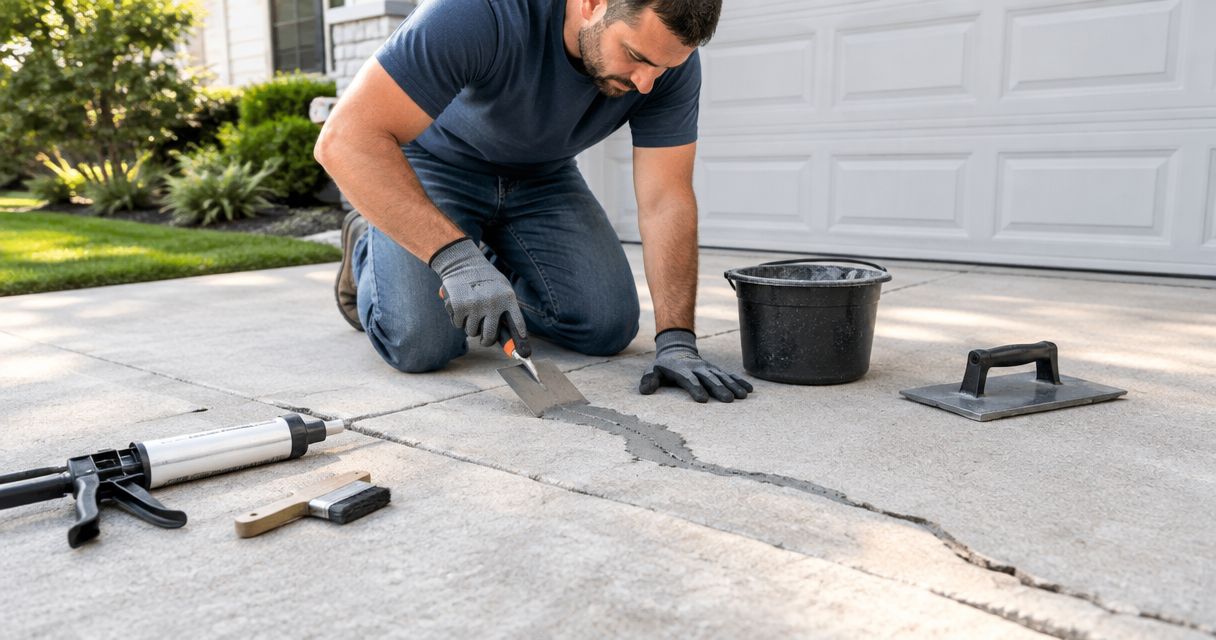
3. Crack sealing: best driveway repair for a small, stable opening
Crack sealing treats an opening in concrete with a material selected for the crack and exposure conditions. It addresses the opening; it does not lift a panel or rebuild the base.
The useful distinction is whether the crack is stable or part of ongoing movement. An opening with a height difference across it needs an assessment beyond a sealant recommendation. Do not assume a narrow crack is harmless solely because it looks small.
Crack sealing pros:
- Targets the opening without removing the panel.
- Limits water entry through the treated crack.
- Keeps the repair confined to the affected line.
Crack sealing cons:
- Does not correct settlement or a trip hazard.
- Remains a visible repair.
- Cannot stop movement caused by an unresolved support problem.
Best for: A stable crack in otherwise serviceable concrete.
For a 2026 crack-repair estimate, ask what preparation is included, which material is proposed, and how the contractor evaluated movement. Cleaning and preparing the opening belong in the scope, not in an assumption about what the crew will do.
Verdict: Buy crack sealing for a stable opening; skip it as the sole fix for displaced concrete.
4. Localized patching: best driveway repair for a surface chip
Localized patching removes loose or unsound material from a defined surface defect and replaces it with a suitable repair material. It fits chips and small areas of surface loss when the concrete beneath remains sound.
A patch relies on its connection to the existing concrete. Covering loose material without preparing the repair area leaves the underlying weakness in place.
Localized patching pros:
- Keeps work focused on a specific defect.
- Restores the damaged surface profile.
- Preserves the surrounding concrete.
Localized patching cons:
- The patch can differ in color and texture.
- Widespread deterioration requires a broader assessment.
- Patching does not correct panel movement.
Best for: An isolated chip or spall without a wider slab or support problem.
Ask whether the contractor will remove unsound concrete and prepare the exposed surface before applying the patch. Also ask whether the defect extends farther than the visible damaged spot.
Verdict: Buy localized patching for a defined surface defect with sound concrete beneath it.
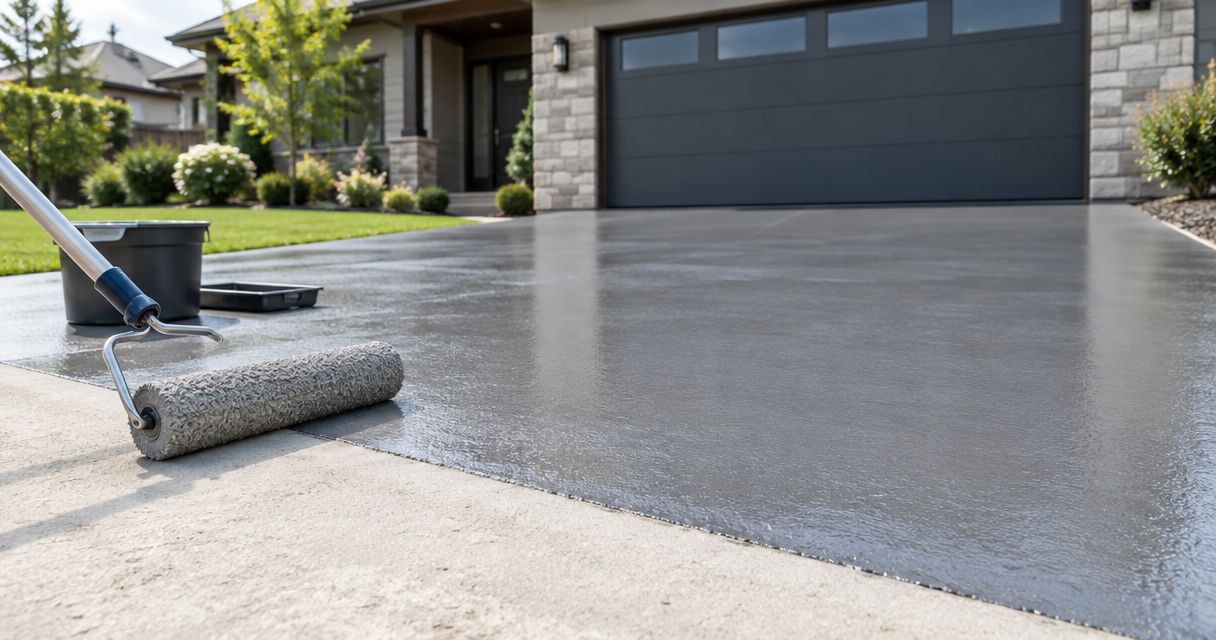
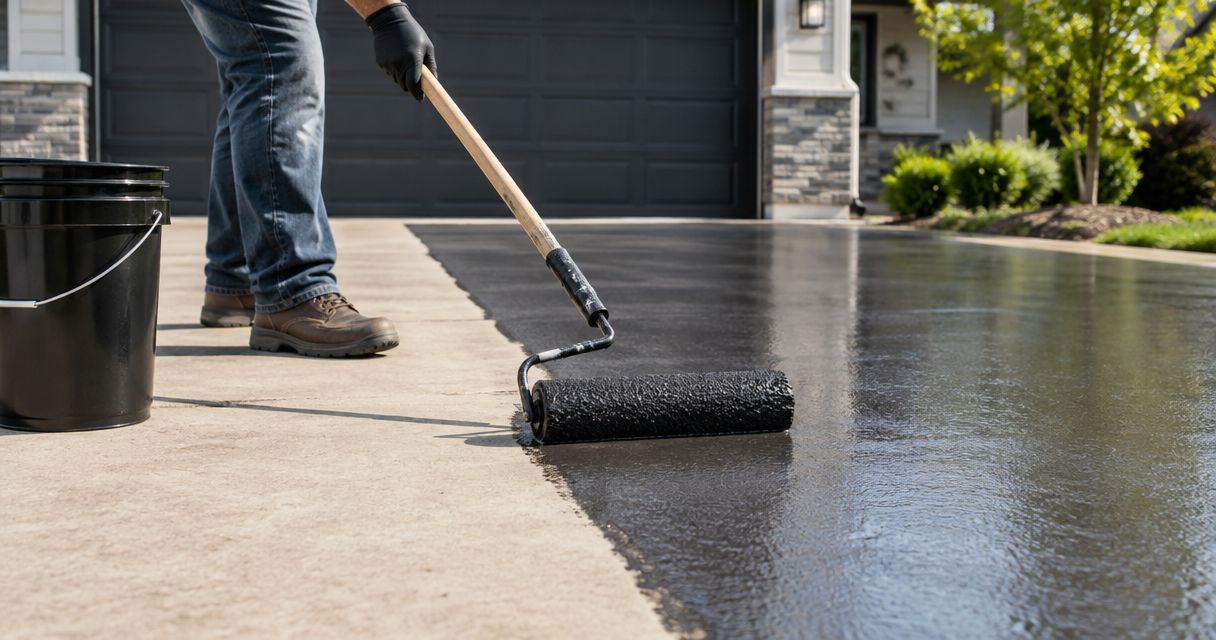
5. Resurfacing: best driveway repair for widespread surface wear
Resurfacing applies a new surface layer over prepared existing concrete. It fits a driveway whose main problem is surface condition rather than settlement, broken panels, or unstable support.
Resurfacing retains the underlying slab, including its limitations. Existing cracks and movement can affect the new surface, so the preparation and treatment of defects matter as much as the finish.
Resurfacing pros:
- Treats surface wear across a larger area.
- Retains the existing driveway slab.
- Provides an opportunity to select an appropriate surface texture.
Resurfacing cons:
- Does not correct a sunken panel or weak base.
- Existing movement can affect the overlay.
- Requires suitable existing concrete and surface preparation.
Best for: Broad surface wear on a stable, otherwise serviceable driveway.
Before choosing resurfacing in 2026, ask how the contractor will handle existing joints, cracks, edges, and garage transitions. The proposal should explain why the slab is suitable for an overlay, not just describe the finished appearance.
Verdict: Buy resurfacing for surface wear; skip it as a substitute for correcting movement.
6. Full replacement: best driveway repair for widespread failure
Full replacement removes the existing driveway and rebuilds it. It fits conditions where extensive breakage, deterioration, or reconstruction needs make retaining the old concrete unsuitable.
Removal creates access to the base and allows the driveway layout, elevations, and drainage to be reconsidered. Those decisions still need to appear in the scope. New concrete alone is not an explanation of how the underlying problem will be addressed.
Full replacement pros:
- Removes damaged concrete across the entire work area.
- Allows broad inspection and preparation of the base.
- Permits coordinated changes to elevations, joints, and transitions.
Full replacement cons:
- Requires demolition and removal of the existing driveway.
- Disrupts access across a larger area.
- Includes work on sections that a smaller repair would leave untouched.
Best for: Widespread failure or a driveway that needs reconstruction rather than isolated repairs.
Ask how vehicles will access the property during work and when the contractor permits traffic on the new concrete. Use the project's written instructions rather than a generic calendar estimate.
Verdict: Buy full replacement when an assessment shows that retaining the existing driveway is not a suitable repair strategy.
Match the repair to the damage
Start with the condition you can see, then ask the contractor to verify what lies beneath it. These categories help organize the conversation; they do not replace an on-site assessment.
- Surface damage: Compare patching for isolated defects with resurfacing for broader wear on sound concrete.
- Slab movement: Discuss lifting when the panel is intact, and investigate the loss of support.
- Broken concrete: Discuss panel replacement for localized failure or full replacement for widespread damage.
For your estimate, take 3 photos: one of the whole driveway, one of the damaged area, and one of the connection to the garage or adjoining concrete. Make 2 checks before the appointment: look for standing water after rain and note any height difference across the damage. Request 1 written scope that identifies the repair, preparation, and drainage work included.
Do not enter an unsafe area to collect photos. Observations from a safe position are enough to start the conversation.
Schedule Your Free On-Site Estimate
Ask Crisscrossco to assess concrete damage and nearby drainage concerns at your DFW home.
How we ranked
This ranking prioritizes matching the method to the defect, preserving suitable concrete, and addressing support and water flow. Panel replacement leads for localized broken concrete; the other methods win only within their stated use cases.
The ranking does not claim measured service life, tested performance, or guaranteed repair outcomes. The right scope depends on the condition of your driveway.
Which driveway repair should you choose?
If a single section is broken, start by asking about panel replacement. If the slab is intact but low, ask whether lifting fits. If the problem is confined to the surface, compare sealing, patching, or resurfacing before discussing demolition.
Crisscrossco is a practical choice for DFW homeowners seeking a free on-site estimate for concrete and drainage work. Ask for a recommendation that names the defect and explains why the proposed repair fits it.
For your 2026 project, reject a proposal that describes only the finished appearance while leaving support, water flow, and adjacent transitions unexplained.
FAQ
What's the best concrete driveway repair option?
The best concrete driveway repair option depends on the defect: panel replacement for isolated broken concrete, lifting for an intact sunken slab, and sealing for a stable crack. Widespread failure requires an assessment of whether full replacement is appropriate.
Is slab lifting better than replacing a driveway panel?
Slab lifting fits intact concrete that has settled; panel replacement fits concrete that needs reconstruction. Choose based on the slab's condition, underlying support, and required finished elevation.
Can resurfacing fix a sinking driveway?
Resurfacing does not correct a sinking driveway. It renews the surface over existing concrete, so settlement and support problems need separate assessment.
Should I seal a driveway crack with uneven sides?
A driveway crack with uneven sides needs an assessment of movement before sealing is treated as the repair. Sealant does not remove the elevation difference or restore the support beneath the slab.
How much does concrete driveway repair cost?
A project-specific estimate depends on the damage, repair method, access, preparation, and drainage work. Ask for a written scope so you can compare proposals for the same work.
Does driveway damage mean my house has foundation problems?
Driveway damage alone does not establish a house foundation problem. Tell the contractor about separate concerns at the house so each condition can be assessed on its own.
Can I request a free driveway estimate in DFW?
DFW homeowners can request a free on-site estimate from Crisscrossco for concrete work. Mention drainage concerns when scheduling so the discussion covers more than the visible driveway damage.
One last thing
Photograph where the water goes, not just where the concrete cracked. A close-up shows the defect; a wider view shows the driveway's relationship to the garage, yard, and nearby surfaces. Bring both to your estimate discussion.