Best overall for soil-water intrusion: exterior waterproofing with foundation drainage. Best for managing water inside an existing basement: interior perimeter drainage with a sump pump. Best first step for roof runoff: grading and downspout corrections. This 2026 guide ranks the best basement waterproofing methods by how they handle water, what needs maintenance, and where each approach falls short.
- The best basement waterproofing methods address the water source, not just the visible damp spot.
- Exterior waterproofing keeps water outside; interior drainage collects water after it enters.
- Crack injection treats a specific leak, not drainage problems around the entire foundation.
- DFW homeowners can request a free on-site estimate from Crisscrossco before choosing foundation waterproofing or drainage work.
Why the water source matters
A durable waterproofing plan starts with a diagnosis. Rainwater running toward the house, groundwater entering below the floor, a leaking wall crack, and indoor condensation need different responses. Covering the damp area does not establish which problem you have.
For DFW homeowners comparing basement waterproofing methods, start with a free on-site estimate from Crisscrossco. Describe where the water appears and whether it follows rain. Request an assessment of drainage and foundation conditions, not just a recommendation for a wall coating.
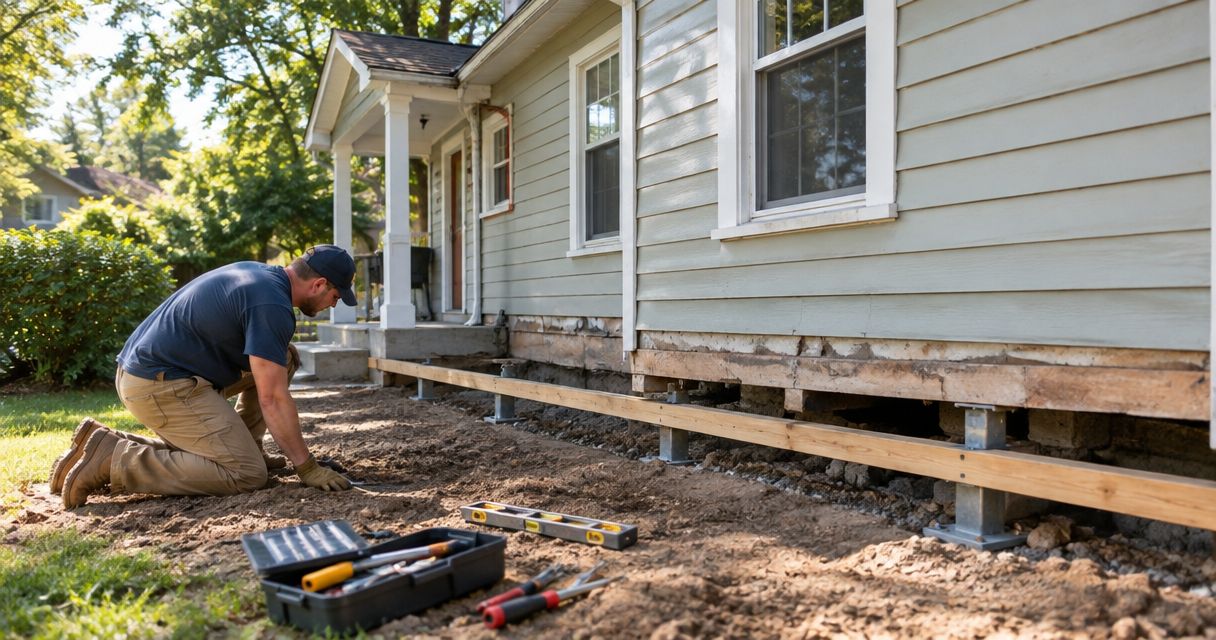
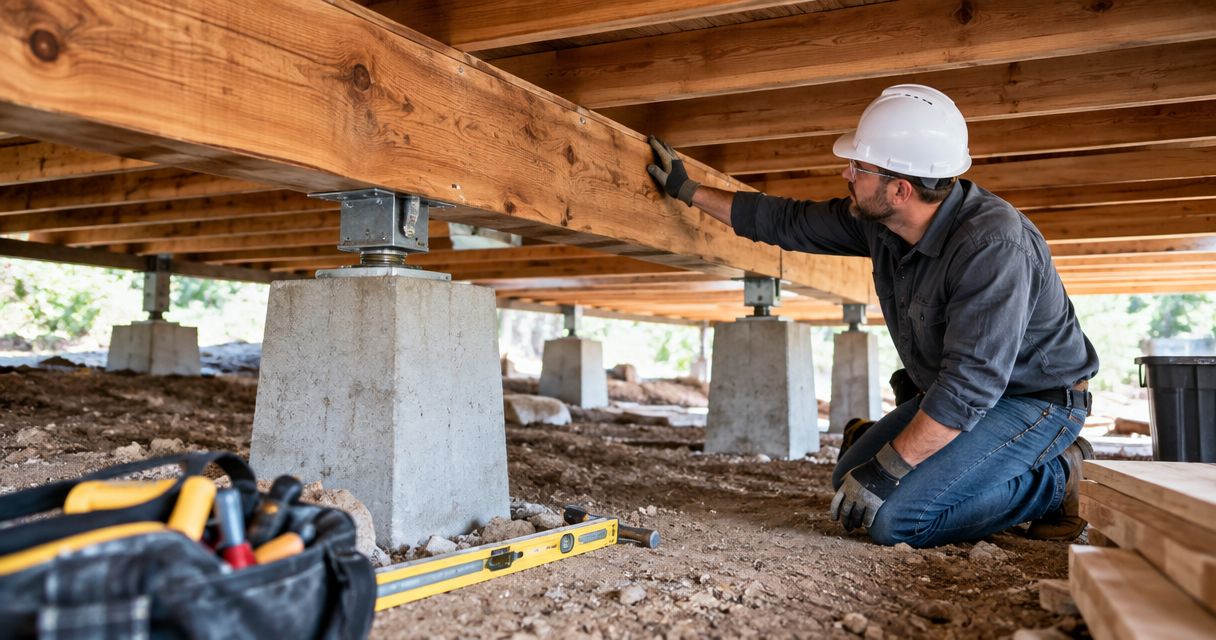
This guide applies to homes with basements or below-grade spaces. A slab foundation or a pier-and-beam crawl space needs its own repair assessment; basement systems are not interchangeable with house leveling. Structural movement also needs separate attention. Waterproofing does not straighten a displaced wall or repair a failing foundation.
What makes the best basement waterproofing methods
Use these criteria to compare a waterproofing proposal in 2026:
- Water-source control: Does the method stop water outside, collect it inside, or seal one entry point?
- Coverage: Does it address the wall, the wall-floor joint, the floor, or only a visible crack?
- Site access: Can the contractor reach the affected area without leaving untreated sections?
- Maintenance: Which drains, pumps, outlets, or exposed surfaces need inspection and cleaning?
- Repair scope: Does the plan distinguish water intrusion from foundation movement and condensation?
- Discharge: Where does collected water go, and does that route keep it from returning toward the house?
Durability means the method continues doing its intended job. It does not mean every system works without maintenance or suits every basement.
Waterproofing methods at a glance
| Rank and method | Best for | Standout function | Key limitation |
|---|---|---|---|
| 1. Exterior waterproofing with drainage | Accessible walls exposed to soil water | Keep water out | Excavation and drainage access constrain the work |
| 2. Interior perimeter drainage with a sump pump | Recurring entry around the basement perimeter | Collect water inside | Depends on drainage, pump operation, and discharge |
| 3. Grading and downspout corrections | Surface runoff directed toward the house | Redirect runoff | Does not resolve every below-grade leak |
| 4. Crack injection | An identified leak through a suitable concrete crack | Seal one entry point | Does not address the whole foundation |
| 5. Cementitious waterproofing | Suitable, stable masonry or concrete surfaces | Coat the substrate | Rigid coatings do not accommodate active movement |
| 6. Waterproof paint | Limited surface dampness after diagnosis | Cover the surface | Does not replace drainage or structural repair |
Exterior and interior systems perform different jobs. Exterior waterproofing separates the wall from surrounding water; interior drainage creates a collection route after water enters. Neither label alone tells you whether the proposal includes adequate drainage and discharge.
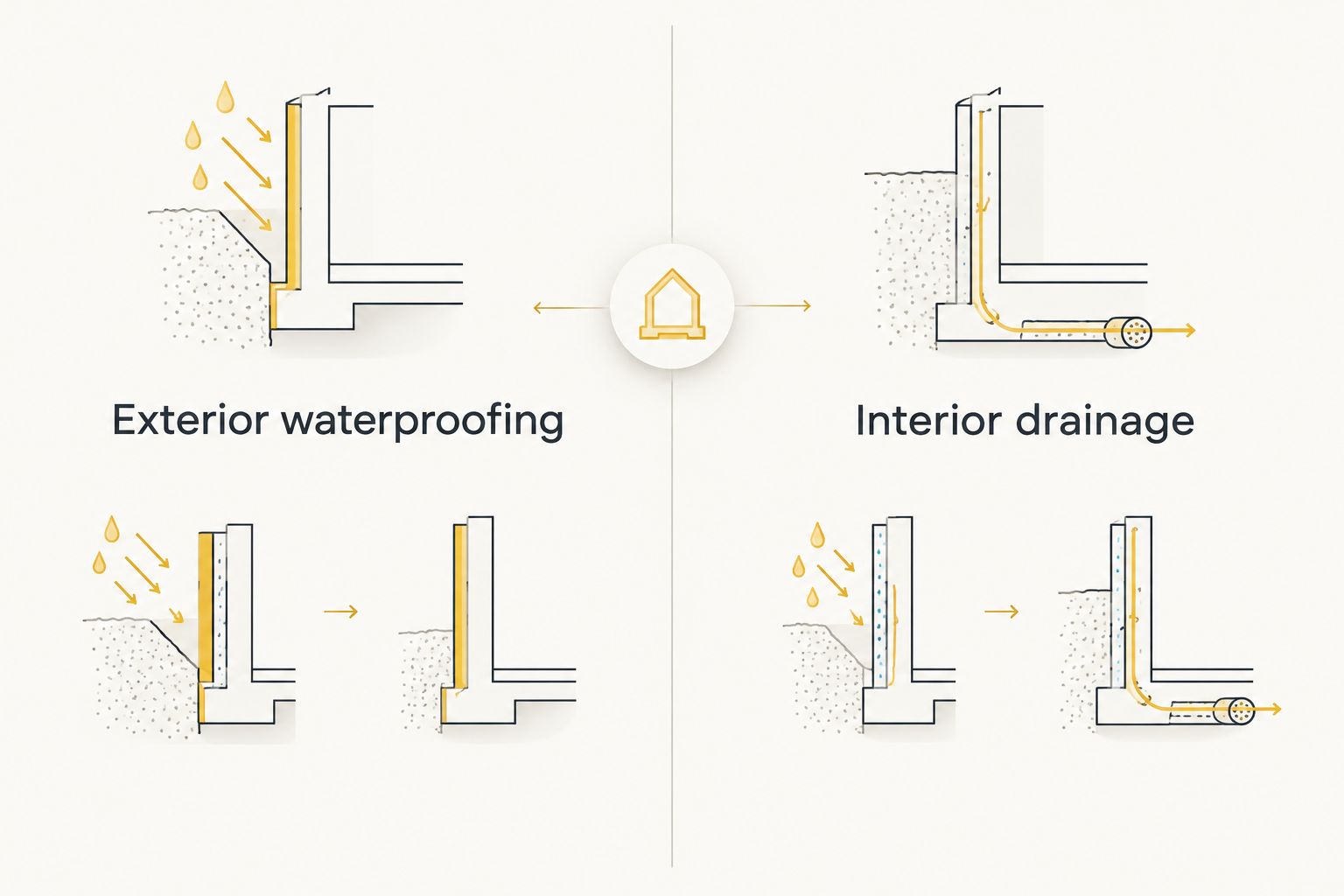
1. Exterior waterproofing: best for keeping soil water outside
Exterior waterproofing treats the outside face of a below-grade foundation wall. A compatible waterproofing membrane, surface preparation, protection, and drainage work together to keep surrounding water from reaching the interior.
Exterior waterproofing ranks first when the leaking wall is accessible and the problem is water against that wall. The membrane is only part of the system. Drainage needs a suitable route, and the finished grading must not direct runoff back toward the foundation.
Exterior waterproofing pros:
- Addresses water before it passes through the wall.
- Allows exposed wall defects to be assessed during the work.
- Combines wall protection with below-grade drainage.
Exterior waterproofing cons:
- Excavation disrupts the area around the affected wall.
- Patios, additions, utilities, and tight access complicate installation.
- Buried components are harder to inspect after backfilling.
Ask how the membrane will be protected during backfilling and how drainage will discharge. Excavation beside a foundation requires a work plan that accounts for structural conditions and nearby utilities.
Best for: Homeowners with accessible below-grade walls and confirmed exterior water intrusion.
Verdict: Buy when the diagnosis and access support a complete exterior system.
2. Interior perimeter drainage: best for managing recurring entry
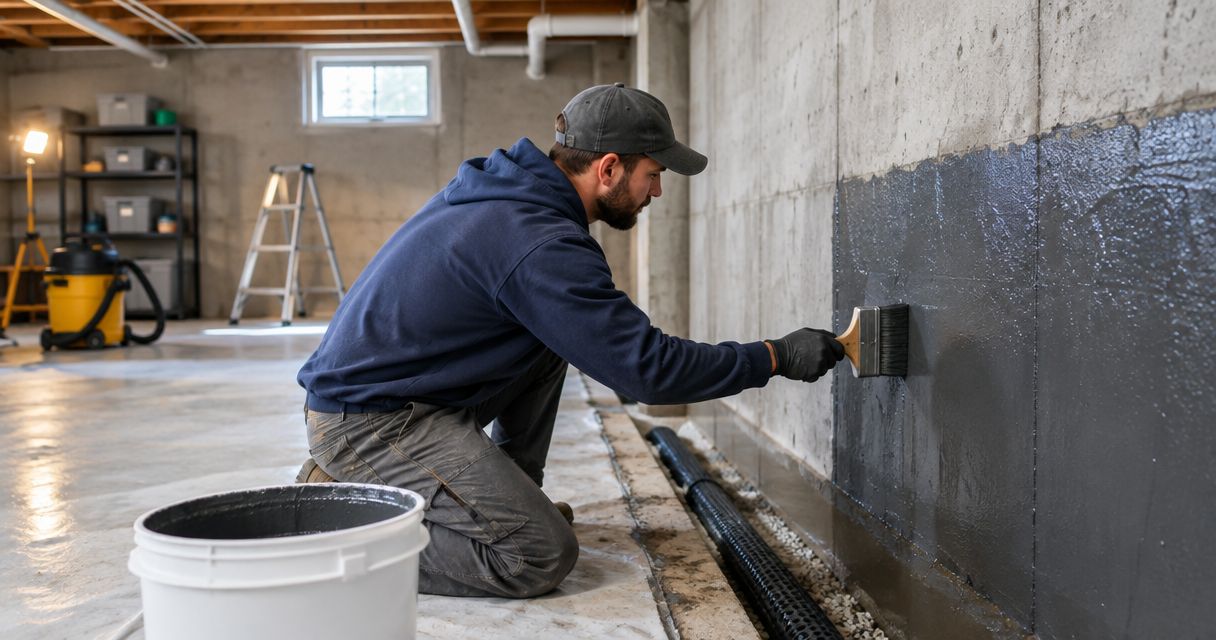
Interior perimeter drainage collects water near the basement's wall-floor boundary and routes it to a discharge point, commonly through a sump pump. It manages entry rather than making the exterior wall waterproof.
This approach suits an assessment where recurring perimeter water needs a collection system and exterior access is restricted. Finished walls and flooring still require attention: water management must not leave wet materials concealed behind them.
Interior perimeter drainage pros:
- Provides a collection path for recurring perimeter water.
- Avoids excavating the full exterior wall perimeter.
- Gives homeowners an accessible pump location for inspection.
Interior perimeter drainage cons:
- Pump-dependent systems need power and maintenance.
- The system does not prevent water from reaching the foundation wall.
- Installation disrupts the basement floor and affected finishes.
In 2026, evaluate the complete system rather than the pump alone. Ask where the collected water discharges, how the collection channel is accessed, and what happens during a power interruption. Do not assume backup equipment is included.
Best for: Existing basements with recurring perimeter entry and limited exterior access.
Verdict: Buy when reliable collection, discharge, and maintenance are part of the plan.
3. Grading and downspouts: best for correcting surface runoff
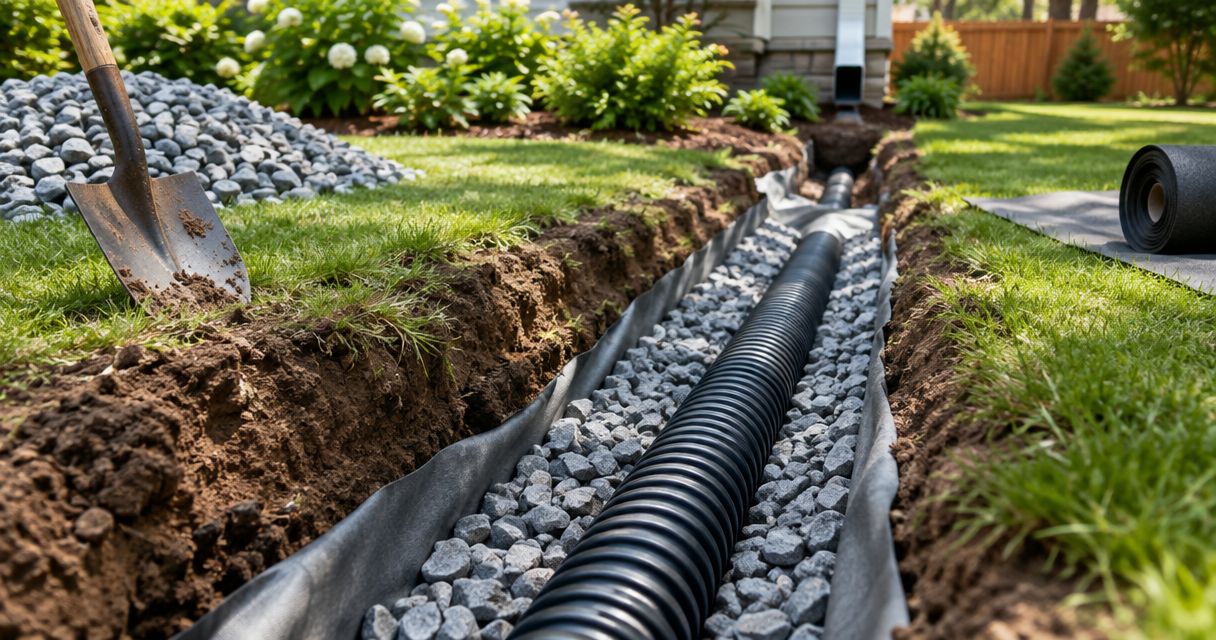
Grading and downspout corrections redirect surface water away from the foundation. They address runoff from roofs and surrounding ground, not every source of below-grade water.
Start here when you can trace water toward the house during rain. Overflowing gutters, a downspout emptying beside the wall, or ground sloping toward the building deserve attention before you choose an interior coating.
Grading and downspout correction pros:
- Addresses visible runoff at its source.
- Supports other foundation waterproofing systems.
- Leaves many drainage components accessible for inspection.
Grading and downspout correction cons:
- Does not seal a leaking foundation crack.
- Does not independently resolve groundwater entering below the floor.
- Site boundaries and neighboring drainage restrict discharge choices.
Ask where water will travel across the entire affected area. Moving the puddle from one wall to another is not a drainage solution. Avoid directing runoff onto neighboring property or creating a new low spot against the house.
Best for: Homes where roof runoff or surface grading directs rainwater toward the foundation.
Verdict: Buy as the first correction for confirmed surface runoff; do not treat it as a universal basement repair.
4. Crack injection: best for an isolated concrete leak
Crack injection fills a suitable concrete crack with a repair material selected for the crack's condition and purpose. Polyurethane systems are used for water sealing; epoxy systems are used in appropriate concrete bonding repairs.
The material choice follows the diagnosis. A leaking crack and a moving structural crack are not the same problem, and filling either one does not correct drainage around the house.
Crack injection pros:
- Targets an identified water-entry path.
- Limits the repair area compared with a perimeter system.
- Offers a repair approach for suitable accessible concrete cracks.
Crack injection cons:
- Does not stop water entering through other locations.
- Ongoing movement requires separate evaluation.
- Material suitability depends on the crack and substrate conditions.
Ask whether the crack is stable, whether it extends through the wall, and whether the repair is intended to seal water or address a structural concern. Do not accept those purposes as interchangeable.
Best for: An isolated leak through a suitable concrete crack after movement has been assessed.
Verdict: Buy for a diagnosed crack leak; hold if structural movement remains unresolved.
5. Cementitious waterproofing: best for suitable stable surfaces
Cementitious waterproofing uses a mineral-based coating on prepared concrete or masonry. It creates a water-resistant treatment whose suitability depends on the substrate, exposure, and the specified coating system.
It belongs in a targeted plan, not as a substitute for investigating persistent water entry. Preparation matters because the coating relies on its connection to the underlying surface.
Cementitious waterproofing pros:
- Applies to compatible concrete and masonry surfaces.
- Treats a broader surface area than an individual crack repair.
- Provides an interior treatment where the specified system suits the exposure.
Cementitious waterproofing cons:
- Rigid coatings do not accommodate active cracking well.
- Poor preparation undermines adhesion.
- The treatment does not redirect exterior water or repair drainage.
Ask what the coating is designed to resist and whether the proposed application matches its published instructions. A generic description such as waterproof cement is not enough to establish suitability.
Best for: Stable, compatible surfaces where a specified coating fits the diagnosed moisture condition.
Verdict: Hold until surface condition, water exposure, and coating suitability are confirmed.
6. Waterproof paint: best for limited surface treatment
Waterproof paint is a surface coating, not a perimeter water-management system. Its application requirements and limitations depend on the actual coating and the condition of the wall.
Rank paint last for recurring basement leaks. A freshly covered wall does not establish that water entry has stopped, and peeling or blistering calls for investigating moisture rather than repeatedly repainting.
Waterproof paint pros:
- Applies directly to suitable prepared surfaces.
- Leaves the treated surface visible for inspection.
- Provides a surface-treatment option where its specified use fits.
Waterproof paint cons:
- Does not collect or discharge incoming water.
- Does not repair foundation movement.
- Adhesion depends on substrate condition and preparation.
Check that the coating is compatible with the wall and its existing finish. If liquid water enters through a joint or crack, diagnose that entry point before considering paint.
Best for: Limited surface treatment after the moisture source and coating suitability are established.
Verdict: Skip as the primary repair for recurring water intrusion.
How the durability ranking works
This 2026 ranking prioritizes source control, coverage, access, maintenance, and discharge. It is a decision guide, not a measured lifespan comparison: no single service-life figure applies across different soils, installations, materials, and water conditions.
Exterior waterproofing leads for accessible walls exposed to soil water. Interior drainage leads when the practical objective is collecting recurring entry. Surface drainage moves ahead of both when roof runoff is the actual cause. The right diagnosis outranks the list position.
Which waterproofing method should you choose?
For an undecided homeowner, choose an assessment before choosing equipment. Record where water first appears, what the weather was doing, and whether you see wall cracks, floor cracks, or water at the wall-floor joint.
Use this short decision sequence for your 2026 project:
- Water source: Separate rain-related entry from condensation and plumbing leaks.
- Foundation condition: Flag displacement, changing cracks, or other movement for assessment.
- Drainage route: Establish where surface and collected water can discharge.
- Repair scope: Match each proposed repair to the problem it addresses.
- Maintenance: Get written instructions for pumps, channels, outlets, and treated surfaces.
Crisscrossco provides foundation repair, drainage/waterproofing solutions, and concrete work for residential property owners. Request a free on-site estimate in DFW and ask which work addresses water intrusion and which work addresses foundation movement. Keep those scopes clear before approving a project.
Schedule your free on-site estimate
Discuss foundation concerns, drainage, and waterproofing for your DFW home.
FAQ
What's the best basement waterproofing method for durability?
Exterior waterproofing with drainage is the leading choice for accessible below-grade walls exposed to soil water. Interior drainage is a different solution: it collects water after entry. Choose according to the diagnosed source, access, and discharge route.
Is exterior waterproofing better than an interior sump system?
Exterior waterproofing is better for preventing entry through an accessible exterior wall; an interior sump system is better suited to collecting water inside. The methods perform different jobs and can form parts of the same water-management plan.
Can waterproof paint stop a leaking basement?
Waterproof paint is not a substitute for repairing recurring water entry. Identify leaking cracks, joints, runoff problems, and drainage conditions before selecting a surface coating.
Will crack injection fix all basement water problems?
Crack injection treats a specific suitable crack, not every basement water source. Water entering through another crack, the wall-floor joint, or the floor needs its own assessment.
Do I need foundation repair as well as waterproofing?
Foundation repair needs a separate assessment when structural movement is present. Waterproofing manages water; it does not level a house or straighten a displaced foundation wall.
What should I ask during a waterproofing estimate?
Ask what causes the water entry, which areas the work covers, where water discharges, and what maintenance is required. Also ask whether foundation movement needs a separate repair scope.
Does Crisscrossco offer free on-site estimates in DFW?
Crisscrossco offers free on-site estimates for DFW homeowners. Request an assessment of foundation concerns, drainage, or waterproofing and explain where you see water or movement.
One last thing
Before closing walls or replacing basement finishes in 2026, make sure the water-entry problem has been addressed and affected materials are dry. Otherwise, the new finish hides the area you need to monitor.
Ask for a discharge explanation, not just a waterproofing product name. A membrane, drain, or pump is only one part of the repair. The proposal should explain how water is kept away, collected when necessary, and routed away from the house.