Best overall for persistently wet soil: a shallow French drain. Best for runoff entering from higher ground: an interceptor French drain. Best for puddles sitting on the surface: a French drain paired with surface inlets. This 2026 guide compares the best French drain types for yard drainage and explains when DFW homeowners need a different solution.
- The best French drain types for yard drainage match the water source, soil conditions, and discharge route.
- A shallow French drain suits persistently wet soil; an interceptor drain addresses water entering from uphill.
- Surface puddles often need catch basins or grading, not a buried French drain alone.
- Crisscrossco provides drainage services for DFW homeowners seeking a free on-site estimate.
Why this matters
A French drain collects water from the surrounding soil and carries it toward a suitable outlet. It does not fix every drainage problem. Water sitting above compacted soil, runoff crossing a driveway, and moisture beside a foundation require different collection strategies.
For DFW homeowners, the first decision is not which pipe to buy. It is where the water comes from and where it can safely go. Crisscrossco provides drainage, foundation repair, and concrete services, so you can request a free on-site estimate that addresses the problem rather than a pipe choice alone.
A drain needs both a collection path and a discharge plan. Installing one without the other leaves the main question unanswered.
What makes the best French drain for your yard?
Use these criteria to compare a proposed drainage layout in 2026:
- Water source: Identify whether the problem is surface runoff, water moving through soil, or concentrated roof runoff.
- Collection location: Put the collection system where water travels or accumulates, not simply where digging is easiest.
- Discharge route: Establish a suitable outlet before choosing the trench route. Do not redirect the problem onto a neighboring property.
- Soil separation: Use an appropriate filter design to limit soil entering the drainage aggregate and pipe.
- Maintenance access: Ask how the pipe, inlets, and outlet will be inspected and cleared.
- Foundation relationship: Check whether drainage work affects soil beside the house, existing utilities, or structural concerns.
The layouts below describe different uses of a French drain, not five interchangeable products. Several use similar components but collect water in different places.
French drain types at a glance
| Drain layout | Best for | Standout feature | Key limitation |
|---|---|---|---|
| Shallow French drain | Persistently wet lawn soil | Collects water near the affected area | Does not directly capture surface puddles without an inlet |
| Interceptor French drain | Water entering from higher ground | Crosses the path of incoming water | Requires a workable route across the slope |
| Foundation-side French drain | Subsurface moisture beside the house | Collects water near the affected foundation area | Requires care around foundations and buried services |
| Deep subsurface French drain | A confirmed deeper water problem | Targets water below a shallow collection zone | More excavation; depth requires site assessment |
| French drain with surface inlets | Mixed puddling and wet soil | Combines surface collection with subsurface drainage | Inlets and buried components need separate maintenance |
There is no universal winner for every yard. Choose the collection method first, then choose the layout that reaches a suitable outlet.
1. Shallow French drain: best for persistently wet lawn soil
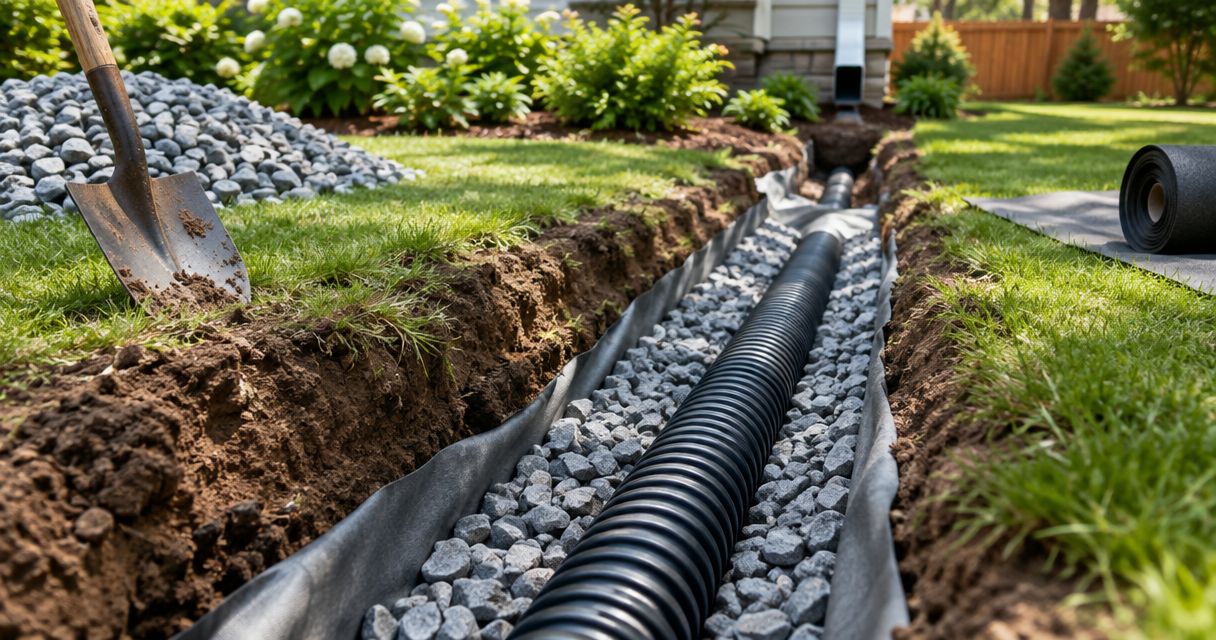
A shallow French drain uses a trench containing drainage aggregate and perforated pipe to collect water from nearby soil. It suits an area that stays wet beneath the grass rather than a problem caused only by water flowing across the surface.
This is the default layout to discuss when a lawn remains soggy after surrounding areas have drained. The important question is whether water can move through the soil into the trench.
Shallow French drain pros:
- Collects subsurface water along a continuous route.
- Targets a wet lawn area without requiring a foundation-side layout.
- Can follow the affected part of the yard toward an outlet.
Shallow French drain cons:
- Buried pipe alone does not provide a direct entrance for surface puddles.
- Trenching disturbs the lawn and can conflict with roots or utilities.
- Poor filtration or an obstructed outlet limits performance.
Best for: Homeowners whose lawn stays wet within the soil and has a feasible discharge route.
Before accepting this option, ask the contractor to identify the wet area and explain why a shallow collection zone fits it. A trench chosen without checking water movement is a construction plan, not a diagnosis.
Verdict: Buy a shallow French drain when persistently wet soil is the confirmed problem; skip it as a stand-alone fix for surface puddles.
2. Interceptor French drain: best for runoff from higher ground
An interceptor French drain sits across the path of water moving downhill through soil. Its purpose is to collect that water before it reaches the lower area you want to protect.
Placement defines this layout. A drain at the bottom of a wet yard collects water after it arrives; an interceptor aims to collect it along the incoming path. Surface runoff still needs an appropriate surface collection method when it does not enter the soil.
Interceptor French drain pros:
- Addresses incoming water rather than only the lowest wet spot.
- Creates a collection line across an identified water path.
- Can form part of a wider grading and drainage plan.
Interceptor French drain cons:
- Requires enough space to cross the relevant water path.
- Cannot stop water that bypasses the collection line.
- Does not replace surface drainage where runoff travels over the ground.
Best for: DFW homeowners with a documented water path from higher ground toward a lawn or house.
Ask where water enters the property and whether it travels above or below the surface. Those answers determine whether an interceptor French drain, a swale, or a surface inlet fits the problem.
Verdict: Buy an interceptor layout for identified subsurface water entering from uphill; hold if the incoming path has not been established.
3. Foundation-side French drain: best for moisture beside the house
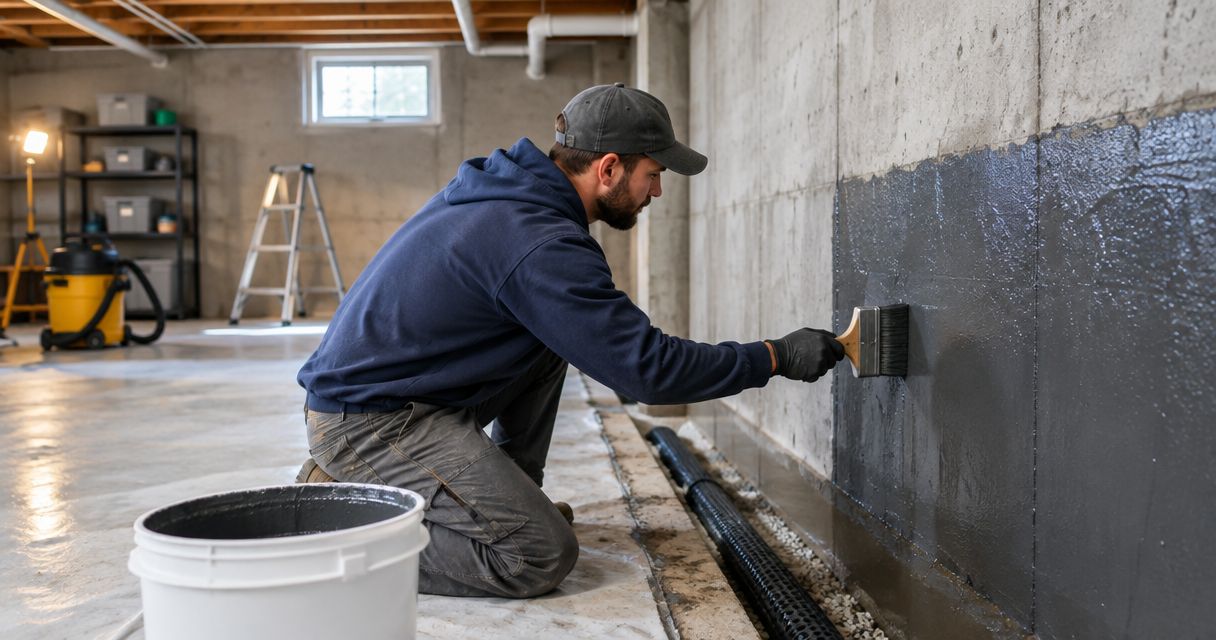
A foundation-side French drain collects subsurface water near an affected part of the house. It is not the same as extending a downspout, and it is not a substitute for evaluating foundation movement.
Water collecting beside a house deserves a plan that considers both drainage and the structure. Excavation, buried utilities, foundation depth, and the proposed outlet all affect whether this layout is suitable.
Foundation-side French drain pros:
- Focuses collection near the moisture problem.
- Can work alongside roof-water management and grading corrections.
- Allows drainage planning to address the house rather than only the lawn.
Foundation-side French drain cons:
- Excavation beside a foundation requires careful planning.
- Does not repair cracks, settlement, or other structural damage.
- Is not automatically appropriate around the entire house.
Best for: Homeowners with confirmed subsurface moisture near the foundation and a professionally assessed collection route.
Crisscrossco provides yard drainage services for DFW homeowners who want a free on-site estimate. If you also notice sticking doors, uneven floors, or changing cracks, describe those concerns when scheduling. Do not assume drainage work and foundation repair are interchangeable.
Verdict: Hold until the foundation-side conditions are assessed; buy only a layout supported by that assessment.
4. Deep subsurface French drain: best for confirmed deeper water
A deep subsurface French drain places its collection zone below a shallow yard-drain layout. It addresses water at a deeper level, not simply a lawn puddle that looks severe.
Depth is a design decision. A deeper trench adds excavation and changes the relationship between the drain, utilities, surrounding soil, and discharge point. It does not automatically make drainage better.
Deep subsurface French drain pros:
- Reaches a deeper collection zone when the site requires it.
- Addresses water a shallow layout does not intercept.
- Can form part of a site-specific subsurface drainage plan.
Deep subsurface French drain cons:
- Requires more excavation than a shallower layout.
- Needs careful assessment of underground conflicts and outlet elevation.
- Adds unnecessary work when the problem is only surface runoff.
Best for: Properties where an assessment identifies a deeper water source and supports deeper collection.
For a 2026 drainage proposal, ask what observation supports the proposed depth. The answer should connect depth to the water problem, not describe deeper installation as an upgrade by itself.
Verdict: Hold until deeper water is confirmed; skip deeper excavation chosen without a site-specific reason.
5. French drain with surface inlets: best for puddles and wet soil
A combined layout uses surface inlets to collect visible runoff and a French drain to collect water from soil. The components serve different jobs, even when they share part of a discharge route.
A catch basin provides an entrance for surface water. A perforated collection pipe receives water from its surroundings. The connecting pipework needs a design that carries collected water away rather than releasing it where drainage is unwanted.
Combined drainage layout pros:
- Addresses surface pooling and subsurface wetness together.
- Places inlets at identified collection points.
- Separates the water-entry problem from the discharge route.
Combined drainage layout cons:
- Surface inlets collect leaves, sediment, and other debris.
- More components create more inspection points.
- Incorrect connections undermine the collection plan.
Best for: Yards with both visible puddles and persistently wet soil.
Request a drawing that identifies which sections collect water and which sections convey it. A solid pipe carrying roof runoff away from a house is not itself a French drain.
Verdict: Buy a combined layout when both surface pooling and subsurface wetness are confirmed; skip extra components that serve no identified problem.
Check the water before choosing a drain
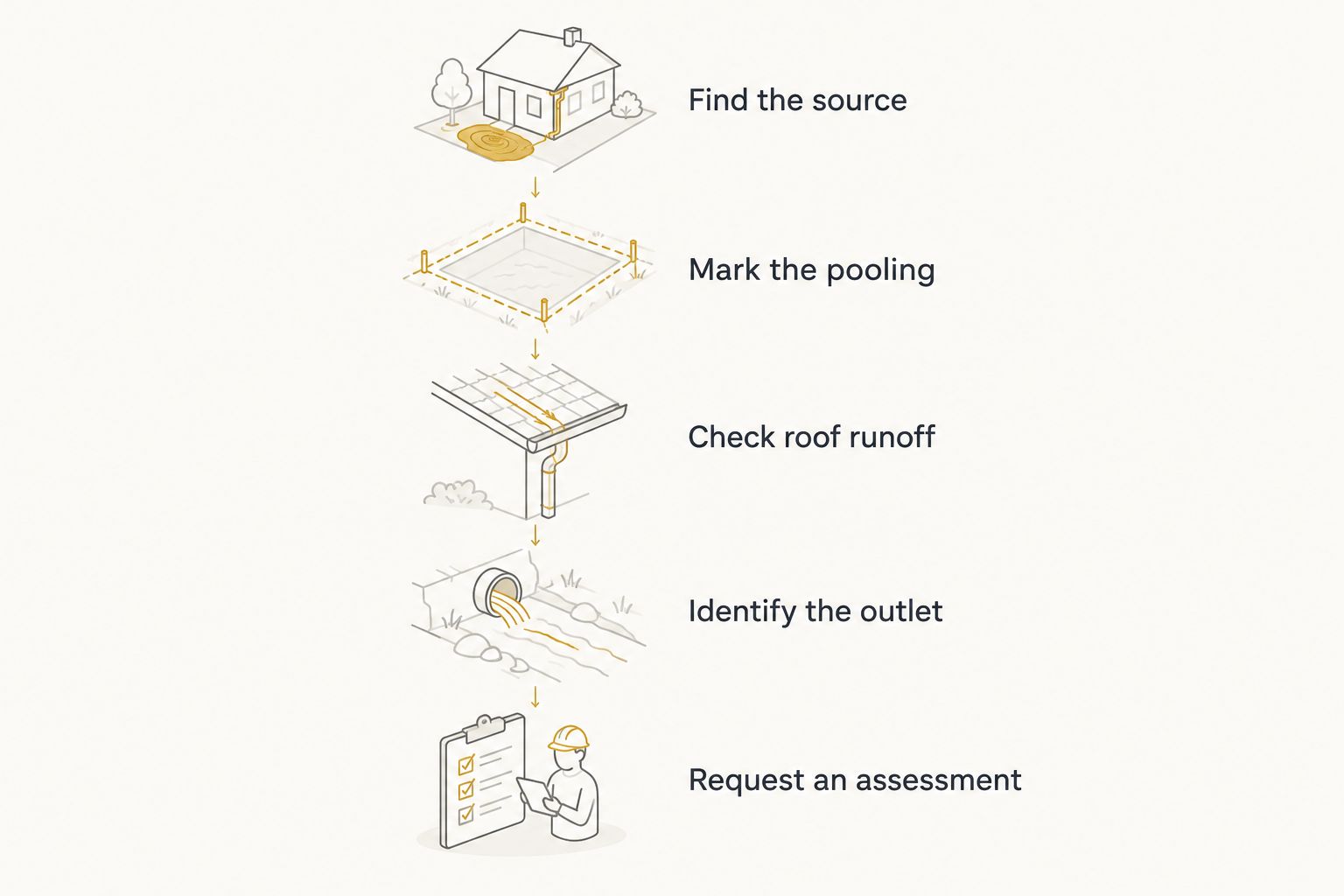
Use this sequence to prepare for an estimate. Observe from a safe location; do not enter trenches or investigate buried utilities yourself.
- Find the source. Watch where water first enters or accumulates during rain.
- Mark the pooling. Take 3 photos: the incoming path, the wet area, and the proposed discharge area.
- Check roof runoff. Compare 2 water sources separately: downspout discharge and runoff arriving from the yard.
- Identify the outlet. Ask where collected water will go and what approvals or restrictions apply.
- Request an assessment. Bring a 1-page note describing what stays wet, what changes during rain, and any house symptoms.
These observations help a contractor distinguish a collection problem from an outlet problem. They also make it easier to compare proposals that otherwise use the same general term: French drain.
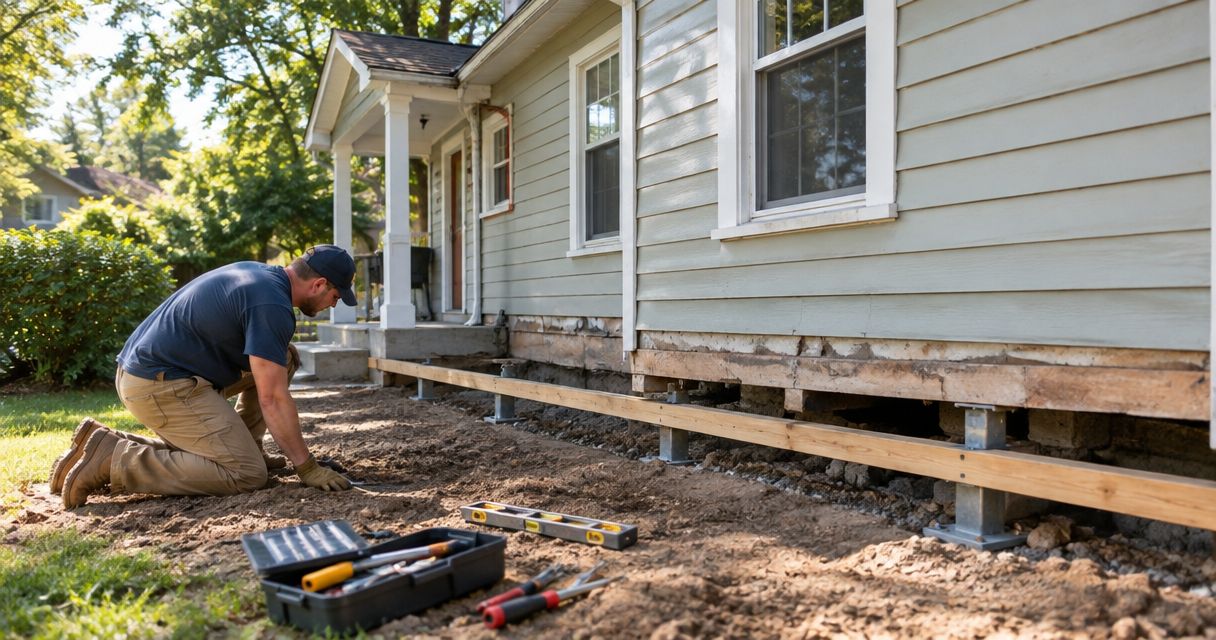
Ask Crisscrossco to explain the collection area, discharge route, and maintenance access during your free on-site estimate. Include foundation or house-leveling concerns in the same conversation so the drainage recommendation accounts for them.
Schedule Your Free On-Site Estimate
Discuss yard drainage and foundation concerns at your DFW home.
How these drain types are ranked
This 2026 ranking compares layouts by water source, collection location, outlet requirements, maintenance, and proximity to the foundation. It is a selection guide, not a claim that one installation works on every property.
The shallow layout comes first because it directly addresses the core French drain use: collecting water from wet soil. The remaining layouts earn their place through distinct site conditions, not additional pipe or deeper excavation.
Which French drain should you choose?
Start with a shallow French drain assessment for persistently wet lawn soil. Choose an interceptor for confirmed incoming subsurface water, and consider surface inlets when puddles need a direct collection point.
Keep foundation-side and deep layouts tied to an assessment. For your 2026 project, ask Crisscrossco for a free on-site estimate before committing to excavation. The next move is a drainage diagnosis, not a purchase based on pipe shape.
FAQ
What's the best French drain type for a soggy yard?
A shallow French drain is the starting option for persistently wet lawn soil with a suitable discharge route. Visible surface puddles need a separate check for grading or surface collection.
Is a French drain better than a catch basin?
A French drain collects water from soil, while a catch basin collects water at the surface. Choose by how the water reaches the problem area; a mixed problem can require both.
Will a French drain fix standing water beside my house?
A French drain addresses subsurface water, not every cause of standing water beside a house. Check roof runoff, ground slope, surface collection, and foundation conditions before choosing the repair.
Should I choose perforated pipe or solid pipe?
Perforated pipe collects water from surrounding soil; solid pipe conveys water without intentionally collecting or releasing it along the route. A drainage system can use both for different purposes.
Does a deeper French drain work better?
A deeper French drain is appropriate only when the water source requires deeper collection. Extra depth does not solve an incorrectly identified surface-water problem.
Can a French drain repair foundation damage?
A French drain manages water; it does not repair foundation damage. Have cracks, uneven floors, and other movement concerns evaluated separately from the drainage layout.
What should I ask during a drainage estimate?
Ask where water enters, how it will be collected, where it will discharge, and how the system will be maintained. Request an explanation of any excavation proposed beside the house.
One last thing
A pipe can be open and still fail to drain a yard if its outlet is blocked or poorly positioned. Check the discharge plan as closely as the trench design. That is the practical test for any 2026 French drain proposal.