Best overall: drainage paired with ground-moisture control. Best for recurring standing water: a crawl space drain and sump system. Best for exposed soil: a sealed ground vapor barrier. This 2026 guide compares the best waterproofing solutions for crawl space homes in Dallas–Fort Worth; Crisscrossco provides drainage/waterproofing and foundation repair services for residential homeowners.
- The best waterproofing solutions for crawl space homes address water entry, soil moisture, and humid air separately.
- Crisscrossco provides drainage/waterproofing and foundation repair services for DFW homeowners seeking an on-site estimate.
- Exterior drainage addresses runoff; a crawl space drain and sump system removes collected water.
- Ground vapor barriers and encapsulation control moisture, but neither replaces drainage where water collects.
- A dehumidifier controls airborne moisture; it does not repair leaks or remove standing water.
Why this matters
A wet crawl space is not one problem. Rainwater entering from outside, moisture rising from exposed soil, and condensation need different responses. Plumbing leaks need repair at the source, not another waterproofing layer.
Choosing the wrong treatment leaves the cause untouched. A liner does not redirect yard runoff, and a dehumidifier does not pump out water. Start with the source, then choose the system.
For DFW homeowners, the inspection should also address the condition of the supports beneath the house. Waterproofing manages moisture; foundation repair and house leveling address structural conditions. One is not a substitute for the other.
What makes the best crawl space waterproofing solution?
Use these criteria to assess a recommendation before accepting a scope of work:
- Source control: Does the proposal address where water or moisture originates, rather than just where you notice it?
- Water removal: If liquid water collects, does the plan explain how it reaches a drain and where it discharges?
- Ground coverage: Does the plan address exposed soil, liner seams, edges, and penetrations?
- Humidity control: Does the enclosed space need a separate way to manage moisture in the air?
- Service access: Can you still reach plumbing, wiring, supports, and equipment for inspection and maintenance?
- Structural coordination: Does the work account for damaged supports or planned foundation repairs before covering surfaces?
For your 2026 project, ask the contractor to explain the job as 2 parts: the problem being corrected and the work that corrects it. A list of materials without that connection is not a useful repair plan.
Crawl space waterproofing at a glance
These 6 options have different jobs. The order prioritizes controlling the source before adding moisture-control equipment; it is not a claim that every house needs every treatment.
| Rank and option | Best for | Standout function | Key limitation |
|---|---|---|---|
| 1. Exterior drainage corrections | Runoff collecting beside the house | Redirects surface water before it enters | Does not address plumbing leaks or soil vapor |
| 2. Crawl space drain and sump system | Recurring standing water below the house | Collects and pumps liquid water to a discharge point | Needs maintenance, power, and a suitable outlet |
| 3. Ground vapor barrier | Moisture rising from exposed soil | Separates crawl space air from the soil surface | Does not remove standing water |
| 4. Crawl space encapsulation | A crawl space needing coordinated moisture isolation | Combines ground coverage with detailed perimeter sealing | Requires drainage and humidity planning |
| 5. Crawl space dehumidifier | Persistent humidity after water sources are addressed | Removes moisture from the air | Does not stop water entry |
| 6. Targeted entry-point sealing | Identified gaps admitting water | Closes specific paths through the enclosure | Cannot resolve runoff pressure or structural movement alone |
1. Exterior drainage: best for runoff beside the house
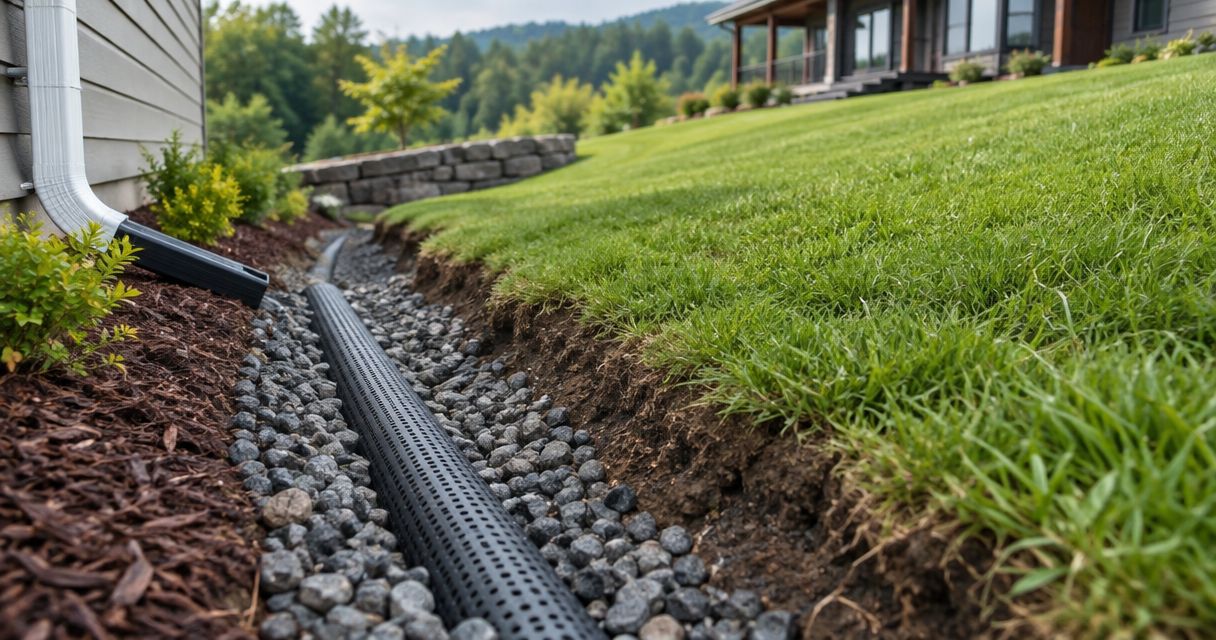
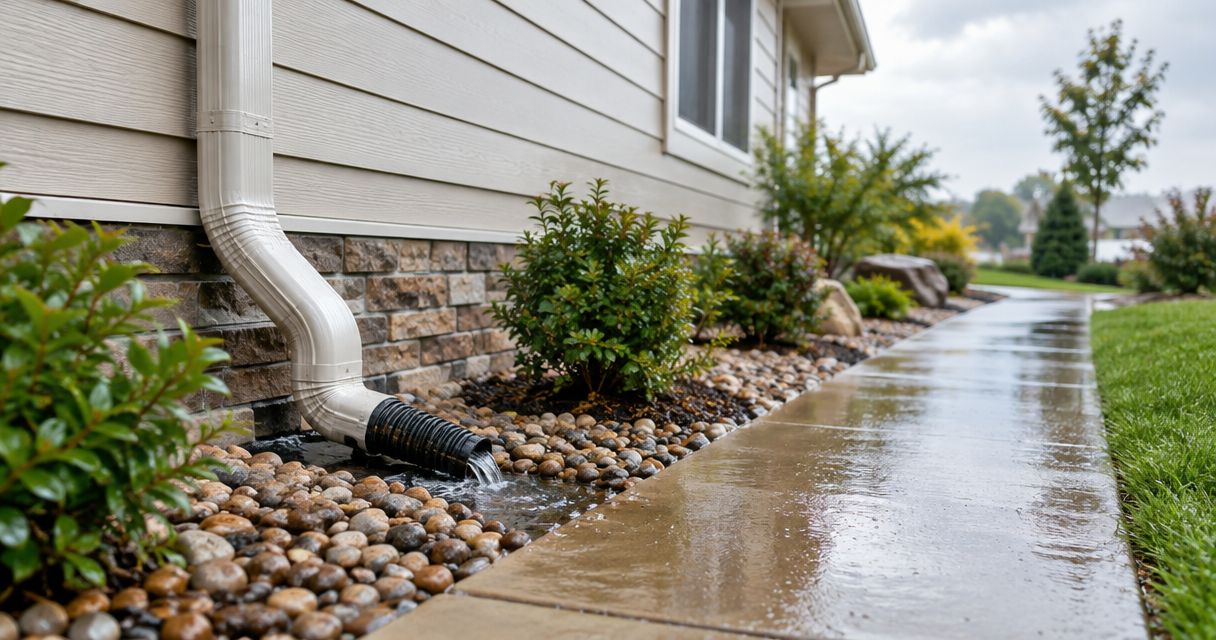
Exterior drainage corrections address water approaching the foundation. Depending on the site, the scope can include correcting surface slopes, managing roof runoff, or collecting water in an appropriately designed drain.
For a crawl space that gets wet during rain, inspect outside before treating the interior. Follow the water from the roof and yard toward the house, then identify a suitable discharge route. A drain needs somewhere to send the water.
Exterior drainage pros:
- Addresses runoff before it reaches the crawl space.
- Connects roof-water management with yard drainage.
- Can be coordinated with walkways and other concrete surfaces that affect water flow.
Exterior drainage cons:
- Requires a site-specific route and outlet.
- Does not control moisture rising from exposed soil.
- Excavation can affect landscaping and access.
Best for: DFW homeowners whose crawl space moisture follows rain or visible ponding near the foundation.
Compare exterior drainage solutions for foundation protection when runoff is the main concern. Ask how the proposed work handles both collection and discharge.
Verdict: Buy the drainage correction when runoff is the confirmed source; hold interior-only treatments until that source is addressed.
2. Drain and sump system: best for recurring standing water
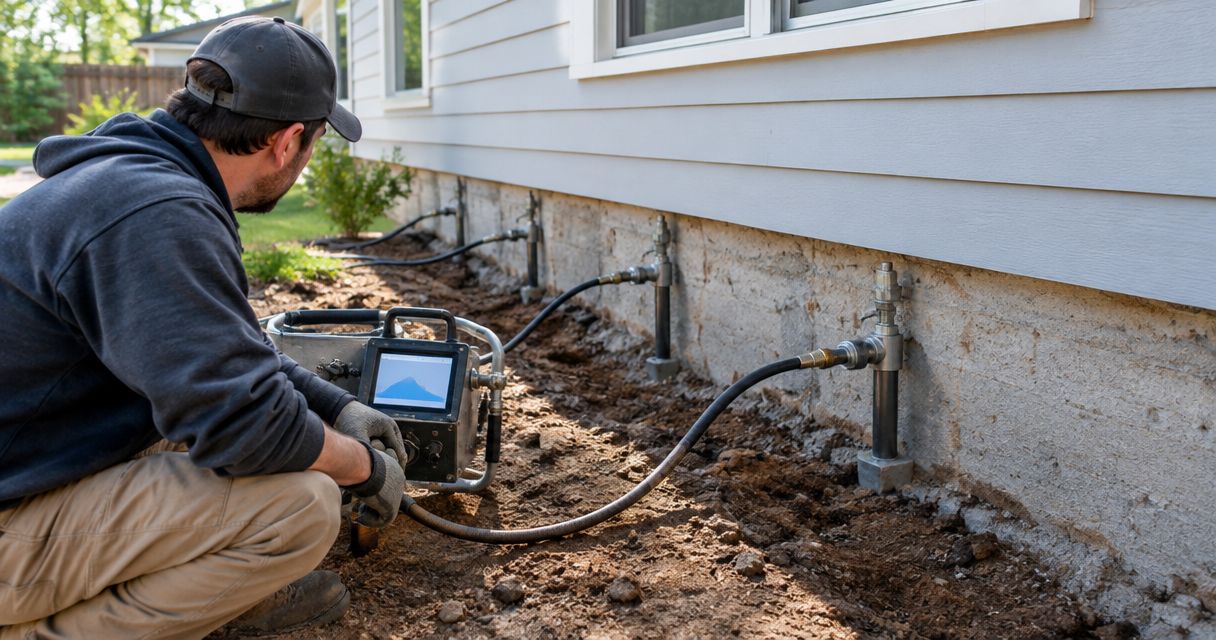
A crawl space drain and sump system collects water and moves it through a pump to a planned discharge point. It manages liquid water that reaches the space; it does not make the surrounding soil dry or seal every entry path.
The collection layout matters as much as the pump. Ask where water enters, how it reaches the collection point, and how the discharge avoids returning toward the house. Include pump access and maintenance in the discussion.
Drain and sump system pros:
- Removes collected liquid water.
- Provides a defined collection and discharge path.
- Can work alongside exterior drainage and a vapor barrier.
Drain and sump system cons:
- Depends on functioning equipment and electrical power.
- Requires inspection and maintenance.
- Does not control soil vapor or humid air by itself.
Best for: Homes with recurring standing water that needs an active removal system.
For a 2026 installation, ask what happens during a power interruption and how you will know the pump needs attention. Do not assume backup equipment or monitoring is included unless it appears in the written scope.
Verdict: Buy when recurring liquid water requires collection and pumping; skip as a standalone answer to humidity.
3. Ground vapor barrier: best for exposed-soil moisture
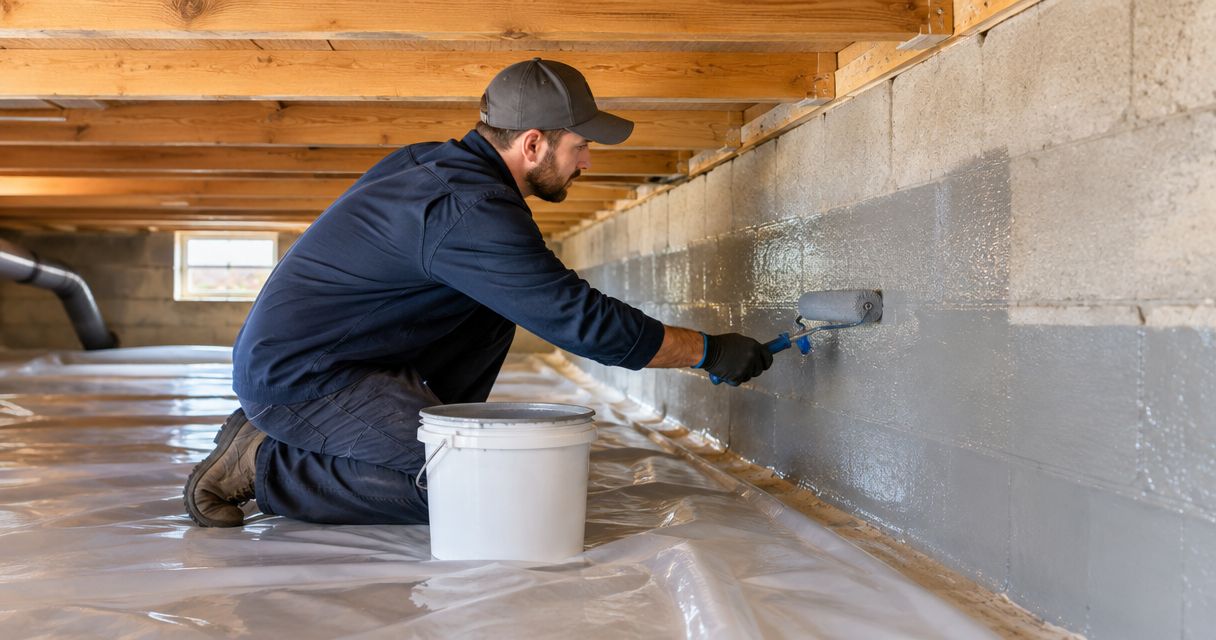
A ground vapor barrier covers exposed soil to reduce moisture transfer into the crawl space air. Its performance depends on coverage and installation details, including seams, penetrations, and edges.
This is a moisture-control layer, not a water-removal system. If puddles are already present, identify their source and establish drainage before treating a liner as the solution. Water trapped beneath or above a liner still needs attention.
Ground vapor barrier pros:
- Addresses moisture from the soil surface.
- Covers exposed earth beneath the home.
- Works as one part of a larger moisture-control plan.
Ground vapor barrier cons:
- Does not remove standing water.
- Needs careful detailing around supports and penetrations.
- Can be damaged by later access or repair work.
Best for: Crawl spaces with exposed soil where ground moisture is a confirmed concern and liquid-water problems have been addressed.
Ask how the installer will handle irregular ground, existing debris, and routes used for servicing plumbing. Complete repairs that require disturbing the ground before installing the finished coverage.
Verdict: Buy for exposed-soil moisture; hold when unresolved leaks or standing water remain.
4. Encapsulation: best for coordinated moisture isolation
Crawl space encapsulation combines ground coverage with detailed sealing around the crawl space enclosure. The exact scope varies, so ask what surfaces, openings, seams, and penetrations the proposal includes.
A sealed enclosure still needs a plan for water entry and humidity. Encapsulation is not simply placing plastic on the ground, nor is it a substitute for correcting a plumbing leak. Equipment and ventilation changes must suit the house and applicable requirements.
Encapsulation pros:
- Treats ground coverage and perimeter details together.
- Supports a coordinated crawl space moisture-control plan.
- Makes seams, edges, and penetrations explicit parts of the scope.
Encapsulation cons:
- Requires preparation and access planning.
- Does not eliminate the need for drainage where water enters.
- Requires consideration of humidity control and equipment within the space.
Best for: Homeowners seeking coordinated ground and enclosure moisture control after liquid-water sources are assessed.
Use your 2026 estimate to compare actual scope, not the word encapsulation alone. Confirm how the plan preserves access and handles any fuel-burning equipment that draws combustion air from the space.
Verdict: Buy a complete, house-specific plan; skip a liner-only proposal presented as a cure for every moisture problem.
5. Dehumidifier: best for persistent airborne moisture
A crawl space dehumidifier removes moisture from the air. It belongs in a humidity-control plan after plumbing leaks, runoff, standing water, and exposed-soil moisture have been assessed.
Ask how collected condensate will drain and how the equipment will be reached for service. A unit that is difficult to inspect or maintain creates an avoidable maintenance problem beneath the house.
Crawl space dehumidifier pros:
- Addresses airborne moisture directly.
- Complements a properly designed enclosed crawl space.
- Provides active humidity control rather than ground coverage alone.
Crawl space dehumidifier cons:
- Needs power, drainage, and maintenance.
- Does not remove puddles or repair leaks.
- Does not correct damaged framing or supports.
Best for: Crawl spaces with persistent humidity after the main moisture sources are controlled.
Ask the contractor how equipment selection relates to the space and its moisture conditions. Avoid choosing by the physical size of the appliance alone.
Verdict: Buy for confirmed humidity control; skip as the first response to standing water.
6. Targeted sealing: best for identified entry gaps
Targeted sealing addresses specific openings where water enters, such as gaps around penetrations or defects in the enclosure. It is a focused repair, not a replacement for a site drainage plan.
Identify the opening and the cause before selecting the treatment. Where cracking is associated with movement or damaged supports, the foundation concern needs evaluation rather than a cosmetic cover-up.
Targeted sealing pros:
- Addresses an identified entry path.
- Can accompany drainage corrections.
- Keeps the repair focused on a specific defect.
Targeted sealing cons:
- Does not redirect water collecting outside.
- Does not resolve structural movement.
- Does not control moisture from exposed soil.
Best for: Homes with a confirmed, localized water-entry opening and an appropriate repair detail.
Ask whether the defect is simply an opening or evidence of a larger condition. That distinction changes the job.
Verdict: Buy for a confirmed localized entry point; skip as the sole treatment for widespread crawl space moisture.
Match the repair to the source
Separate the inspection into 3 moisture sources: runoff, soil moisture, and humid air. Check plumbing leaks separately because they require plumbing repair. Describe where you see water and when it appears without assuming that the visible wet spot identifies the entry point.
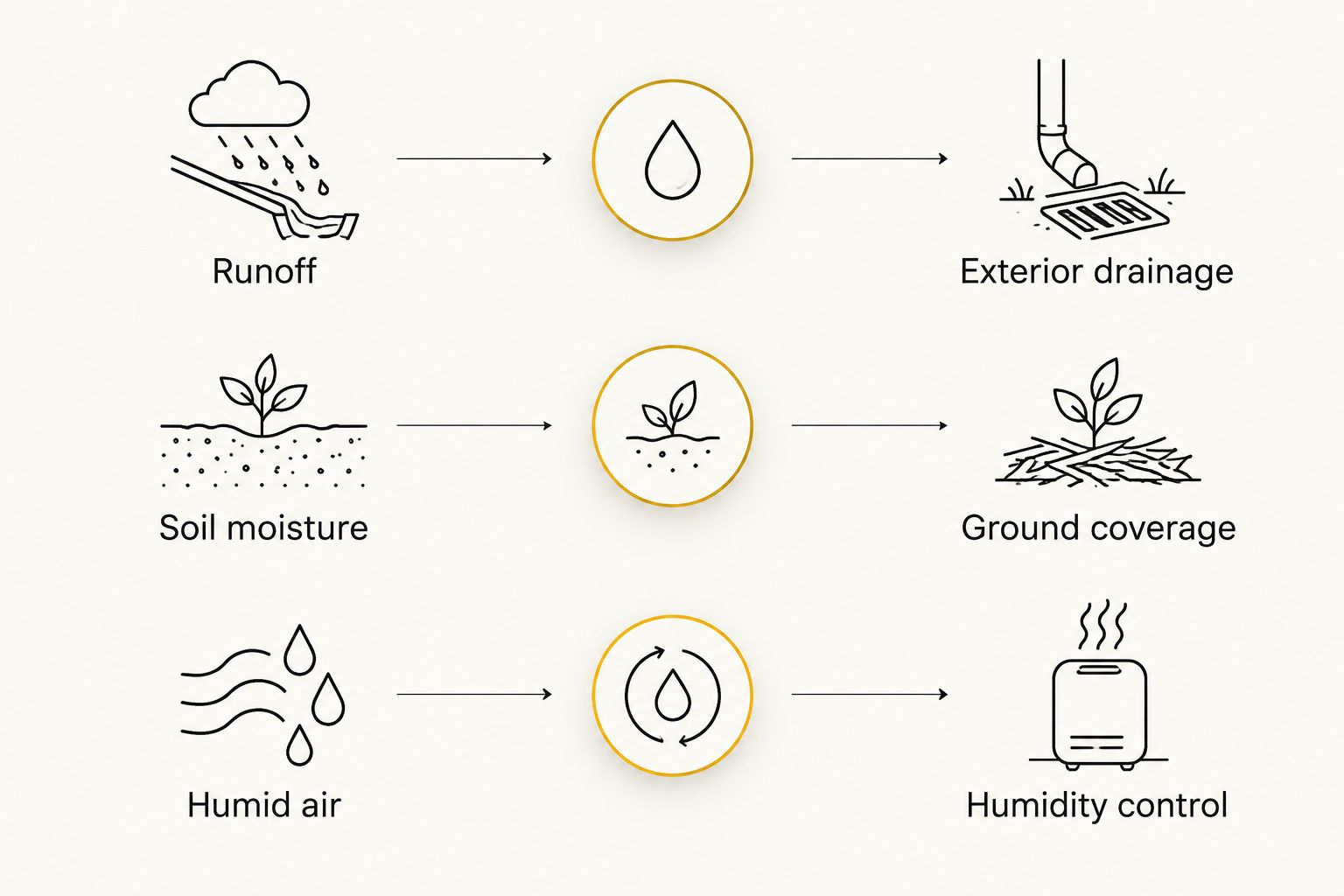
Before your appointment, write down when you notice dampness, odors, or standing water. Photograph visible conditions from a safe location; do not enter a flooded crawl space or approach wet electrical equipment.
Also report uneven floors, sticking doors, or concerns about supports. Those observations do not establish a diagnosis, but they belong in the inspection discussion. Do not cover a structural concern with a moisture-control layer before it is evaluated.
How these options are ranked
This 2026 ranking follows source control, water removal, ground coverage, humidity control, service access, and structural coordination. Exterior drainage ranks first for incoming runoff because it addresses water before entry; the other options lead when their specific moisture source is the problem.
The table compares functions and limitations, not measured product performance. There is no universal winner for every crawl space, and no single treatment earns a recommendation without a matching cause.
Which solution should you choose?
Choose drainage plus ground-moisture control as the default planning approach, then add pumping or humidity equipment only where the inspection supports it. If water collects beneath the house, resolve collection and discharge. If the main issue is exposed-soil moisture, focus on ground coverage. If humidity persists, evaluate humidity control.
Crisscrossco is a crawl space waterproofing service option for DFW homeowners who also need foundation repair assessed. Schedule a free on-site estimate and ask for a scope that separates drainage, moisture control, and any foundation work.
Schedule Your Free On-Site Estimate
Discuss crawl space moisture, drainage, and foundation concerns at your DFW home.
FAQ
What's the best waterproofing solution for a crawl space home in DFW?
The best solution matches the moisture source: exterior drainage for runoff, collection and pumping for standing water, and ground coverage for soil moisture. A crawl space inspection determines which combination your home needs.
Is encapsulation better than a ground vapor barrier?
Encapsulation has a broader scope than ground coverage alone, but it is not automatically the right choice for every home. Compare perimeter sealing, drainage, humidity control, and service access in the proposed work.
Will a vapor barrier stop water from collecting under my house?
A vapor barrier does not remove standing water. Identify leaks or incoming runoff and establish a water-removal plan before relying on ground coverage.
Do I need a sump pump in my crawl space?
A sump pump is appropriate when the drainage plan requires active removal of collected water. Humidity or damp soil alone does not establish that you need one.
Can a dehumidifier fix a wet crawl space?
A dehumidifier controls moisture in the air, not standing water or leaks. Address liquid-water sources and exposed-soil moisture before treating equipment as the complete solution.
Should foundation repair happen before crawl space waterproofing?
Coordinate foundation repair with waterproofing before either scope is finalized. Repairs that disturb supports, ground coverage, or access should be accounted for in the installation sequence.
Can I get a free crawl space estimate in Dallas–Fort Worth?
Crisscrossco offers free on-site estimates for DFW homeowners. Request an assessment of drainage, crawl space moisture, and any foundation or house-leveling concerns.
One last thing
Ask where the water goes. That question applies to exterior drains, sump discharge, and dehumidifier condensate. Collecting water without a suitable discharge plan leaves an essential part of the job unresolved.
For your 2026 project, ask Crisscrossco to explain the moisture source, the proposed correction, and the maintenance each part requires. A clear scope is more useful than a promise that one system fixes everything.