Best overall for a settled, load-bearing house foundation: engineered pier underpinning. Best for a sunken, intact concrete slab: polyurethane lifting. Best for a raised home: pier-and-beam adjustment. This 2026 guide explains which mudjacking alternatives fit your problem and when to request a free on-site estimate from Crisscrossco in Dallas–Fort Worth.
- The best mudjacking alternatives for foundation leveling depend on whether your house foundation or separate concrete has moved.
- Engineered pier underpinning addresses structural settlement; polyurethane lifting targets suitable sunken concrete slabs.
- Pier-and-beam adjustment fits raised homes, while concrete replacement addresses slabs unsuitable for lifting.
- Crisscrossco provides DFW foundation repair, drainage, and concrete services; request a free on-site estimate before choosing a method.
Why this matters
A low driveway panel and a settling house foundation are different repair problems. Mudjacking pumps a cement-based slurry beneath concrete to fill voids and raise it. Replacing that material with foam does not automatically turn slab lifting into structural foundation repair.
For DFW homeowners, the first decision is what needs support: a separate concrete surface, a load-bearing foundation, or the supports beneath a raised house. The second is why it moved. Soil movement, water conditions, damaged supports, and deteriorated concrete require different responses.
This ranking separates those jobs. It does not treat every lifting method as interchangeable, and it does not promise that lifting will close every crack or return every surface to its original position.
What makes the best foundation leveling alternative
Use these criteria to compare foundation repair recommendations in 2026:
- Structural fit: The repair must match the foundation type and the loads it carries. A walkway repair is not evidence that the same method fits your house.
- Soil support: The proposal must explain how the repaired structure receives support, rather than describing only how it gets lifted.
- Concrete condition: An intact but sunken slab presents a different problem from badly fractured or deteriorated concrete.
- Water control: Roof runoff, standing water, and drainage defects belong in the assessment when they affect the foundation area.
- Repair scope: You need a clear description of the affected area, access requirements, repair limits, and follow-up responsibilities.
Do not choose by material alone. The best method is the one that addresses the diagnosed failure—not the one with the most appealing installation description.
Mudjacking alternatives at a glance
This 2026 comparison ranks methods by the problem they address. Drainage ranks as a supporting measure because it does not lift an already settled house.
| Rank and method | Best for | Standout feature | Key limitation |
|---|---|---|---|
| 1. Engineered pier underpinning | Settled, load-bearing foundations | Transfers loads to support selected through a structural repair design | Requires site-specific design and foundation access |
| 2. Polyurethane slab lifting | Suitable intact, sunken concrete slabs | Injected expanding material fills voids and raises concrete | Is not a universal replacement for structural underpinning |
| 3. Pier-and-beam adjustment | Raised homes with support-related unevenness | Addresses accessible beams, piers, and connections | Does not apply to slab-on-grade homes |
| 4. Partial concrete replacement | Concrete unsuitable for lifting | Rebuilds the affected section and its base | Removes existing concrete and requires curing |
| 5. Drainage correction | Water-related problems around the foundation | Addresses runoff and water accumulation | Does not reverse existing structural settlement |
1. Engineered pier underpinning: best for structural settlement
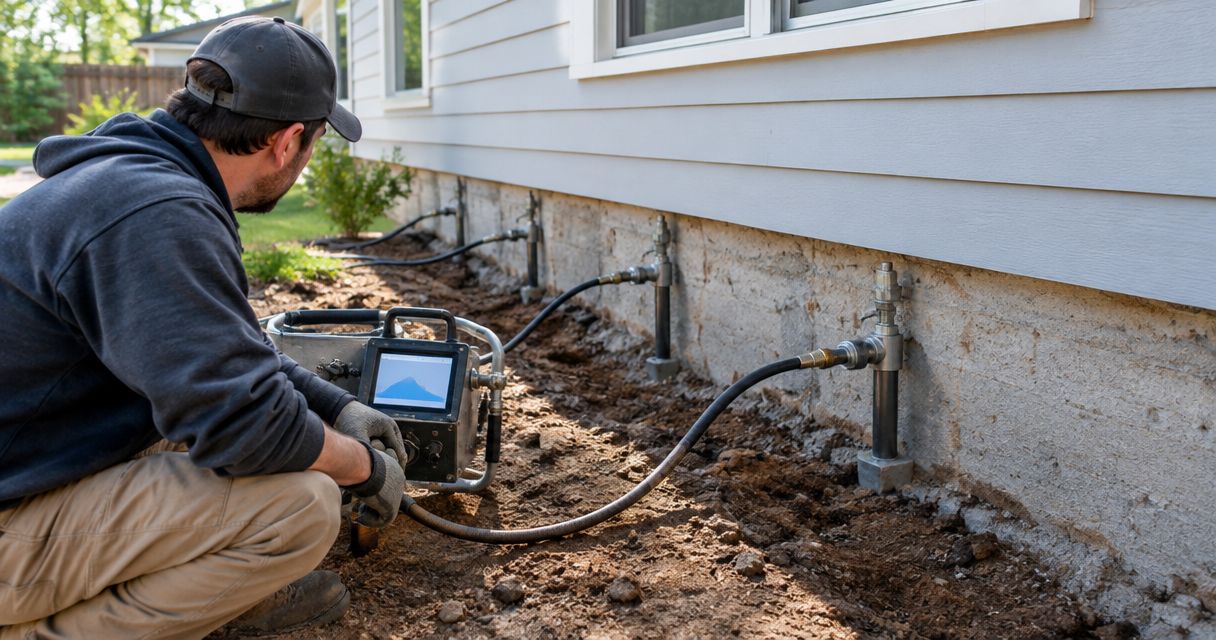
Engineered pier underpinning supports a foundation by transferring its load through installed supports to an appropriate bearing layer. The design determines the pier type, placement, and connection to the existing foundation. Lifting, when appropriate, forms part of that repair rather than its entire purpose.
This is the strongest default category to investigate when the house itself has settled. It addresses structural support directly instead of assuming that filling a shallow void will solve the problem.
Engineered pier underpinning pros:
- Addresses load-bearing foundation support.
- Allows the repair design to respond to the affected foundation areas.
- Connects the support strategy to soil and structural conditions.
Engineered pier underpinning cons:
- Requires access around or through affected foundation areas.
- Needs a site-specific design; pier selection is not a homeowner shortcut.
- Does not correct every damaged wall, floor finish, or plumbing connection associated with movement.
Best for: A house foundation with diagnosed settlement that requires additional structural support.
Ask how the proposed supports carry the house, what movement the repair intends to address, and what remains outside the scope. A proposal that discusses lifting without explaining support leaves the main question unanswered.
Verdict: Buy only after the assessment confirms a structural support problem and defines the repair design.
2. Polyurethane slab lifting: best for suitable sunken concrete
Polyurethane slab lifting injects expanding material beneath concrete through drilled holes. The material fills voids and can raise a suitable slab. The existing concrete remains in place rather than being removed and rebuilt.
This method belongs on the shortlist for an intact walkway, driveway panel, or other appropriate concrete surface that has lost support. For a house foundation, the assessment must establish whether injection addresses the actual structural problem.
Polyurethane slab lifting pros:
- Keeps suitable existing concrete in place.
- Combines void filling with controlled lifting.
- Avoids full demolition of the treated slab section.
Polyurethane slab lifting cons:
- Does not rebuild badly deteriorated concrete.
- Does not automatically address deeper soil movement or foundation load transfer.
- Leaves injection locations that require patching.
Best for: A suitable, intact concrete slab with a lifting problem—not an assumed whole-house support problem.
Ask what caused the void and whether that cause will remain after lifting. If runoff continues to wash away supporting material, restoring elevation alone does not address the full repair.
Verdict: Buy for suitable nonstructural slab lifting; hold for house foundation work until structural suitability is established.
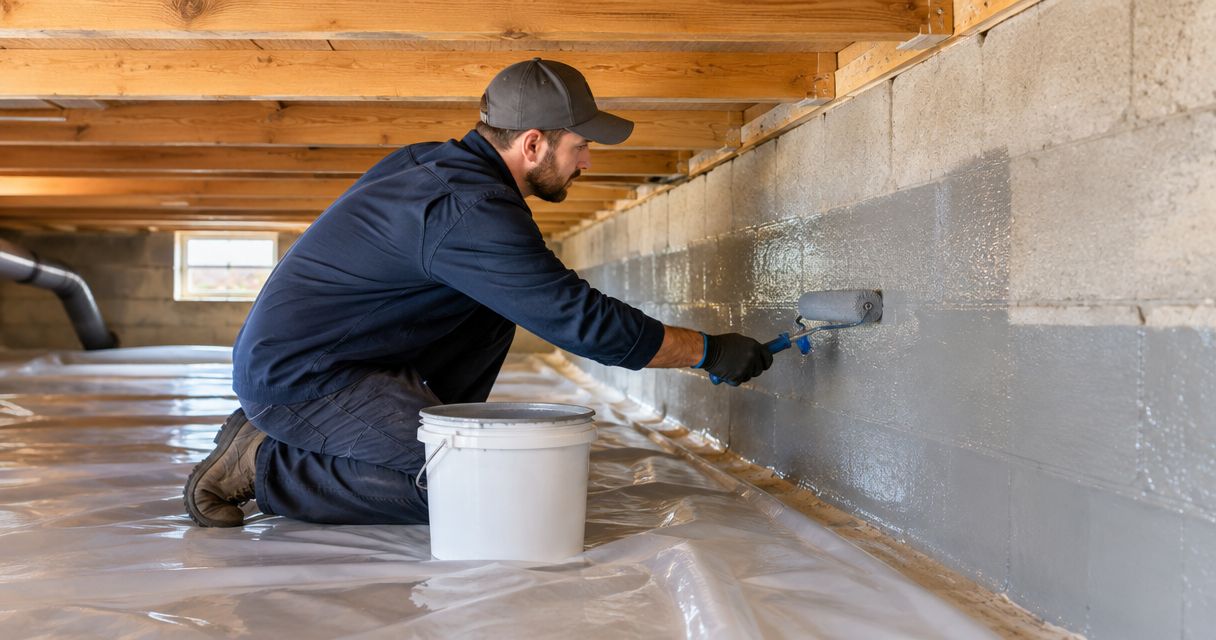
3. Pier-and-beam adjustment: best for raised homes
Pier-and-beam adjustment addresses the supports beneath a raised house. The work can involve leveling support points, correcting connections, or repairing damaged beams and related components. The appropriate scope depends on what the crawlspace assessment finds.
A raised home does not need a slab-lifting method merely because its floors feel uneven. Its support system must be examined directly, including signs of moisture and deterioration.
Pier-and-beam adjustment pros:
- Matches the construction of a raised house.
- Allows damaged support components to be addressed directly.
- Provides access to inspect the relationship between piers, beams, and floor framing.
Pier-and-beam adjustment cons:
- Crawlspace access affects the work.
- Leveling alone does not repair rotted or otherwise damaged structural members.
- Moisture problems need their own correction rather than repeated adjustment.
Best for: A raised DFW home with unevenness traced to its supporting piers, beams, or connections.
Ask whether the recommendation involves adjustment, component repair, or both. Those are different scopes. Also ask which moisture conditions need correction to protect the repaired support system.
Verdict: Buy for a diagnosed pier-and-beam support problem; skip for slab-on-grade foundations.
4. Partial concrete replacement: best for slabs unsuitable for lifting
Partial replacement removes an affected concrete section and rebuilds it on a prepared base. It is an alternative when the concrete itself is too damaged for lifting to produce a useful result. The replacement scope should address the base, drainage, joints, and connection to surrounding surfaces.
For house foundations, removal and reconstruction involve structural considerations beyond ordinary driveway replacement. Do not treat those jobs as equivalent.
Partial concrete replacement pros:
- Replaces damaged concrete rather than preserving it.
- Exposes the base for inspection and preparation.
- Allows the rebuilt section to address surface layout and drainage needs.
Partial concrete replacement cons:
- Requires demolition and removal.
- Requires curing before the repaired area returns to its intended use.
- New concrete can differ in appearance from adjacent older concrete.
Best for: A separate concrete surface whose condition makes lifting an unsuitable repair.
Ask why the concrete cannot reasonably be retained and how the new base will differ from the failed one. Replacement without a clear explanation of the underlying support problem leaves you with a new surface over an unresolved cause.
Verdict: Buy when concrete condition rules out lifting; hold structural foundation reconstruction for a defined repair design.
5. Drainage correction: best for supporting the repair
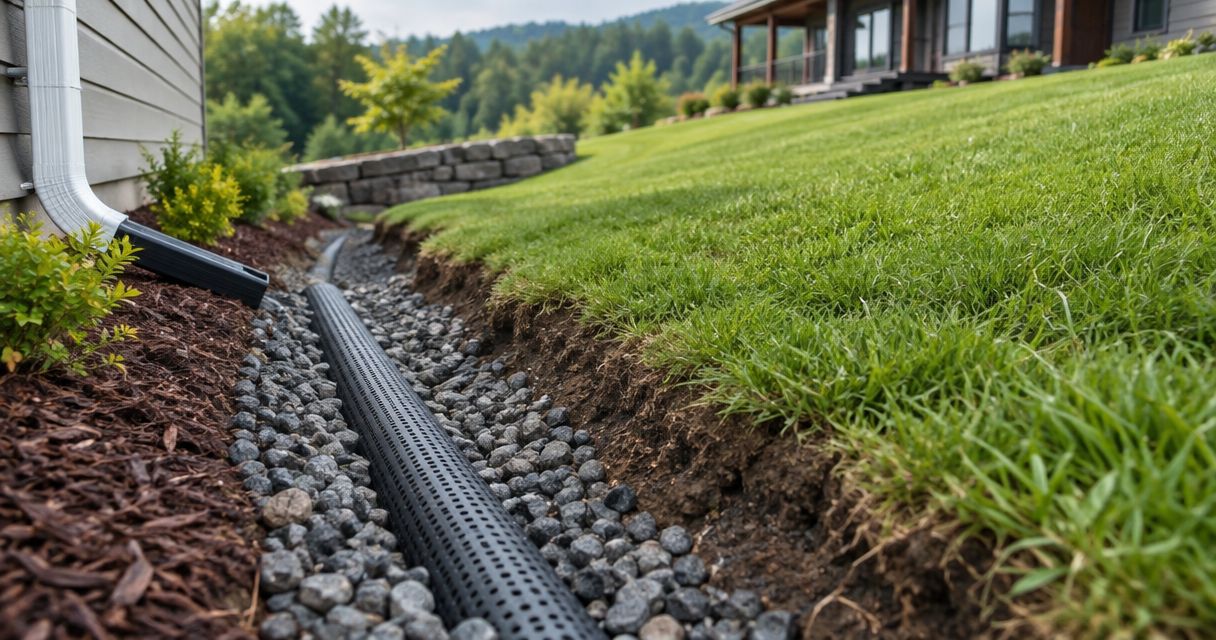
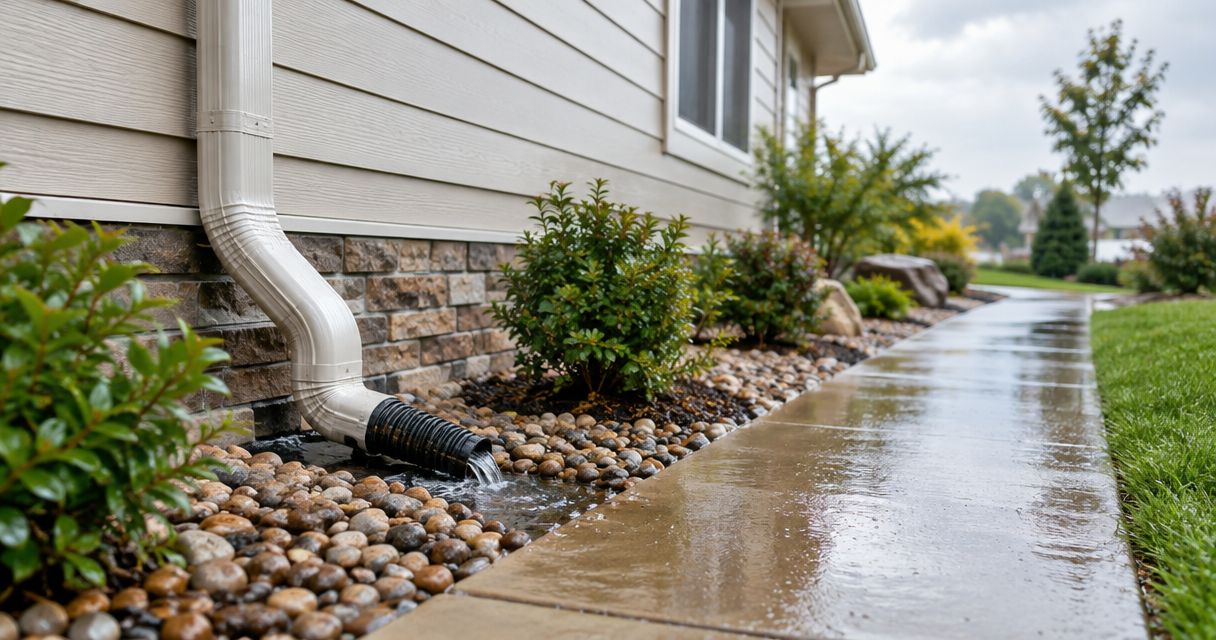
Drainage correction changes how water moves around your property. Depending on the site, that means addressing roof discharge, grading, surface collection, or a drainage system with a suitable outlet. It supports foundation protection but does not lift a settled structure.
This is a companion to leveling when water conditions contribute to the problem. It is not a substitute for required structural work.
Drainage correction pros:
- Addresses identified runoff and water accumulation problems.
- Supports a repair plan that considers the surrounding site.
- Helps distinguish water-management work from structural lifting work.
Drainage correction cons:
- Does not restore foundation elevation.
- Requires a suitable discharge route.
- Collection points and drainage routes need maintenance.
Best for: A property with identified water-management defects near the foundation or affected concrete.
Ask where collected water will go. A drain without a workable outlet is not a complete drainage plan, and moving water from one problem area to another does not solve the site issue.
Verdict: Buy when the assessment identifies a drainage defect; skip it as a stand-alone leveling solution.
Before you request an estimate
Bring 3 observations to your 2026 assessment: where you see movement, when you first noticed it, and what happens around that area after rain. These are observations, not a diagnosis. You do not need to decide which repair material to request.
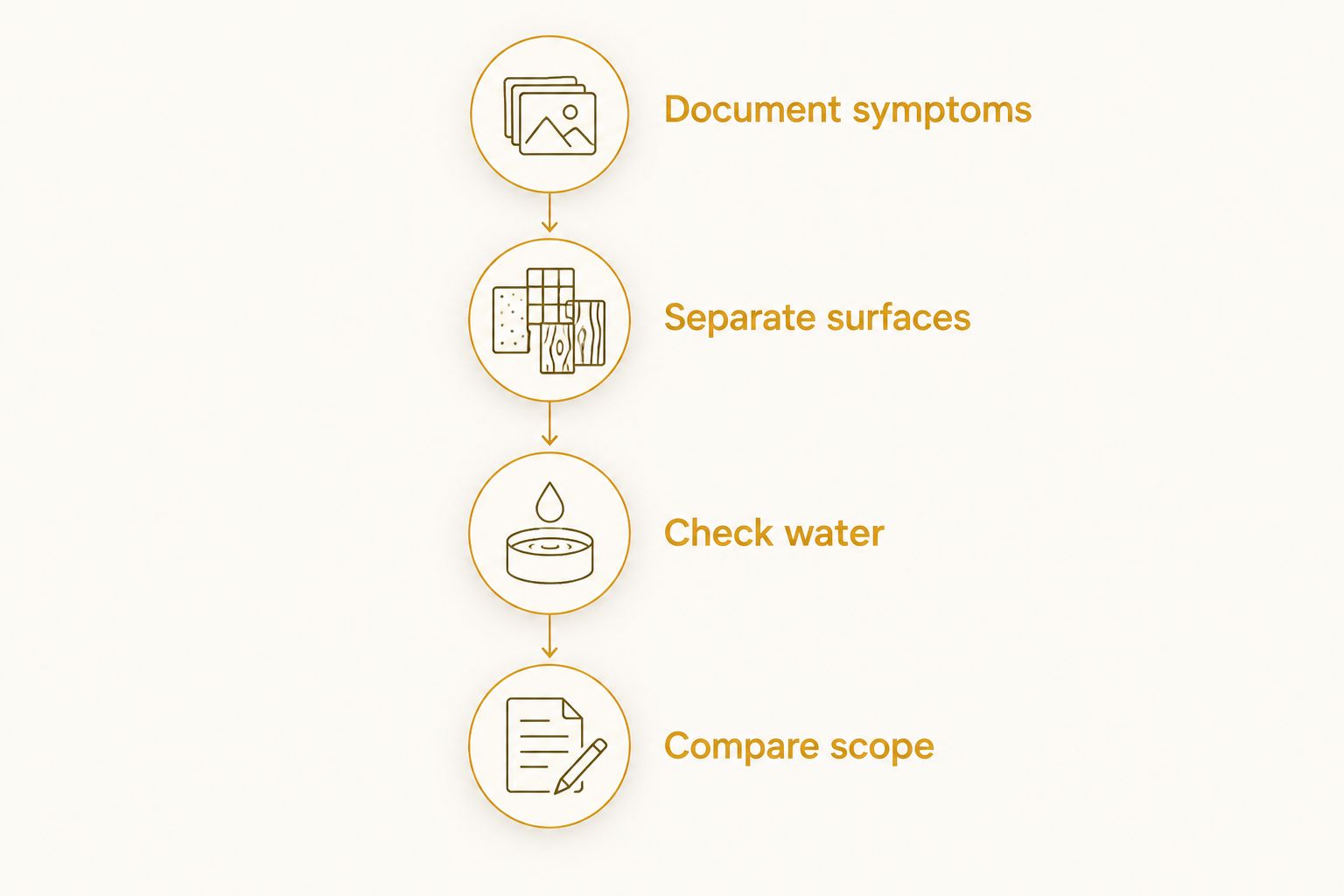
Document symptoms
Photograph the affected cracks, uneven surfaces, and sticking doors. Include wider views so the person assessing your home can locate each issue. Record changes instead of relying on memory.
Separate surfaces
Identify whether the concern involves your house floor, a raised home's support system, or separate concrete such as a driveway. Describe each affected area separately. That keeps a concrete-lifting discussion from replacing a foundation assessment.
Check water
Note standing water, roof discharge near the house, and visible soil erosion. Observe from a safe location; do not enter an unsafe crawlspace or dig around foundation supports.
Compare scope
Ask each proposal to separate structural work, concrete work, and drainage work. Compare what each recommendation addresses and what it leaves unchanged—not simply the method name.
Crisscrossco provides foundation repair, drainage, and concrete services for DFW homeowners. Request a free on-site estimate and explain the symptoms rather than asking for foam, piers, or another method before the property is assessed.
Schedule your free on-site estimate
Discuss foundation movement, drainage concerns, or uneven concrete at your DFW home.
Ask these questions before approving work
Use these 4 questions to keep your foundation repair discussion specific:
- What failed? Ask the contractor to distinguish structural settlement, a void beneath separate concrete, damaged supports, and water-management defects.
- What carries the load after repair? A lifting explanation should not replace an explanation of ongoing support.
- What stays unchanged? Identify existing cracks, finishes, adjoining concrete, and other items outside the work scope.
- What needs separate attention? Clarify drainage, plumbing evaluation, and structural design requirements when relevant.
Get the answers in the written proposal. A useful scope describes the work and its limits; a method name alone does neither.
How these alternatives rank
The 5 methods in this 2026 guide rank by structural fit, soil support, concrete condition, water control, and repair scope. Engineered pier underpinning takes the structural-settlement slot because its purpose is foundation support. Polyurethane lifting takes the intact-concrete slot because it retains and raises suitable slabs.
This is a problem-based buying guide, not a claim that every home needs piers or that every contractor provides every method. Choose the repair category after the diagnosis, then compare proposals within that category.
Which alternative should you choose?
For a settled house foundation, start with a structural assessment that determines whether underpinning is appropriate. For separate, intact sunken concrete, investigate polyurethane lifting. For a raised house, inspect the pier-and-beam system before considering adjustment.
Replace concrete when its condition rules out lifting, and correct identified drainage defects alongside the relevant repair. Crisscrossco is a DFW option for homeowners seeking foundation repair, drainage, and concrete services.
Your default next move in 2026 is a free on-site estimate—not choosing a lifting material from a list. Ask for the cause, the proposed support, and the limits of the work.
FAQ
What's the best mudjacking alternative for a settling house foundation?
Engineered pier underpinning is the leading category to investigate when a load-bearing house foundation needs additional structural support. A site-specific assessment must establish whether it fits the foundation and soil conditions.
Is polyurethane lifting better than mudjacking for foundation leveling?
Polyurethane lifting is not universally better than mudjacking for foundation leveling. It is an option for suitable sunken concrete, but the assessment must establish whether injection addresses the structural problem rather than only filling a void.
Can foam lift my driveway and my house foundation?
A successful driveway lift does not establish that foam is suitable for your house foundation. Separate concrete and load-bearing foundations have different support requirements.
What should I choose for a pier-and-beam house?
Choose an assessment of the piers, beams, connections, and crawlspace conditions before selecting a leveling method. Adjustment alone does not repair damaged structural components or resolve moisture problems.
Can better drainage level my house?
Drainage correction does not lift an already settled house. It addresses identified water-management defects and can form part of a broader foundation repair plan.
When should I replace concrete instead of lifting it?
Replace concrete when its condition makes lifting an unsuitable repair. The proposal should explain both the concrete damage and how the replacement base will address the support problem.
Does Crisscrossco offer free on-site estimates in DFW?
Crisscrossco offers free on-site estimates for DFW homeowners seeking foundation repair, drainage, and concrete services. Describe the affected areas and observed changes when requesting your estimate.
One last thing
The lowest-looking spot is not automatically the spot that needs lifting. A level survey and structural assessment distinguish low areas from surrounding movement and help define the repair target.
Before approving work, ask the contractor to explain that target in plain language. Knowing what will be supported—and what will remain unchanged—is more useful than choosing between foam and slurry alone.