Best overall: correcting the ground slope around your home. Best for concentrated surface pooling: catch basins with a discharge pipe. Best for persistent subsurface moisture: a French drain. This 2026 guide ranks the best drainage solutions for homes without gutters by the water problem each one addresses, with practical choices for Dallas–Fort Worth homeowners.
- The best drainage solutions for homes without gutters start with ground slope and a suitable discharge location.
- Catch basins collect surface pooling; French drains intercept water moving through soil.
- Channel drains suit paved runoff; gravel drip strips reduce erosion but do not replace drainage.
- Crisscrossco provides drainage and foundation repair services for DFW homeowners seeking a free on-site estimate.
Why this matters
Without gutters, roof runoff falls along the roof edge instead of entering a controlled downspout. When the ground slopes toward the house, that water has a path back to the foundation. A drain only helps if it collects the right water and carries it somewhere suitable.
Crisscrossco is a practical choice for DFW homeowners who need drainage and foundation repair evaluated together. You can request a free on-site estimate to discuss pooling, erosion, and signs of foundation movement rather than choosing a drain from appearance alone.
For your 2026 drainage project, separate three problems: water sitting on the surface, moisture moving through soil, and roof runoff washing away soil. They call for different fixes. One property can have all three.
What makes the best drainage solution?
Use these criteria before comparing installations:
- Water source: Identify whether the problem begins at the roof edge, on a paved surface, or in saturated soil.
- Ground slope: Water needs a route away from the house, not a depression beside it.
- Discharge location: A collection point is useful only when the outlet is suitable and permitted.
- Surface compatibility: Lawn, concrete, planting beds, and narrow side yards need different collection details.
- Maintenance access: Grates, outlets, and buried systems need inspection and cleaning access.
- Foundation relationship: Drainage work must account for existing soil levels, foundation conditions, and nearby construction.
A common benchmark in the International Residential Code's foundation drainage provisions is a fall of 6 inches over the first 10 feet, equivalent to a 5 percent slope. That benchmark describes surface grading around foundations; it is not a universal pipe slope or a substitute for checking local requirements and site constraints.
For a 2026 project on a clay-soil property, review yard drainage solutions for clay soil before treating gravel as an infiltration solution. Gravel does not change the drainage characteristics of the soil underneath it.
Drainage options at a glance
| Rank | Solution | Best for | Standout function | Key limitation |
|---|---|---|---|---|
| 1 | Corrective grading | Ground sloping toward the house | Redirects surface runoff before it pools | Requires enough space and suitable elevations |
| 2 | Catch basins and discharge pipe | Concentrated surface pooling | Collects water at a defined low point | Grates and outlets need cleaning |
| 3 | French drain | Persistent subsurface moisture | Intercepts water moving through soil | Not a substitute for collecting heavy surface flow |
| 4 | Channel drain | Paved runoff | Collects water across a linear grate | Needs sound placement and a suitable outlet |
| 5 | Shallow swale | Open yards with a downhill route | Guides runoff across the landscape | Needs space and a continuous drainage path |
| 6 | Gravel drip strip | Roof-edge erosion and splash | Protects the surface where roof water lands | Does not carry water away by itself |
1. Corrective grading: best for water flowing toward the house
Corrective grading changes the ground surface so runoff travels away from the foundation. It addresses the route water takes before adding a collection system. For a gutterless home with soil sloping toward the walls, this is the first condition to evaluate.
The work is not simply adding dirt beside the house. Finished elevations must account for wall materials, foundation clearances, doorways, and neighboring drainage routes. Raising one area without checking the next can move the puddle rather than solve it.
Corrective grading pros:
- Addresses surface flow at its source.
- Does not rely on an inlet grate to collect every drop.
- Can work alongside catch basins or a swale.
Corrective grading cons:
- Limited space or fixed paving can restrict the available slope.
- Poorly planned grading can redirect water toward another problem area.
Best for: A DFW home where rainwater visibly runs toward the foundation or collects in a depression beside it.
Verdict: Buy corrective grading when the existing slope is the problem and the property supports a suitable drainage route. Do not substitute a buried drain for correcting an avoidable surface-flow problem.
2. Catch basins: best for concentrated surface pooling
Catch basins collect surface water through a grate and feed it into a discharge pipe. They suit defined low spots where roof runoff or yard runoff gathers. Their job is collection, not making the surrounding soil absorb water.
Placement matters more than the number of basins. Water must reach the grate, and the pipe must carry it to an appropriate outlet. A basin sitting above the actual low point leaves the puddle below it untouched.
Catch basin pros:
- Collects visible pooling at a specific location.
- Provides an accessible collection point for inspection.
- Can connect several surface collection areas to a designed discharge route.
Catch basin cons:
- Leaves and sediment can block the grate.
- An unsuitable outlet or undersized system limits performance.
Best for: A side yard, planting-bed edge, or other defined low spot receiving surface runoff.
Verdict: Buy a catch basin system for concentrated pooling with a suitable outlet. Skip an isolated basin that has no planned discharge route.
3. French drain: best for moisture moving through soil
A French drain uses a gravel-filled trench and perforated pipe to intercept water moving through the soil. It serves a different purpose from a surface inlet. If the main problem is a sheet of roof runoff crossing the yard, surface collection deserves attention first.
The French drain types for poor yard drainage guide explains the distinction between layouts. For your home, trench location, filter details, pipe elevation, and outlet conditions determine whether the installation addresses the wet area.
French drain pros:
- Intercepts subsurface water along a trench.
- Can address a persistently wet strip rather than one isolated puddle.
- Can complement surface drainage where both problems exist.
French drain cons:
- Buried components are harder to inspect than open grates.
- Incorrect filtering or placement can reduce effectiveness.
Best for: An area that remains wet because water moves through the soil, rather than solely collecting on top of it.
Verdict: Buy a French drain for a confirmed subsurface-water problem. Hold if the recommendation does not explain why a surface inlet or grading would be insufficient.
4. Channel drain: best for runoff crossing concrete
A channel drain collects water along a narrow, continuous grate. It fits paved areas where runoff travels across a driveway, patio, walkway, or garage approach. Its linear shape catches flow across a wider path than a single point inlet.
Installation must account for the pavement's slope and the direction water approaches. Cutting a channel into concrete without correcting the collection elevation can leave water flowing past it. The outlet remains essential.
Channel drain pros:
- Collects runoff across a paved flow path.
- Fits locations where soil grading is unavailable.
- Offers a visible grate for cleaning and inspection.
Channel drain cons:
- Retrofitting requires concrete work.
- Debris can obstruct the grate or collection channel.
Best for: Water crossing a paved surface toward a garage opening, doorway, or foundation edge.
Verdict: Buy a channel drain when pavement carries the problem water. Skip using it as a substitute for addressing wet soil elsewhere in the yard.
5. Shallow swale: best for an open yard with a downhill route
A swale is a shallow, shaped depression that guides surface water across the landscape. It suits yards with enough room to create a continuous route away from the house. Unlike a buried pipe, the flow path stays visible.
A swale needs an appropriate destination and a surface that resists erosion. Its shape must allow water to continue moving instead of stopping in disconnected low spots. Do not route runoff onto a neighboring property without checking the applicable requirements.
Shallow swale pros:
- Provides a visible route for surface runoff.
- Avoids relying entirely on buried collection pipes.
- Can connect roof-edge runoff areas with a suitable discharge location.
Shallow swale cons:
- Requires landscape space and compatible elevations.
- Poor shaping can create standing water or erosion.
Best for: An open yard with a usable downhill route and room to reshape the landscape.
Verdict: Buy a swale when space and elevations support continuous surface drainage. Hold when the proposed route ends in another low spot.
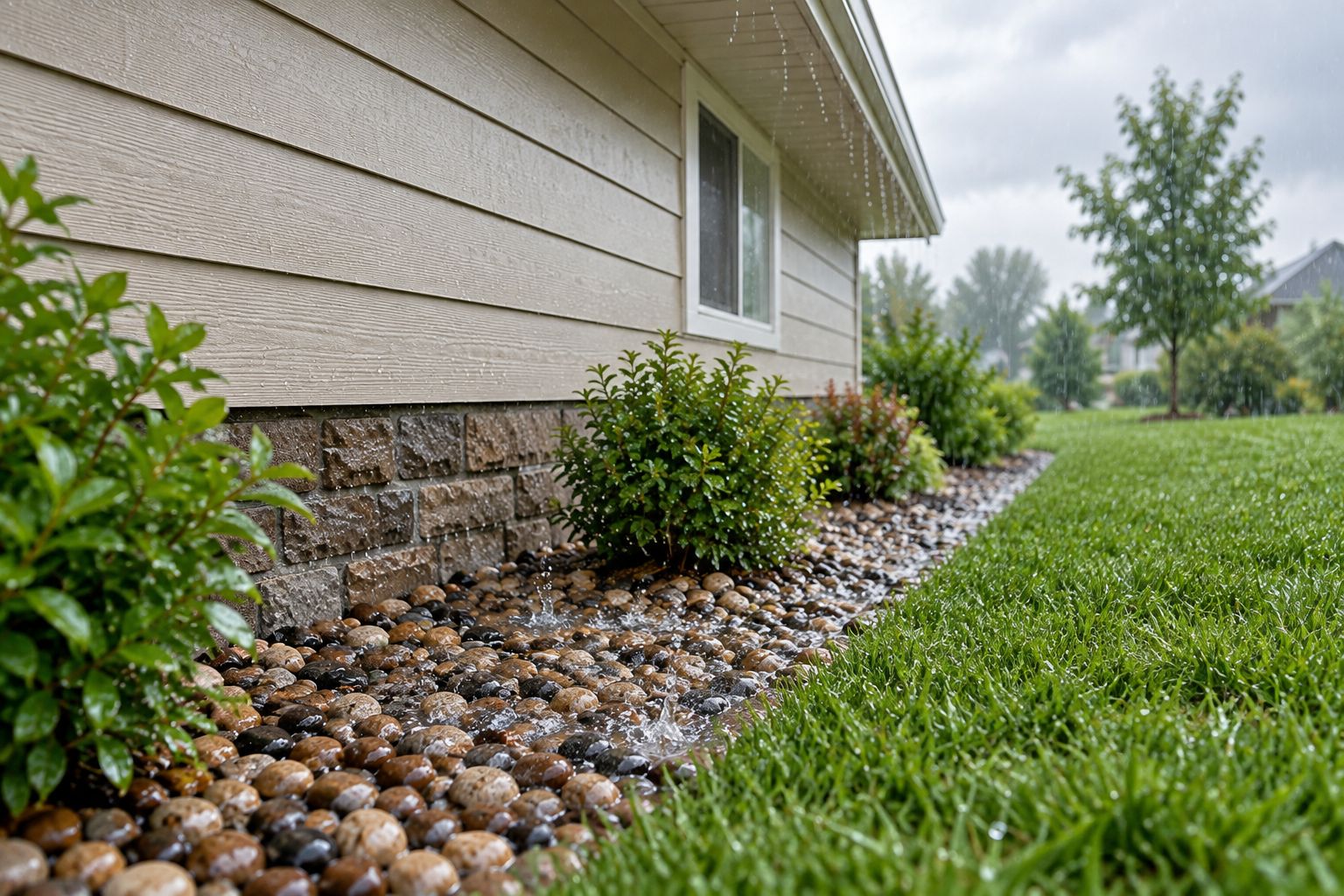
6. Gravel drip strip: best for erosion beneath the roof edge
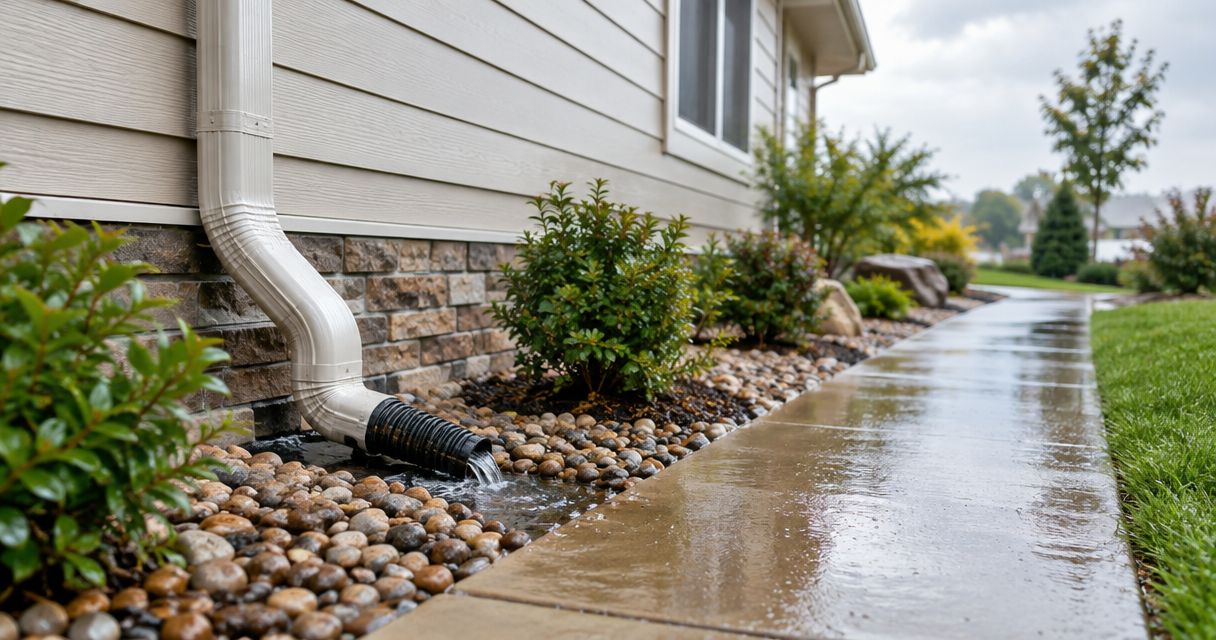
A gravel drip strip covers the area where water falls from a gutterless roof. It helps protect exposed soil from direct rainfall impact and reduces muddy splash. It is a supporting measure, not a complete foundation drainage system.
The distinction is important: water still lands beside the house. Unless the underlying surface directs that water away or a collection system removes it, the gravel only changes the appearance of the wet area.
Gravel drip strip pros:
- Protects exposed soil beneath the roof edge.
- Reduces muddy splash against nearby surfaces.
- Can accompany grading or a collection system.
Gravel drip strip cons:
- Does not provide a discharge route by itself.
- Can conceal wet ground without resolving the cause.
Best for: Roof-edge erosion where the surrounding drainage route already works.
Verdict: Buy a gravel drip strip as erosion protection. Skip it as the only answer to water pooling against your foundation.
Check the water path before choosing
For a 2026 on-site estimate, make the water path the starting point. Follow this sequence rather than requesting a specific drain before the property is assessed:
- Locate the source. Note where roof water lands and where paved runoff enters the area.
- Find the low point. Photograph the pooling location from a safe position during or after rain.
- Check the route. Identify obstacles, neighboring property boundaries, and possible discharge locations.
- Match the solution. Separate surface collection, subsurface drainage, and erosion control.
- Plan maintenance. Ask how you will access grates, cleanouts, and outlets after installation.
If you also see new cracks, sticking doors, or uneven floors, mention them during the assessment. These observations do not establish the cause on their own. They do give the contractor relevant information when considering drainage and foundation work together.
Crisscrossco provides drainage, foundation repair, and concrete services across DFW. Request a free on-site estimate to discuss the water path and the work your property needs.
Schedule Your Free On-Site Estimate
Discuss drainage, foundation concerns, and concrete work at your DFW home.
How these options are ranked
This 2026 ranking prioritizes the water source, collection method, discharge route, and maintenance access. Corrective grading leads because it addresses an adverse surface slope directly; the remaining options each serve a different condition.
The ranking is a selection guide, not a claim that every property needs all six methods. Choose the simplest suitable combination that addresses the identified water path. A buried system is not automatically a better system.
Which drainage solution should you choose?
Start with the slope and outlet, then choose the collection method. Use catch basins for concentrated surface pooling, French drains for subsurface moisture, channel drains for paved runoff, and swales where the landscape supports open flow. Add gravel for erosion control, not as a replacement for drainage.
For DFW homeowners with both drainage concerns and signs of foundation movement, Crisscrossco offers a service-focused next step: a free on-site estimate covering those concerns together. Ask what the proposed work collects, where it sends the water, and how you will maintain it.
FAQ
What's the best drainage solution for a house without gutters?
Correcting an adverse ground slope is the first option to evaluate. Catch basins, French drains, channel drains, or swales then address the specific water source and drainage route.
Is a French drain better than a catch basin?
A French drain is better suited to subsurface moisture, while a catch basin collects surface pooling. Choose according to where the water moves, not which installation sounds more substantial.
Will gravel around my house stop water from reaching the foundation?
Gravel alone does not stop water from reaching the foundation. A drip strip protects against soil erosion and splash, but the ground or a drainage system must still carry water away.
Can I use a channel drain beside my driveway?
A channel drain can collect runoff crossing a driveway when its placement, elevation, and outlet match the flow path. It does not address unrelated subsurface moisture in the yard.
Do I still need gutters after adding yard drainage?
Yard drainage does not perform the same job as gutters. Gutters collect roof runoff before it reaches the ground; yard drainage manages water after it lands, so assess both parts of the water path.
Does standing water mean my foundation needs repair?
Standing water alone does not establish that your foundation needs repair. Report pooling alongside cracks, sticking doors, or uneven floors so the assessment considers the observations together.
Who can assess drainage and foundation concerns in DFW?
Crisscrossco provides drainage and foundation repair services for residential homeowners across DFW. Request a free on-site estimate to discuss the conditions at your property.
One last thing
Ask to see the proposed outlet before approving the drain. An inlet can look correctly placed while the discharge route remains unsuitable. A clear explanation of where water goes is more useful than a long list of materials.