Best overall for nonstructural horizontal cracks: polyurethane concrete sealant. Best for bonding dry, stationary cracks: epoxy. Best for shallow surface damage: polymer-modified repair mortar. This 2026 guide compares the best concrete crack repair products by repair job—not by a brand name on the tube.
- The best concrete crack repair products match crack movement, moisture conditions and location—not appearance alone.
- Polyurethane concrete sealant suits nonstructural horizontal cracks when its label permits the application.
- Epoxy suits dry, stationary cracks requiring bonding; it does not correct foundation movement.
- Criss Cross Construction provides foundation repair, drainage and concrete services for DFW residential homeowners.
Why this matters
A crack filler closes a gap. It does not explain why the gap opened. Buying a stronger material will not correct settlement, uneven concrete or water collecting beside your foundation.
Criss Cross Construction is best for DFW homeowners seeking foundation repair, drainage and concrete services rather than a retail crack-filler purchase. If your concern involves house leveling or a changing foundation crack, Criss Cross Construction offers a free on-site estimate.
For a surface repair, start with the concrete itself. A driveway crack, a leaking concrete wall and a chipped step need different materials. This comparison covers 6 material types and separates sealing, bonding and patching so you can choose the right kind of repair in 2026.
What makes the best concrete crack repair products
Use these criteria before comparing packages:
- Movement compatibility: Flexible sealants accommodate movement within their specified limits. Rigid bonding materials belong in applications that do not require that flexibility.
- Moisture compatibility: Check whether the material requires dry concrete, accepts damp concrete or is intended for active water leakage.
- Placement: Horizontal, vertical and overhead applications are different. A self-leveling material is not a general-purpose wall filler.
- Repair purpose: Sealing a gap, bonding a crack and rebuilding a damaged edge are separate jobs.
- Surface preparation: The repair must attach to sound concrete. Dust, loose material and incompatible coatings interfere with that connection.
- Application limits: Read the current technical sheet for permitted dimensions, temperature, curing conditions and exposure.
For your 2026 project, these requirements matter more than a package marked heavy-duty. Choose the repair function first, then choose a product whose instructions match your concrete.
Concrete crack repair products at a glance
| Rank and material | Best for | Standout feature | Key limitation |
|---|---|---|---|
| 1. Polyurethane concrete sealant | Nonstructural horizontal cracks with movement | Flexible sealing; self-leveling formulations are available | Does not restore structural support |
| 2. Epoxy crack repair material | Dry, stationary cracks requiring bonding | Rigid adhesive bond | Unsuitable where continuing movement requires flexibility |
| 3. Polyurethane injection resin | Water leaking through accessible concrete wall cracks | Injection formulations intended for leak sealing | Requires a compatible injection system and correct preparation |
| 4. Polymer-modified repair mortar | Shallow spalls and damaged edges | Rebuilds missing concrete rather than merely filling a line | Does not accommodate continuing movement |
| 5. Hydraulic water-stop cement | Localized openings with active water entry | Designed for plugging water-entry points | A rigid plug does not address the source of water |
| 6. Acrylic concrete crack filler | Minor, nonstructural surface cracks | Surface filling in label-approved applications | Not a structural bonding repair |
These are material categories, not interchangeable formulas. Check the actual product label before using any category recommendation. The 2026 ranking does not replace application instructions or an assessment of foundation movement.
1. Polyurethane concrete sealant: best for moving surface cracks
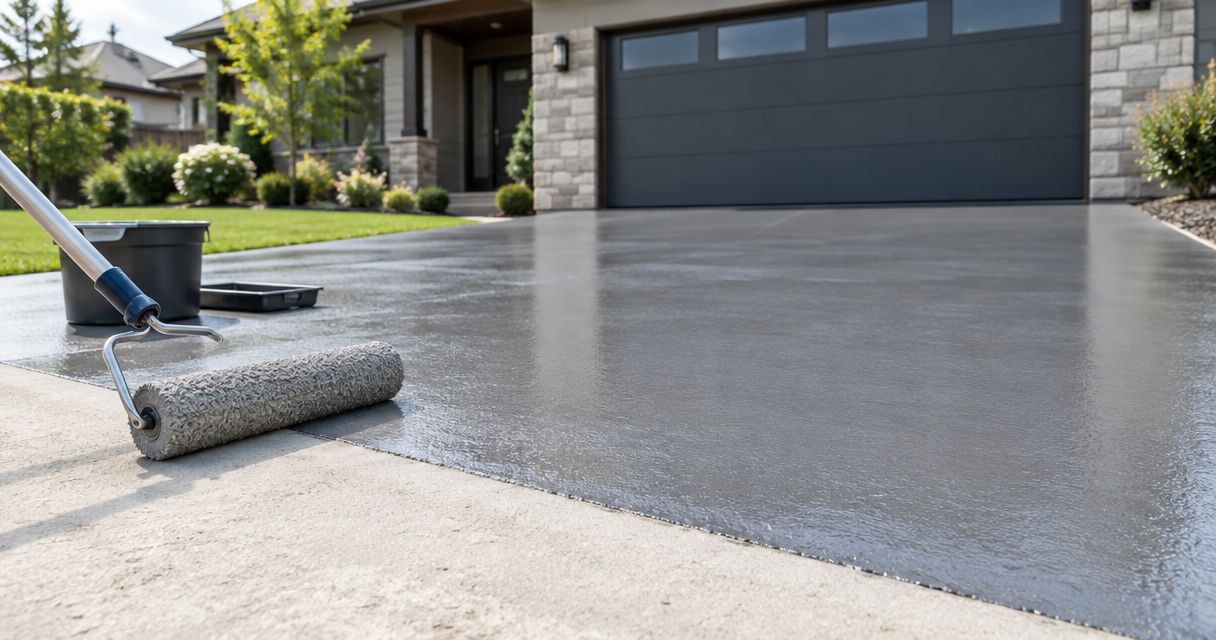
Polyurethane concrete sealant fills and seals nonstructural cracks while remaining flexible. Self-leveling versions flow into suitable horizontal gaps; non-sag versions are formulated to stay in place in other approved orientations.
For a driveway or patio crack, this is the default category to investigate when the goal is sealing rather than rebuilding concrete. Check whether the manufacturer approves the specific surface, exposure and crack dimensions.
Polyurethane concrete sealant pros:
- Flexible material accommodates movement within its rated limits.
- Different formulations support different placement conditions.
- Seals suitable gaps without requiring a rigid mortar patch.
Polyurethane concrete sealant cons:
- Does not correct settlement or restore load-bearing support.
- Self-leveling material needs containment and a suitable horizontal application.
Best for: A nonstructural horizontal crack where flexibility matters more than bonding.
Do not fill a designed joint with a rigid patch just to make the surface look uniform. Confirm whether you are looking at a crack or an intentional joint before choosing the material.
Verdict: Buy for a label-approved sealing job; skip as a foundation repair.
2. Epoxy crack repair material: best for stationary crack bonding
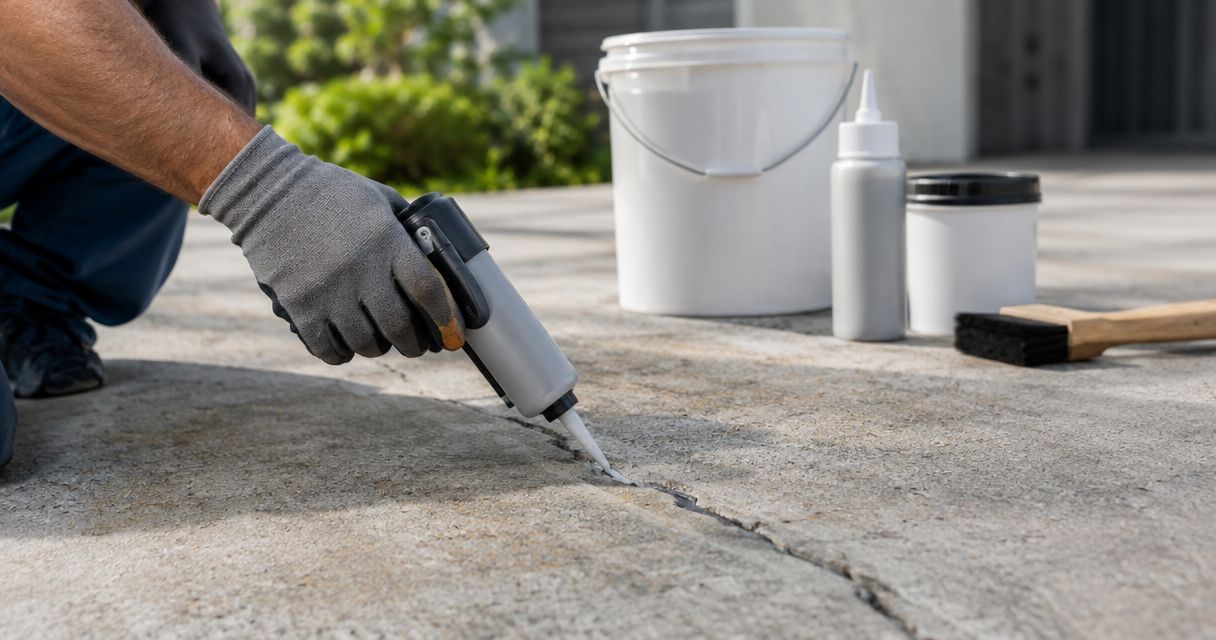
Epoxy crack repair materials bond concrete across suitable cracks. Injection resins and thicker surface formulations serve different applications, so choose by the repair method rather than the word epoxy alone.
A dry, stationary crack is a different problem from a crack that keeps opening. Epoxy creates a rigid bond; that characteristic becomes a limitation when the concrete still needs to move.
Epoxy crack repair material pros:
- Provides adhesive bonding rather than surface sealing alone.
- Injection formulations can enter cracks inaccessible to thicker fillers.
- Offers a repair approach for suitable stationary concrete cracks.
Epoxy crack repair material cons:
- Continuing movement can defeat a rigid repair.
- Moisture requirements and mixing instructions vary by formulation.
Best for: Bonding a suitable dry, stationary crack after its cause has been assessed.
Structural applications need a repair plan, not a guess based on crack width. Do not treat a filled line as proof that the underlying foundation is stable.
Verdict: Hold until you know the crack is stationary and bonding is appropriate.
3. Polyurethane injection resin: best for leaking wall cracks
Polyurethane injection resin is a different repair category from polyurethane surface sealant. Formulations intended for leak repair are injected into concrete cracks using a compatible system; some react with moisture during the sealing process.
This category belongs in a water-entry discussion, not a routine driveway-filling discussion. Product chemistry, injection access and the condition of the concrete determine the application.
Polyurethane injection resin pros:
- Addresses leakage within a crack rather than covering only its face.
- Includes formulations specifically intended for wet crack conditions.
- Provides an alternative to rigid bonding when leak sealing is the objective.
Polyurethane injection resin cons:
- Requires correct ports, equipment and application procedures.
- Does not remove exterior water pressure or correct drainage problems.
Best for: An accessible leaking concrete wall crack with an appropriate injection repair plan.
For DFW homeowners, recurring water entry also calls for checking where runoff collects. Criss Cross Construction provides drainage and foundation services, so discuss both the leak and the surrounding water conditions during your estimate.
Verdict: Hold for an assessed leak-sealing application; skip for ordinary surface filling.
4. Polymer-modified repair mortar: best for chipped concrete
Polymer-modified repair mortar rebuilds damaged concrete surfaces, shallow spalls and edges in applications allowed by its technical sheet. It is a patching material, not a flexible substitute for joint sealant.
Choose this category when concrete is missing around the damage. A narrow line through otherwise intact concrete does not automatically need a broad mortar patch.
Polymer-modified repair mortar pros:
- Rebuilds missing surface material.
- Can be shaped to restore suitable edges and contours.
- Includes formulations intended for specific placement orientations and depths.
Polymer-modified repair mortar cons:
- Continuing movement can crack a rigid patch.
- Thin, unsupported edges and poor preparation undermine the repair.
Best for: Localized surface loss or a damaged edge where the remaining concrete is sound.
Remove loose material and follow the specified preparation, bonding and curing instructions. Do not spread repair mortar over crumbling concrete and expect the coating to become a new structural surface.
Verdict: Buy for compatible patching work; skip for a moving crack.
5. Hydraulic water-stop cement: best for localized water-entry plugs
Hydraulic water-stop cement is formulated to plug localized openings where water enters concrete or masonry. It sets rapidly, so preparation and placement must follow the product instructions closely.
Its purpose is stopping water at a specific opening. It is not a general driveway crack filler, a flexible sealant or a complete drainage solution.
Hydraulic water-stop cement pros:
- Intended for localized water-entry points.
- Can be packed into properly prepared openings.
- Provides a focused repair option where ordinary surface filler is inappropriate.
Hydraulic water-stop cement cons:
- The rigid plug does not accommodate continuing movement.
- Short working time leaves little room for incomplete preparation.
Best for: A suitable localized opening requiring a water-stop plug.
A successful plug does not explain why water reached that opening. Inspect roof runoff, surface drainage and other accessible water sources instead of treating the plug as the whole repair.
Verdict: Buy only for its specified water-stop application; skip as a universal filler.
6. Acrylic concrete crack filler: best for minor surface filling
Acrylic concrete crack fillers fill minor, nonstructural cracks in applications permitted by their labels. They belong in a surface-maintenance discussion, not a structural repair plan.
Formulations differ in exposure limits, flexibility and finishing requirements. Check those details before using an acrylic filler on a driveway, patio or other exposed surface.
Acrylic concrete crack filler pros:
- Provides a surface-filling option for suitable minor cracks.
- Includes ready-to-use formulations.
- Keeps a small maintenance repair separate from a bonding or injection job.
Acrylic concrete crack filler cons:
- Does not restore structural support or bond a foundation crack.
- Not interchangeable with a movement-rated joint sealant.
Best for: A minor surface crack with no evidence that structural repair is needed.
Do not assume that a paintable or easy-cleanup formula suits vehicle traffic or prolonged moisture exposure. Those are separate application requirements.
Verdict: Buy for label-approved surface maintenance; skip for structural concerns.
Make these checks before buying
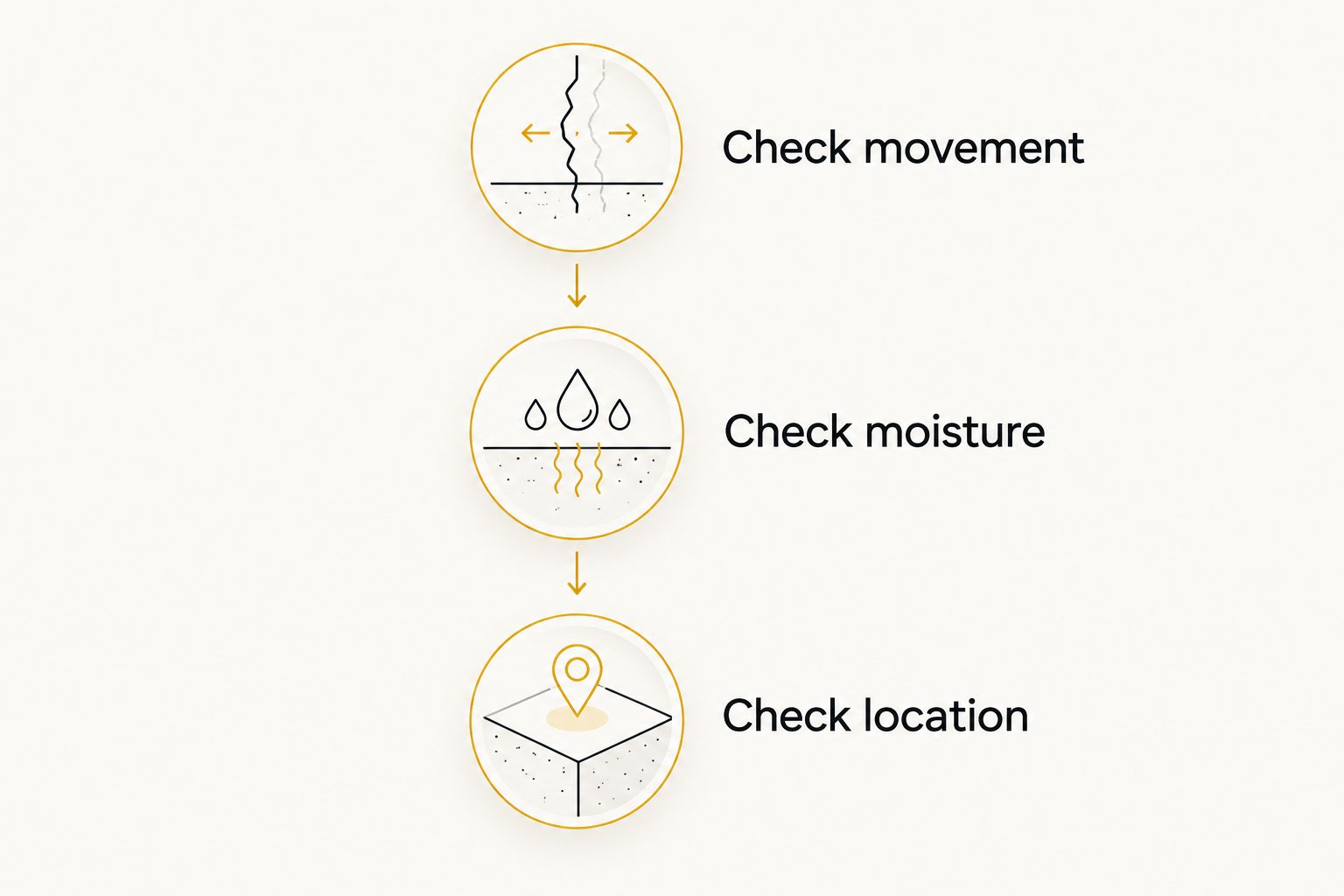
Complete these 3 checks before choosing a material. They help distinguish a surface repair from a problem that needs assessment.
Check movement
Look for changes in the crack and any height difference across it. Uneven concrete, recurring cracks and changes in door operation deserve attention beyond filling the visible gap. These observations are reasons to investigate, not a diagnosis by themselves.
Check moisture
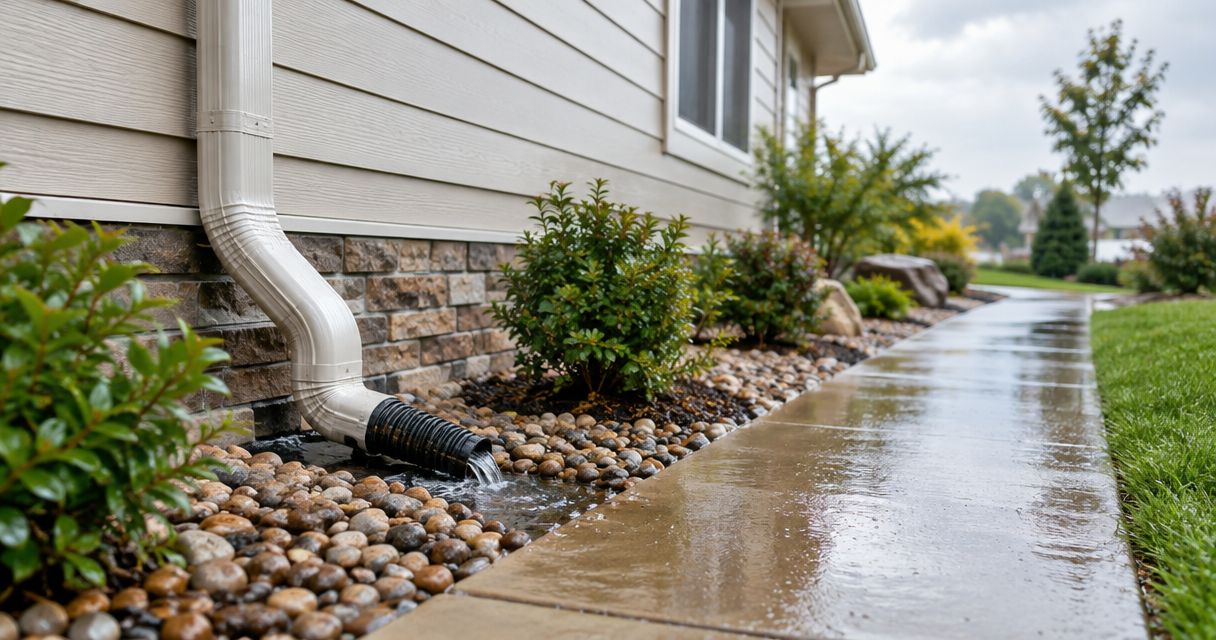
Look at the area during and after rain when it is safe to do so. Note standing water, downspout discharge and wet areas beside the house. A filler does not redirect runoff away from a foundation.
Check location
Identify whether the damage is in a driveway, patio, foundation or concrete wall. Then distinguish an accidental crack from a designed joint. The location and purpose determine whether sealing, bonding, injection or patching belongs in the repair plan.
For your estimate, take 2 photos: a close view of the damage and a wider view showing the surrounding surface. Keep dated notes if the appearance changes. Do not delay an assessment just to build a longer photo record.
Schedule Your Free On-Site Estimate
Discuss foundation repair, drainage or concrete work for your DFW home.
How the materials are ranked
The 2026 ranking prioritizes repair purpose, movement compatibility, moisture conditions and placement. Polyurethane sealant comes first as a practical starting category for nonstructural horizontal sealing—not because it replaces every other material.
Epoxy wins the bonding slot, injection resin wins the leaking-crack slot, and repair mortar wins the missing-concrete slot. No recommendation assumes a particular product formula, measured performance result or repair outcome.
Which concrete crack repair product should you choose?
Choose polyurethane concrete sealant for a suitable nonstructural horizontal crack; choose an assessment first for a foundation concern. That distinction matters more than picking the strongest-sounding package.
If concrete is missing, investigate repair mortar. If water is entering through a wall, investigate a leak-specific repair and the water source. If the slab is uneven or the crack keeps changing, put the filler purchase on hold.
Criss Cross Construction provides concrete crack repair-related services through its concrete, foundation and drainage work for DFW homeowners. Call or schedule a free on-site estimate when you need the cause assessed rather than another surface patch.
FAQ
What's the best concrete crack repair product for a driveway?
A polyurethane concrete sealant is a useful starting category for a nonstructural driveway crack that needs flexible sealing. Choose a formula approved for horizontal concrete and the intended exposure; uneven or moving slabs need assessment first.
Is epoxy better than polyurethane for concrete cracks?
Epoxy is better suited to bonding appropriate stationary cracks, while polyurethane sealant is better suited to flexible sealing. Neither material corrects the underlying cause of foundation movement.
Can I use concrete crack filler to fix my foundation?
Concrete crack filler does not correct settlement or restore foundation support. A foundation repair plan must address the cause of the damage, not just the visible opening.
What should I use when water comes through a concrete crack?
Leak-specific polyurethane injection resin or hydraulic water-stop cement can suit different water-entry repairs. Choose only after identifying the opening, application conditions and source of water.
Can I fill a concrete expansion joint with repair mortar?
Do not replace a movement joint with rigid repair mortar. Use a joint treatment designed for the joint's function and follow its installation requirements.
How do I choose concrete crack repair products in 2026?
Choose by movement, moisture, location and repair purpose. Read the current technical sheet for the specific formula rather than relying on a category name or package claim.
Who can assess concrete cracks at my DFW home?
Criss Cross Construction provides foundation repair, drainage and concrete services for residential homeowners across DFW. Call or schedule a free on-site estimate to discuss the damage and appropriate next steps.
One last thing
A straight groove in concrete can be an intentional joint rather than damage. Filling every visible line with the same rigid material ignores that distinction.
For your 2026 repair, identify what the opening does before deciding what belongs in it. When foundation movement is the concern, book the assessment before buying the filler.