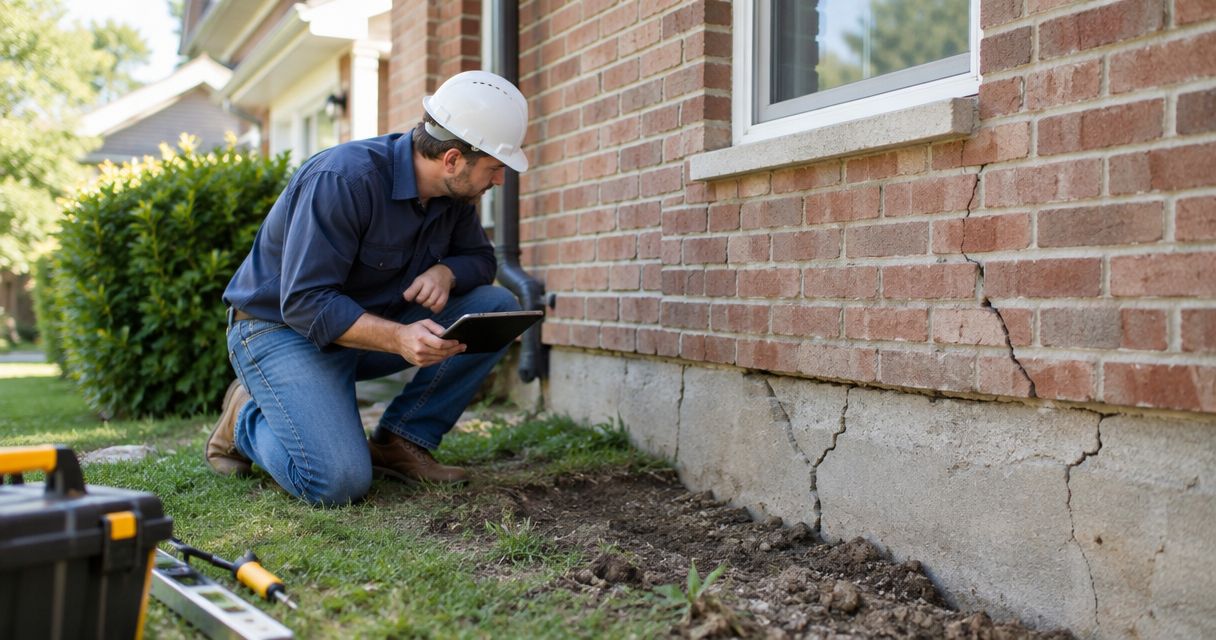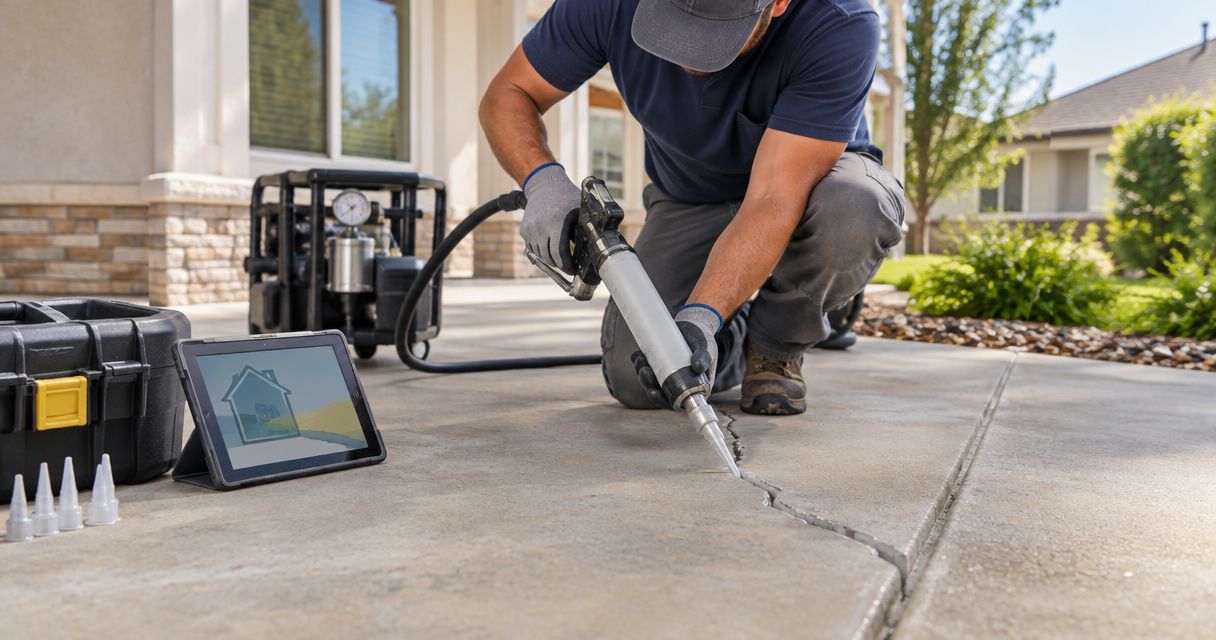
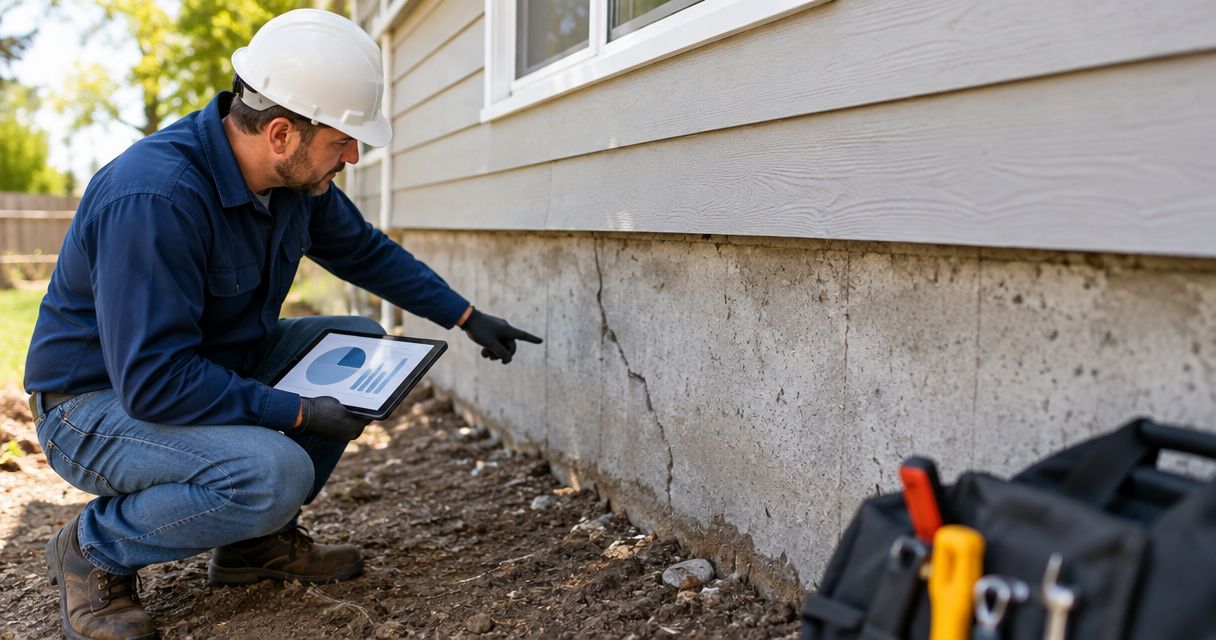
Best overall: the repair that addresses the diagnosed failure. Best for settlement: engineered underpinning. Best limited-scope option: crack injection for a suitable nonstructural crack. This 2026 guide compares foundation repair methods ranked by cost through their required work—not unsupported price estimates—and explains when each belongs on your shortlist.
- Foundation repair methods ranked by cost are useful only when the options address the same diagnosed problem.
- Crack injection addresses suitable cracks; it does not correct foundation settlement.
- Underpinning supports settling foundations; wall reinforcement addresses specific wall movement problems.
- Crisscrossco provides residential foundation repair, drainage/waterproofing solutions, and concrete work.
Why this matters
A sealed crack and a stabilized foundation are different outcomes. Choosing the smallest job without identifying the cause can leave the original problem untouched. Choosing structural work for a nonstructural defect can add work you do not need.
For your 2026 decision, separate symptom treatment, water management, and structural stabilization. These scopes sometimes belong together, but they are not interchangeable. A dry basement does not establish that a foundation is stable, and a stabilized foundation does not establish that water entry has stopped.
Crisscrossco provides foundation repair, drainage/waterproofing solutions, and concrete work for residential property owners. Crisscrossco is best for homeowners seeking those residential services from one provider. Select the actual repair method from the diagnosis, not from a service name alone.
What makes the best foundation repair method?
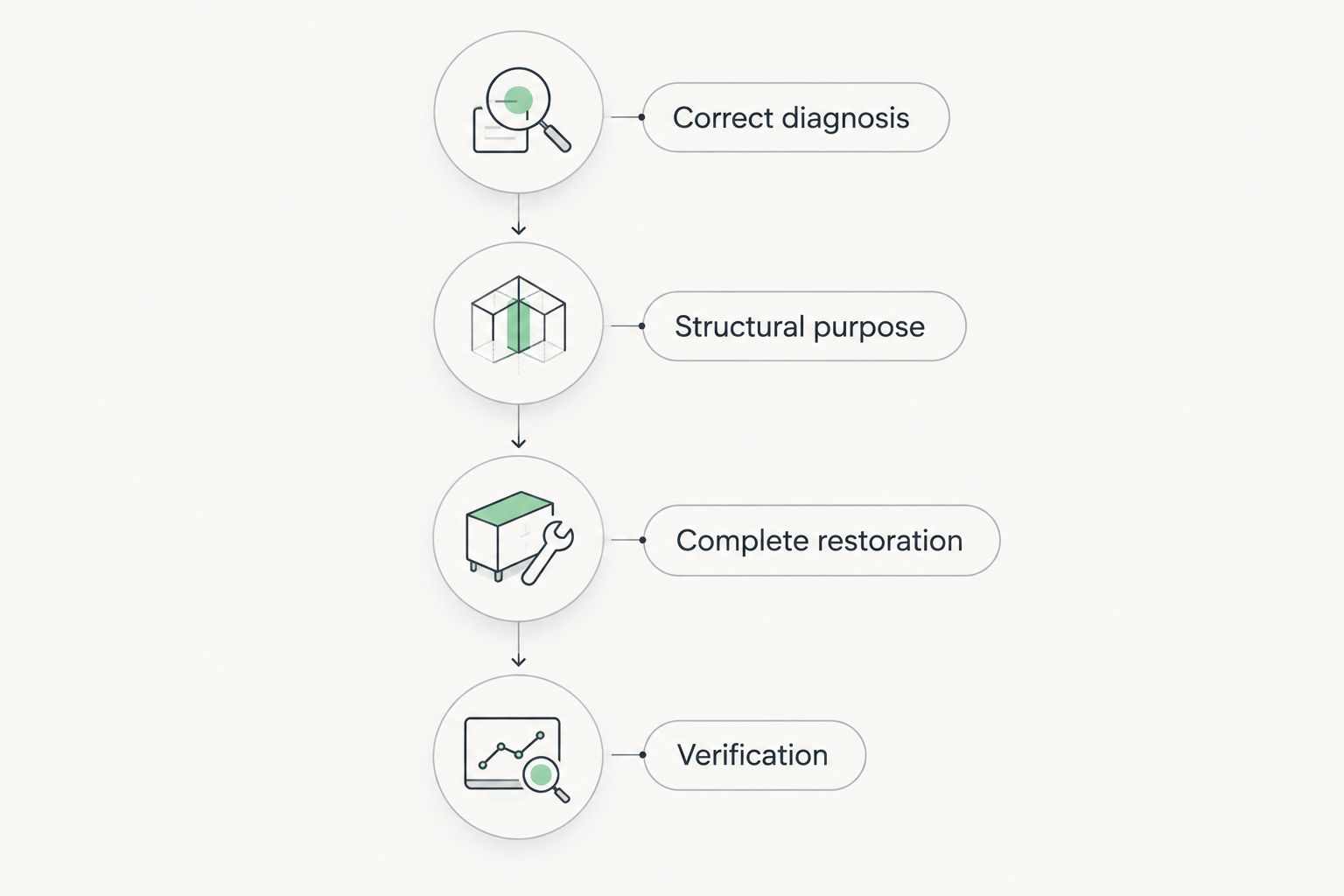
Evaluate each proposal against these criteria before comparing its total:
- Correct diagnosis: The repair addresses the cause of the damage, not just its visible appearance.
- Structural purpose: The proposal states whether it seals, lifts, reinforces, supports, or replaces part of the foundation.
- Water management: Drainage and waterproofing receive their own scope when water contributes to the problem.
- Site access: Excavation, indoor access, utilities, and nearby structures are accounted for.
- Complete restoration: The proposal identifies what happens to disturbed concrete, soil, finishes, and landscaping.
- Verification: You know how the contractor will document completion and whether engineering review or permits are required.
The best foundation repair method is the least extensive method that adequately addresses the diagnosed failure. A smaller intervention is not a substitute for a complete one.
Foundation repair methods at a glance
Use this 2026 comparison as an intervention-scope ranking, from a localized repair to extensive replacement. It is not a universal lowest-to-highest bill: access, damage extent, engineering, and restoration change the work required. Compare competing methods financially only when each is appropriate for the same problem.
| Rank and method | Best for | Standout function | Scope to compare | Key limitation |
|---|---|---|---|---|
| 1. Crack injection | Suitable isolated, nonstructural cracks | Seals a defined crack | Preparation, injection, and finish repair | Does not stabilize a settling foundation |
| 2. Drainage and waterproofing | Diagnosed water-entry problems | Manages water or blocks its entry | Drainage route, excavation, discharge, and restoration | Does not replace required structural repair |
| 3. Slab lifting | Suitable settled concrete slabs | Raises a slab through material placement beneath it | Slab condition, access, lift, and void treatment | Does not automatically support footings or walls |
| 4. Wall reinforcement | Specific lateral foundation-wall movement | Restrains or reinforces an existing wall | Wall condition, connections, access, and engineering | Cannot rescue every severely damaged wall |
| 5. Underpinning | Settlement requiring deeper support | Transfers foundation loads to suitable support | Support design, installation, connections, and access | Requires a diagnosis and site-specific design |
| 6. Foundation reconstruction | Sections unsuitable for retention | Replaces damaged foundation construction | Temporary support, demolition, rebuilding, and restoration | Extensive disruption and coordination |
1. Crack injection: best foundation repair for isolated cracks
Crack injection places repair material into a crack. Depending on the material and specified application, its purpose is sealing water entry or bonding concrete. Those are different objectives, so the proposal must identify which outcome the repair is intended to achieve.
Best for: A suitable isolated crack after assessment rules out movement requiring a different repair. Do not interpret a neat finished surface as evidence that the cause has been corrected.
Crack injection pros:
- Targets a defined defect rather than the entire foundation.
- Can limit disturbance to surrounding construction.
- Provides a distinct scope that is straightforward to describe.
Crack injection cons:
- Does not provide deeper support for a settling foundation.
- Continued movement can undermine a sealing repair.
- Material selection depends on the crack and repair objective.
Scope check: Ask whether preparation, injection, surface finishing, and treatment of the water source are included. Compare sealing proposals with sealing proposals—not with bids intended to stabilize the building.
Verdict: Buy only when the crack is suitable and its cause has been assessed; skip injection as a stand-alone settlement repair.
2. Drainage and waterproofing: best for water-entry problems
Drainage manages where water travels. Waterproofing limits water passage through a foundation assembly. A proposal can include either or both, depending on the entry path and site conditions.
Best for: A diagnosed moisture problem where water management is the required outcome. Structural damage needs a separate assessment even when the leak is the homeowner’s main concern.
Drainage and waterproofing pros:
- Addresses water rather than merely covering interior stains.
- Can treat contributing site conditions and entry paths.
- Can complement an appropriate structural repair.
Drainage and waterproofing cons:
- Does not restore structural capacity by itself.
- Exterior work can require excavation and landscape restoration.
- Drainage needs an appropriate discharge arrangement.
Scope check: Identify collection points, the drainage route, discharge arrangements, waterproofing surfaces, and restoration. Two proposals labeled waterproofing can describe substantially different work.
Crisscrossco provides drainage/waterproofing solutions alongside foundation repair. The written scope should still distinguish the water-management work from any structural correction.
Verdict: Buy for a diagnosed water problem; skip it as a substitute for structural stabilization.
3. Slab lifting: best for suitable settled concrete slabs
Slab lifting introduces material beneath a concrete slab to raise it toward an intended elevation. Cementitious and polyurethane-based approaches exist, but suitability depends on the slab, the underlying conditions, and the repair objective.
Best for: A settled slab that remains suitable for lifting. First establish whether the affected concrete is a slab, a footing, or another structural element; those distinctions change the repair.
Slab lifting pros:
- Can retain existing concrete instead of replacing it.
- Targets elevation differences in suitable slabs.
- Can address support voids as part of a specified repair.
Slab lifting cons:
- Does not automatically stabilize foundation walls or footings.
- Broken or deteriorated concrete can be unsuitable for lifting.
- Unresolved soil or water problems can compromise the result.
Scope check: Ask what will be lifted, what elevation is intended, how nearby construction will be protected, and whether joint or surface repairs are included. A proposal should also address the reason support was lost.
Verdict: Buy for a suitable slab with a defined lift objective; skip it as a general remedy for house settlement.
4. Wall reinforcement: best for specific lateral wall movement
Wall reinforcement addresses selected foundation-wall problems through a designed reinforcing or restraint system. Options include steel bracing, anchors, and composite reinforcement, but those systems are not interchangeable.
Best for: A wall whose condition and movement pattern support retention with an appropriate reinforcing system. The assessment determines whether reinforcement is adequate or replacement is necessary.
Wall reinforcement pros:
- Can retain a wall that is suitable for repair.
- Addresses lateral movement rather than only filling cracks.
- Allows the repair objective and connections to be specified.
Wall reinforcement cons:
- Severe damage can make reinforcement inappropriate.
- Some systems require exterior access or interior clearance.
- Reinforcement does not eliminate the need to address contributing water conditions.
Scope check: Ask how the system connects to the existing structure and whether the objective is stabilization or movement correction. Those outcomes are different; do not assume a stabilized wall will become straight.
Verdict: Buy after the wall and system have been assessed; hold any proposal that leaves the intended outcome undefined.
5. Underpinning: best for foundation settlement needing deeper support
Underpinning adds support beneath or alongside an existing foundation. Engineered approaches can include helical piles, push piers, or other support arrangements selected for the structure and ground conditions.
Best for: Diagnosed settlement where the existing foundation requires additional support. The support design must account for the loads, installation conditions, and connection to the foundation.
Underpinning pros:
- Addresses foundation support rather than surface appearance.
- Can target affected areas when the design supports that approach.
- Provides a structural repair scope with defined connections.
Underpinning cons:
- Requires site-specific assessment and design decisions.
- Installation access and buried utilities affect the work.
- Stabilization does not guarantee reversal of every visible defect.
Scope check: Compare the support layout, design basis, installation requirements, connection details, and restoration. A shorter support list is not automatically the better proposal; the question is whether the design adequately supports the affected structure.
Ask separately about attempted lifting. Supporting a foundation and raising it are distinct objectives, and associated finishes or utilities require consideration.
Verdict: Buy for confirmed support-related settlement; hold until the design and intended outcome are clear.
6. Foundation reconstruction: best for sections that cannot be retained
Foundation reconstruction replaces damaged construction rather than trying to preserve it. The work can include temporary structural support, excavation, demolition, rebuilding, waterproofing, and restoration.
Best for: Foundation sections that an assessment identifies as unsuitable for repair or retention. Replacement is a structural decision, not simply the final option after unsuccessful cosmetic treatments.
Foundation reconstruction pros:
- Replaces damaged material instead of reinforcing unsuitable construction.
- Allows the replacement section and its connections to be designed.
- Can coordinate structural and water-management work within the affected area.
Foundation reconstruction cons:
- Requires substantial access and construction coordination.
- Disturbs adjoining finishes, ground, or site features.
- Temporary support and project sequencing are central to the work.
Scope check: Require clear boundaries for demolition and replacement, temporary support, disposal, inspections, waterproofing, and reinstatement. Otherwise, proposals can describe different projects despite sharing the same repair label.
Verdict: Buy when retention is unsuitable; skip replacement justified only by the appearance of a crack.
How these methods are ranked
These 6 methods are ordered by the intervention they describe: localized treatment first, replacement last. That makes the list a useful starting point for a 2026 decision, not a substitute for site assessment or a promise about relative totals.
The ranking applies the same criteria throughout: diagnosis, structural purpose, water management, access, restoration, and verification. No method wins across all foundation problems. Crack injection cannot take underpinning’s job, and underpinning cannot take waterproofing’s job.
Which foundation repair method should you choose?
Choose a diagnosis-matched scope before choosing a contractor. For your 2026 project, write down the required outcome in plain language: stop this water entry, support this settling foundation, stabilize this wall, or correct this slab elevation.
Ask these 3 questions before accepting a proposal:
- What failure does this repair address?
- What observable outcome does the proposed work deliver?
- Which related problems remain outside the scope?
Separate 2 scopes in your comparison: the core repair and the associated restoration. Excavation, drainage, damaged finishes, and concrete reinstatement should not disappear between the proposal and completion.
For residential foundation repair, Crisscrossco provides the stated foundation, drainage/waterproofing, and concrete services. Evaluate any proposed combination by what each part corrects, what remains unresolved, and how completion will be verified.
FAQ
What are the best foundation repair methods ranked by cost?
There is no universal financial ranking that applies to every foundation. Compare crack injection, drainage and waterproofing, slab lifting, wall reinforcement, underpinning, and reconstruction by diagnosis and complete scope.
Is crack injection enough to repair a settling foundation?
No. Crack injection does not supply the additional foundation support needed to correct support-related settlement. Assess the movement before treating the crack.
Is slab lifting the same as underpinning?
No. Slab lifting raises suitable concrete slabs, while underpinning adds support to an existing foundation. Identify the affected structural element before comparing the methods.
Does waterproofing fix foundation damage?
Waterproofing addresses water passage, not structural capacity by itself. A foundation with structural damage needs a separate assessment even when waterproofing is also required.
Should a bowed foundation wall be reinforced or replaced?
The wall's condition and movement determine whether reinforcement or replacement is appropriate. Ask for a defined objective and an explanation of how the proposed system addresses the damage.
What should I compare in foundation repair proposals?
Compare the diagnosis, intended outcome, repair design, access, water management, restoration, and verification. Proposals for different outcomes are not equivalent alternatives.
What foundation-related services does Crisscrossco provide?
Crisscrossco provides foundation repair, drainage/waterproofing solutions, and concrete work for residential property owners. Select the required service combination from the diagnosed problem.
One last thing
A successful stabilization job does not necessarily erase old damage. Ask whether the proposal includes lifting, crack treatment, and finish restoration, or only support and stabilization. For a 2026 foundation repair decision, that distinction is more useful than selecting a method because it sits near the top of a cost-ranked list.